
What US Credit Approvals Actually Look Like
The honest answer is that the first card is small. Not five figures. Real First Class Citizen clients opened first cards at 1,000 and 2,500 dollars, and were pleased to have them. One wrote, simply, that it was a start.
What changes is what comes after. The same clients move from a secured card to an unsecured one, then raise limits, and the numbers climb from there.
Approvals of 15,000 and 50,000 dollars exist in the record, months into the file, not at the opening of it.
Below is what that path looks like with the numbers left in, taken from client messages published on the Hall of Wins. No client is named. These are individual outcomes, and nothing here is a promise about yours.
A realistic first card is 1,000 to 2,500 dollars
The single most useful thing to know before you begin is the size of the first approval, because almost every disappointment in this lane comes from expecting the wrong number.
One client was approved unsecured at Bank of America for 1,000 dollars, at 0% for fifteen months, in the same stretch that he opened accounts at PNC and Citizens.
His own reaction to the limit was that it was low, followed immediately by the observation that mattered more: at least approved.
Another was approved for a 2,500 dollar Chase card and described it in three words. It is a start.


That is the correct frame. The first card is not the prize. It is the account that makes a file exist, and a file is the thing everything later is built on.
A thin new file does not attract large limits, in any country, for anyone.
Wondering which of these numbers is realistic for your file? That is what the call is for.
Book Your Assessment CallSecured first, unsecured next, then more than one
The usual order is a secured card, where your own deposit sets the limit, then an unsecured card once there is history to read.
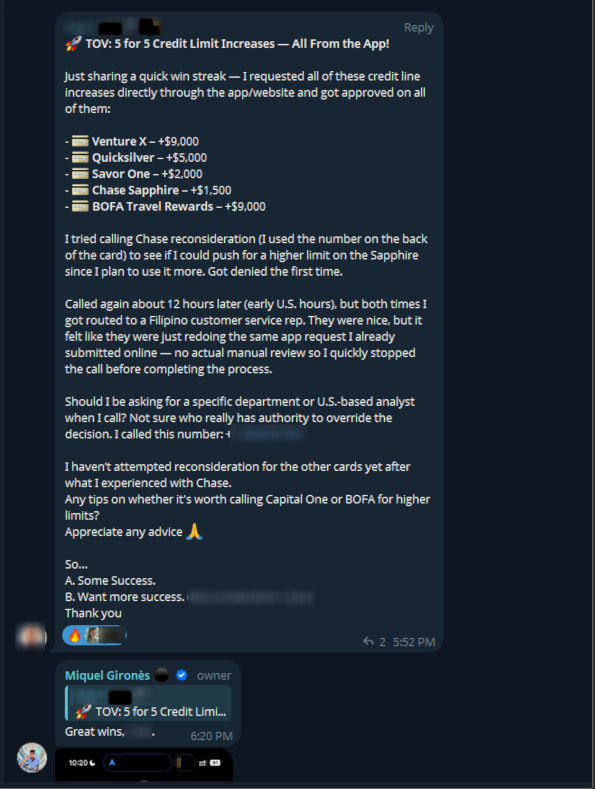
One client's position a few months in was three cards at once: Bank of America secured at 5,000 dollars, Chase unsecured at 2,500, and American Express.
The secured card carried the larger number precisely because it was secured, and the unsecured Chase card was the more meaningful of the two, because it was issued on the strength of the file rather than a deposit.

Reading limits alone gets this backwards. The unsecured 2,500 is the progress; the secured 5,000 is the collateral.
One phone call moved a limit from 2,000 to 7,000
This one is worth reading twice, because it is a repeatable move rather than a lucky outcome.
A client holding a card with a 2,000 dollar limit called and asked for 5,000. He was denied. He then called the issuer's reconsideration line, asked for the same 5,000 again, and was given 7,000.

Nothing about his file changed between the two calls. What changed was who picked up. A first decline on a credit-line increase is frequently an automated one, and the reconsideration line exists precisely so a human can look at the account again.
Limits move faster than files do. Once the account is open and paid on time, asking is close to free, and asking twice is a different question from asking once.
Where it goes, and when
The larger numbers in the record are real and they are late. An American Express approval came in at a 15,000 dollar limit. Another client's credit check returned an approval for 50,000, and a further one reported being approved for a 50,000 dollar card.


None of these were opening positions. They sit on top of months of reported, on-time activity, which is the only thing that produces them.
Treat them as the shape of the ceiling rather than a forecast of your own. The useful number for planning is still the first one: expect four figures, and be pleased when it is approved at all.
The first card is the hard one. The call maps how yours gets opened.
Book Your Assessment CallWhat these screenshots do not show
A page of wins is a filtered view by definition, so here is what sits outside the frame.
The clock is not negotiable. No score exists until roughly three to six months of activity have been reported, and that interval is set by Experian, Equifax and TransUnion rather than by any provider. Nothing on this page shortens it.
Declines happen and are not published. The client above was denied on his first credit-line request; that decline is visible only because he mentioned it himself.
And the engagement is advisory. First Class Citizen give the method and open the door at the bank, most often on a Miami visit they organise for the first in-person card.
They do not touch your accounts, and the applications are yours. The full method is set out here.
More approvals from the record
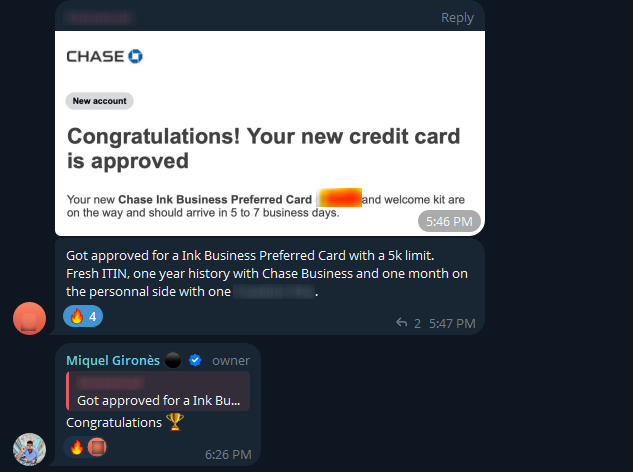


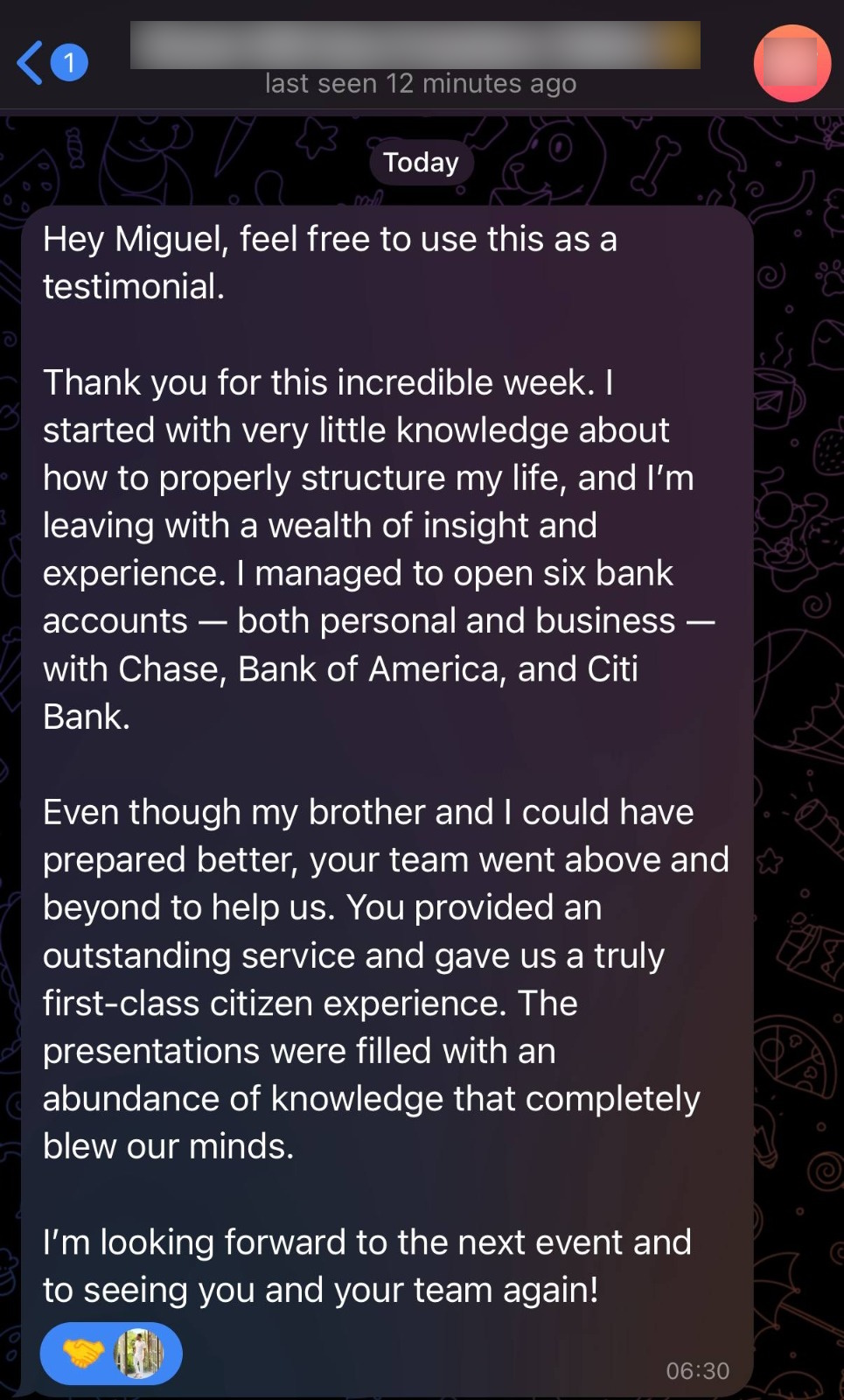
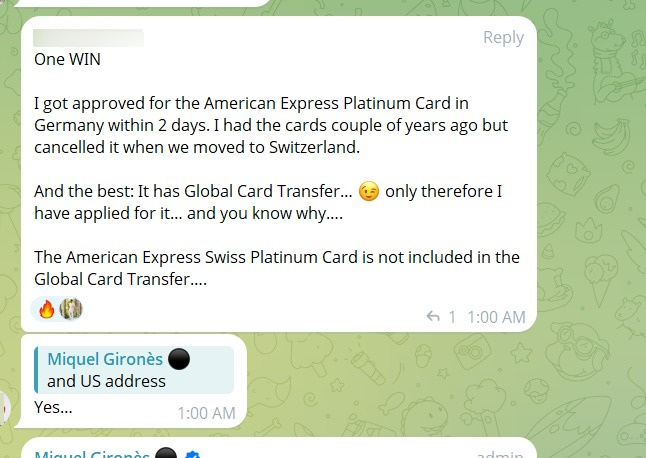
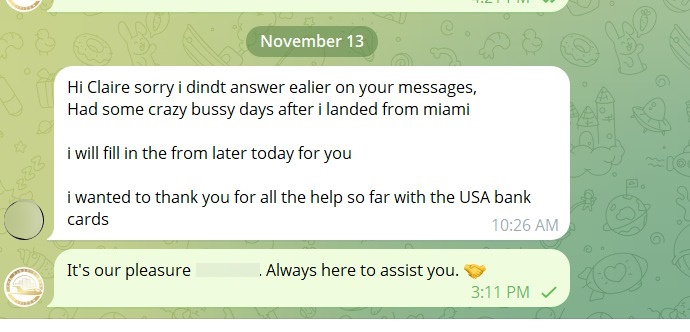
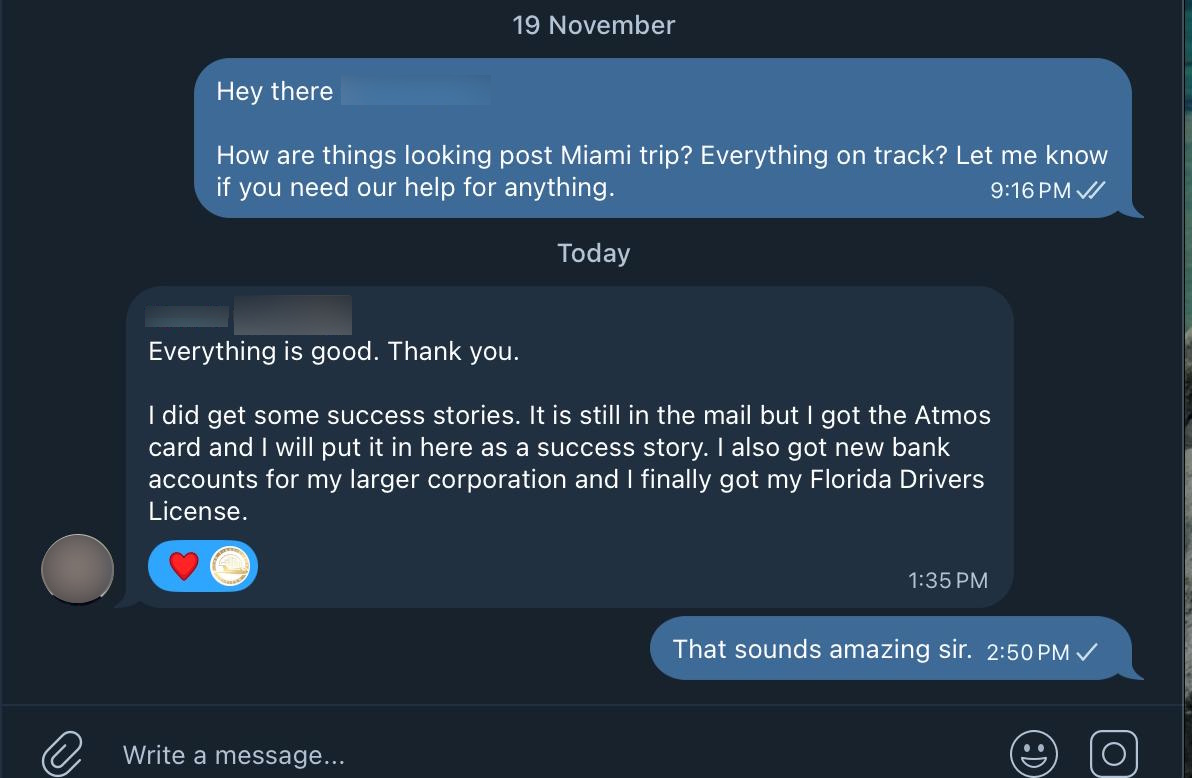

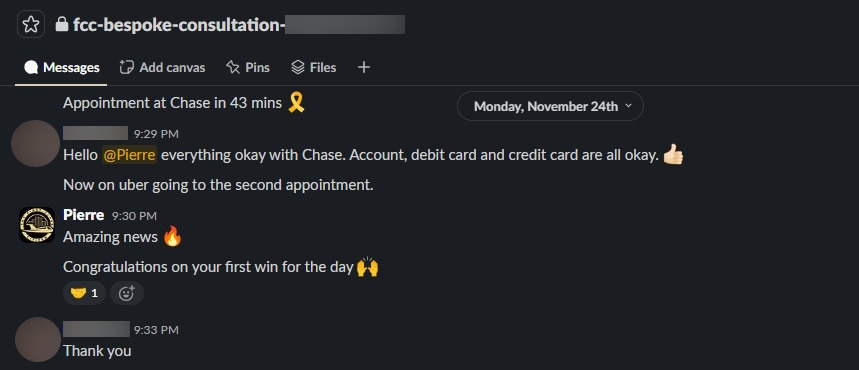

Real client wins, straight from the Hall of Wins.
The US credit series
The rest of the picture
- Find your routeTell it what you are trying to do and it maps the guides to read in order.
- ITIN document checklistPick your situation, get the exact list the IRS accepts.
- What it costsPublished prices and timelines, service by service.
- US credit calculatorWhat your spend returns at the rates issuers publish today.
FAQ
How big is a realistic first US credit card for a non-resident?
Does a secured card or an unsecured card come first?
Can a credit limit be increased quickly?
How long before any of this shows up as a score?
Are these results guaranteed?
Find out what your first approval would look like
The assessment call goes through your situation and is straight about the size of a realistic first card, the months the bureaus require, and how the first account gets opened. Free, qualified, direct.
Book Your Assessment CallThis guide reports what the authorities and institutions involved publish, quoted, with the date each source was read. It is not tax, legal or immigration advice. Published rules change, and an individual case can turn on facts no page can see.

Founder & CEO, The First Class Citizen