
Which Banks Accept an ITIN for a Credit Card

Two issuers publish a direct answer to this, and the answer is the same one. An ITIN can be used to apply.
Chase states it plainly in its education library. Capital One states it in its own learning pages. Both are quoted below, in their words.
What no issuer publishes is who gets approved. That distinction is the whole subject, and most pages written about it blur the two.
Applying is a published rule. Approval is a decision made on your file, and no bank writes down in advance whose file passes.
The clearest published answer of any of them
Chase answers it directly, under a heading that names both numbers.
"If you already have a Social Security Number or an Individual Taxpayer Identification Number, you should be able to apply for most credit cards. Simply include your number with your application to apply."
And in the same section, the sentence people skip:
"As with any credit card applications, your credit history, income, and other factors will be used to evaluate your application for approval."
Read together, those two lines are the honest shape of this whole question. The door is open and the decision is still a decision. The Chase page covers what they publish in full.
The form taking your number and the bank taking you are two different questions.
Book Your Assessment CallThe same answer, hedged one level further
Capital One addresses it in its money-management pages rather than on a card offer, which is why it is easy to miss.
"Some credit card issuers let applicants use ITINs instead of SSNs when applying for a credit card."
And more broadly: "You might be able to use an ITIN in place of an SSN for some banking and credit applications."
Note the hedges. Some issuers, might be able to. They are describing the market rather than committing their own underwriting, and that is worth reading exactly as written.
It does address it, on a page nobody thinks to open
This section previously said American Express does not address applying with an ITIN. That was wrong, and it was wrong for the same reason the Chase mistake was: the answer is not on the page you would expect.
On its page for people relocating to the United States
On its page for people relocating to the United States, listing what an application needs, American Express publishes: "Passport details, U.S.-issued Social Security Number (SSN), or U.S.-issued Individual Tax Identification Number (ITIN)". Read on 2 August 2026.
The or is the whole sentence. Amex is speaking about its own card application here, not summarising the market, which puts it alongside Chase rather than alongside Capital One.
The same thing, in a much narrower place
It publishes the same thing in a much narrower place. The rule sits under its own heading, on who may be the second named owner of a joint Rewards Checking account, and it is there that the applicant must be "a U.S. citizen or a resident alien with a valid Social Security number (SSN) or individual taxpayer identification number (ITIN)". That page separately notes an application must still be approved. It is a co-owner rule on one deposit product, so it is worth exactly that and no more.
Also removed from this section
Also removed from this section: a quotation about requesting a credit report from the three bureaus with an ITIN. It was attributed to American Express and could not be found again anywhere across their education library when the whole of it was read on 2 August 2026. A quote nobody can locate a second time does not stay on the page. Whether a credit file exists at all is covered in what happens after the number arrives.
It publishes plenty, and none of it is about Discover
An earlier version of this page said Discover returned no ITIN page in its own sitemap. That is now not merely unsupported, it is disproven: Discover publishes several pages on the subject, including one written for immigrants.
About the industry rather than about itself
What it publishes is about the industry rather than about itself. "Some credit card companies may accept applications from immigrants without a Social Security number, but they may require an Individual Taxpayer Identification Number (ITIN)."
And where it comes closest to the question, it hands it straight back: "Social Security number or Individual Taxpayer Identification Number (if the card issuer accepts it)". The issuer it defers to is unnamed, and Discover does not say whether it is one of them.
So Discover belongs with Capital One in this list, describing the market, not with Chase and American Express, who commit about themselves.
One trap worth naming
⚠️ One trap worth naming, because it would produce a confident wrong answer. Two Discover banking pages do carry the words "Tax ID Number (SSN or ITIN)", and both redirect to Capital One following the acquisition. That text belongs to Capital One.
A thin file is the real constraint, and that is fixable before you ever apply.
Book Your Assessment CallWhy nobody should tell you the others publish nothing
The obvious next line would be a list of issuers that say nothing. This page does not carry one, and the reason is worth more than the list would be.
Searching an issuer's site does not work
Searching an issuer's site for pages with the ITIN in the address does not work. Chase is the proof: its answer sits in an education library, on a page about international students, with no mention of the number in the URL.
So a search that finds nothing has established nothing. It has found no page with a particular address, which is a different statement from a company being silent, and treating them as the same is how a confident wrong answer gets published.
What this page carries instead
What this page carries instead is only what was found by reading: Chase, Capital One and American Express, quoted above in their own words. Absence from that list means it was not found, not that it does not exist.
Applying is published. Approval is not.
This is the sentence to carry away, and it survives every issuer on the list.
What an issuer will tell you
An issuer will tell you which identifiers its application form accepts. That is a rule, and rules get written down.
No issuer tells you who it approves. Approval runs on your file, your income and factors they weigh privately, and a page claiming otherwise is selling you something.
The useful work happens before the application
Which is why the useful work happens before the application rather than during it. A thin file is the constraint, not the number on the form.
Building a US credit file from zero covers what actually moves that, and secured cards with an ITIN covers the route people usually start on.
On camera, Miquel Gironès puts it this way, at 0:38 of I Stopped Using Debit Cards Completely | HERE'S WHY:
It lets you apply for these credit cards and start building US credit history.
What this page will not do
It will not tell you which card to apply for. That depends on a file this page cannot see, and a wrong application is a hard search on your record.
It will not rank issuers by how likely you are to be approved. Nobody outside an underwriting team can rank that honestly.
It will not promise the list is complete. It covers the issuers checked, by the method named, on the date named.
What it does is stop you guessing about the one thing that is actually published, which is whether the form takes your number at all.
The form taking your number and the bank taking you are two different questions.
Book Your Assessment CallApprovals that landed
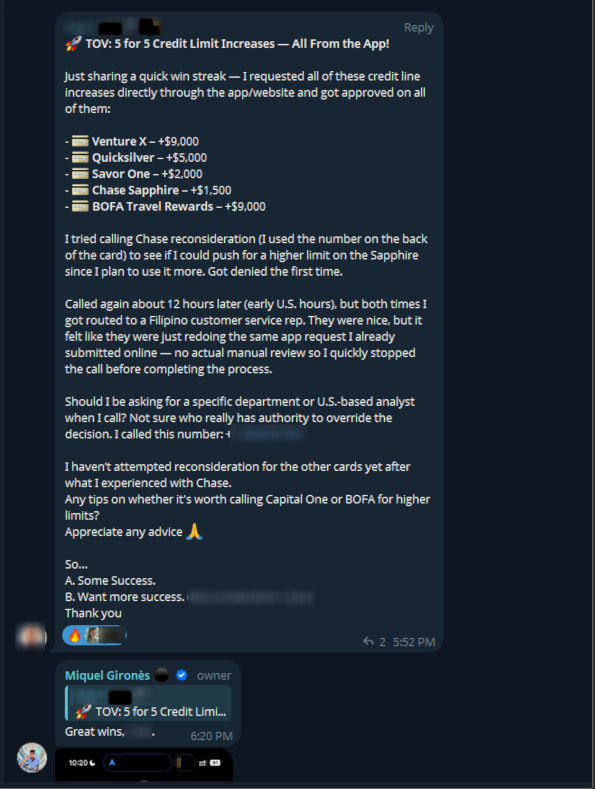
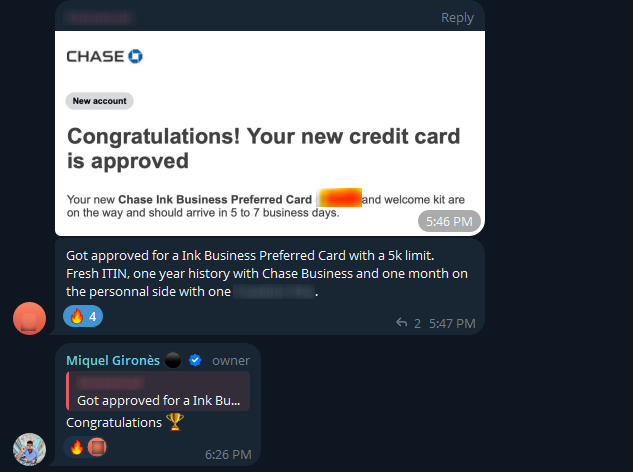


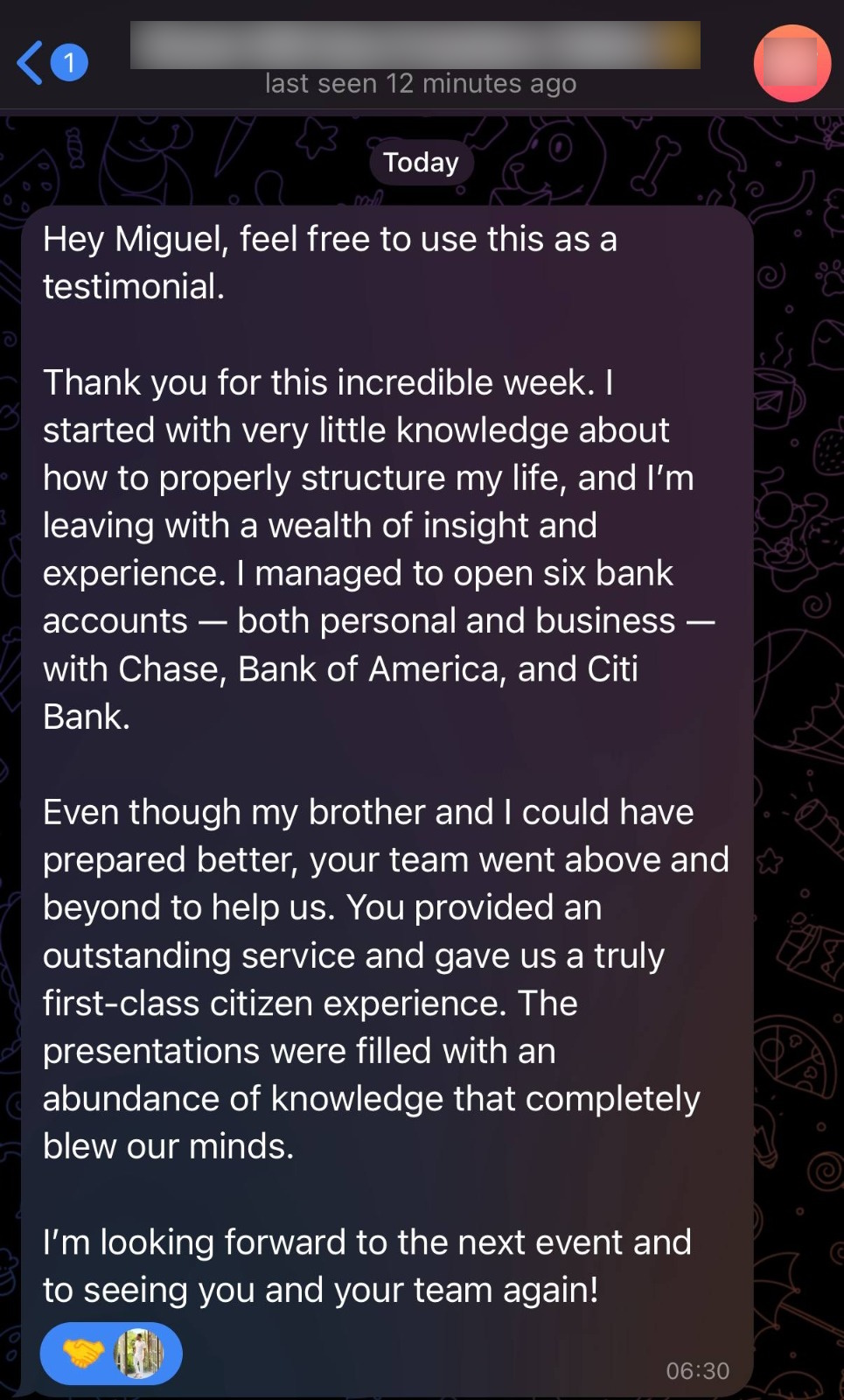
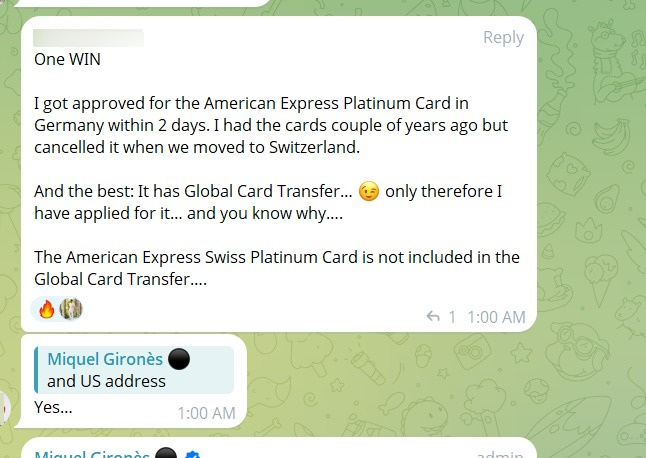
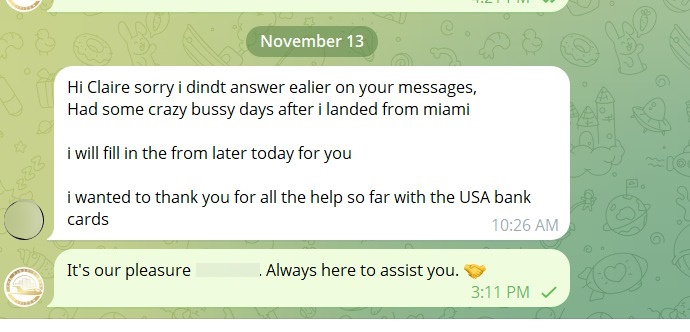
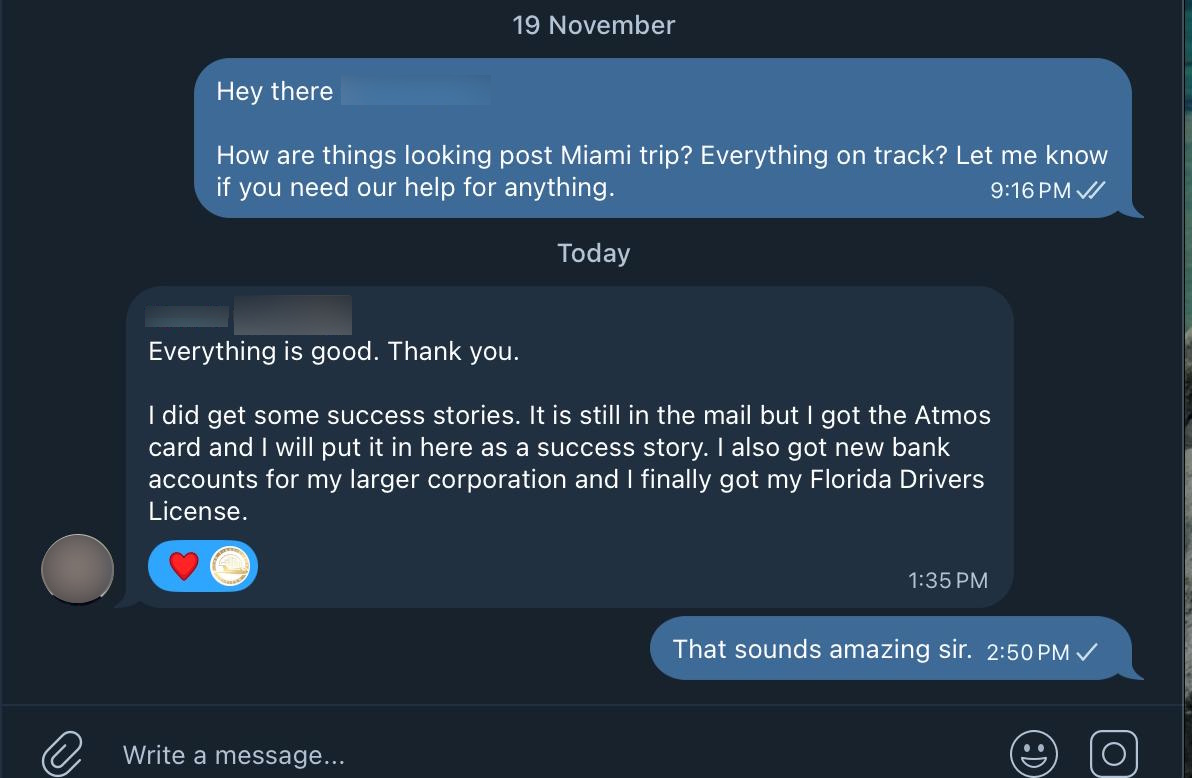

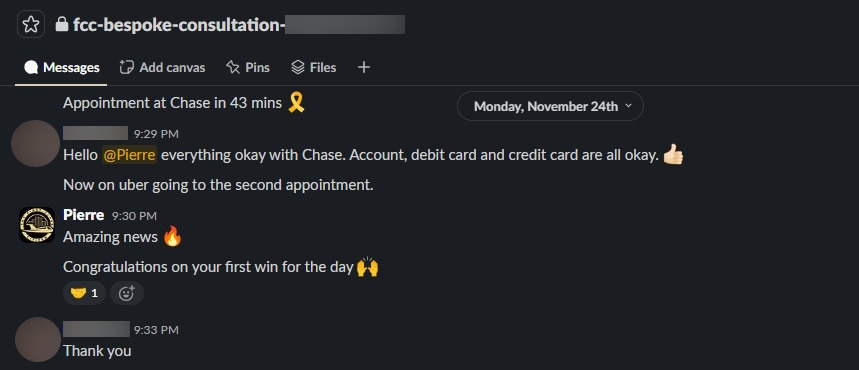
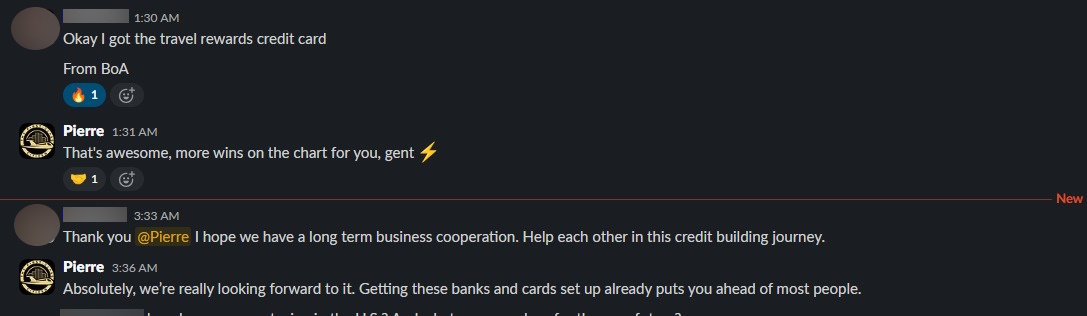
Real client wins, straight from the Hall of Wins.
The US credit series
The rest of the picture
- Find your routeTell it what you are trying to do and it maps the guides to read in order.
- ITIN document checklistPick your situation, get the exact list the IRS accepts.
- What it costsPublished prices and timelines, service by service.
- US credit calculatorWhat your spend returns at the rates issuers publish today.
FAQ
Which banks accept an ITIN for a credit card?
Does an ITIN guarantee approval?
Does American Express accept an ITIN?
What about the issuers not listed here?
Why do so many pages disagree about this?
Sources
The published pages this guide draws on, each read on the date shown.
- chase.com read 2026-08-30
- capitalone.com read 2026-08-30
- americanexpress.com read 2026-08-02
- americanexpress.com read 2026-08-30
- discover.com read 2026-08-30
- discover.com read 2026-08-02
- capitalone.com read 2026-08-30
- capitalone.com read 2026-08-30
- youtube.com read 2026-08-30
Before the application, not during it
The assessment call covers where your file actually stands, what reports and what does not, and the order that avoids a wasted hard search. Free, qualified, and direct about what applies to you.
Book Your Assessment CallThis guide reports what the authorities and institutions involved publish, quoted, with the date each source was read. It is not tax, legal or immigration advice. Published rules change, and an individual case can turn on facts no page can see.

Founder & CEO, The First Class Citizen