
What a US Credit Score Is, and What Moves It

A US credit score is a number calculated from a credit file, and a credit file is a record of accounts that lenders have reported to the three nationwide bureaus: Experian, Equifax, and TransUnion. No reported accounts, no file. No file, no number.
That is why a non-resident does not begin at a low score. They begin at no score, which is a different problem and is solved differently.
Once the file exists, four things move it: payments made on time, balances kept low against the limit, history allowed to age, and restraint between applications. First Class Citizen's own published proof story calls it applying the fundamentals.
Every score figure on this page belongs to someone: a published client result, a published testimonial, or a target on their own ladder. Each one is labelled as what it is. None of them is a promise about your file.
What the score is actually counting
The score is not an opinion about you. It is arithmetic performed on a record, and the record is the only input.
A file comes into existence the moment a lender reports an account to the bureaus.
Before that first report there is nothing to calculate, which is the part most people get wrong when they assume a bank somewhere is quietly forming a view of them.
No Social Security Number is required for the file to exist. It can be compiled on your ITIN together with your name, your current and prior US addresses, and your date of birth. What it needs is an account that reports.
There is also a floor built into the system. You typically need three to six months of reported activity before a score can be produced at all, and some versions of the FICO Score require up to six months of account activity before returning a number.
That waiting period is set by the bureaus and the scoring models, not by any provider.
One honest gap, stated rather than filled. First Class Citizen publishes 300 as the lowest score, in the proof headline that opens both of their credit programme pages.
They do not publish where the scale ends, or which scoring model their score targets refer to.
Lenders use more than one model, so a figure quoted without its model is missing half its meaning. That detail is not on their pages, so it is not filled in here. It is a question for the call.
The number is downstream of the file. Whether you have one yet is the first thing the call settles.
Book Your Assessment CallA non-resident starts from no file, not a low score
This distinction changes the whole plan. Repairing a damaged score and originating a file that has never existed are not the same job, and almost everything written about US credit is written about the first one.
The clearest illustration is published on their own ITIN page. One client, Povilas, ran a company in Lithuania and put five to six million dollars a year of advertising spend through a debit card.
In his words, he never touched credit cards in his life and did not know AMEX existed until it was explained what he was leaving on the table. Enormous volume, moving through an account that reports nothing as credit, builds no file at all.
Standing at home does not travel either. Michael Niziolek, quoted on the programme page, puts it plainly: in Poland there is no such thing as an AMEX. He got his ITIN in forty to fifty days and now holds two credit cards.
So the published order is a sequence rather than a preference. Their own ITIN page sets it out in four steps: request the ITIN, which is what allows you to open bank accounts and start building credit history; fly to the US, open accounts at banks including Bank of America, Chase, JP Morgan and Wells Fargo, and get the first credit cards; build the credit; then combine the set-up with an LLC for business funding. The number arrives at step three, and it cannot arrive earlier.
There is a second starting position, and two of their published clients used it. Thor M. held an AMEX Platinum in Germany, moved the whole thing across on a global transfer, and now holds his first US AMEX.
Davide Vignoli, with thirty five thousand dollars of limit already behind him, said he would take the same route on his Miami trip.
Whether that door is open to you depends on your own issuer and history, which is the kind of question a page cannot answer and a call can.
What the published evidence shows actually moved the number
Four levers, and none of them is exotic. Pay on time. Keep balances low against the limit. Let the history age.
Do not apply widely in a short window, because applying for a lot of credit over a short period can appear to lenders as though you are dealing with financial setbacks.
What makes that more than advice is the record behind it. Two client wins published on their Hall of Wins show the levers doing their work.

Read that line again, because it is the whole lesson. What earned the approval was not a strategy. It was time on file.
A year of reported behaviour on one side and a month on the other, and the approval notice said the card and welcome kit should arrive in five to seven business days.

The second win carries the honest half as well, and it is left in deliberately. The same client reports that a Chase reconsideration call was denied the first time.
Requests get refused. That is what a real record looks like, and it is worth seeing before you start rather than after.
One more correction to a common assumption. More cards is not the lever. Thor M. reports a score of 730 while using two cards, an AMEX and a Capital One Quicksilver, and calls it pretty decent for the size of the stack.
What moved his number was conduct on the accounts he had, not the count of them.
Order matters too. Markus Dunk describes his own progression on their page: the Ink card first, then the Sapphire, then an approval on the Sapphire Reserve, applied for online.
Each rung is underwritten against the history the rung below it produced. The same ladder is walked in more detail in how a first card turns into travel points.
Where every score figure on their pages comes from
Five score figures appear across First Class Citizen's published material. They are not interchangeable, and telling them apart is the most useful thing this page can do.
300. Published on both credit programme pages as the lowest score. It is the opening point of their proof headline, and it is the only thing they publish about the scale itself.
729. The other end of that same story, in their words: from 300, the lowest score, to a 729 credit score in six months, applying the fundamentals.
That is one client's published result, presented as evidence that it has been done rather than as a schedule.
720. The figure Miquel Gironès states for their method: a 720 credit score in four to six months. This is their stated method result and the number worth planning around.
It is not the 729 story, and it is not a promise: a credit file is built from your own reported behaviour, which no provider controls.
730. A published client testimonial, Thor M., reached on two cards after a global transfer. An individual outcome, from a named client, on their own page.
750. This one is different in kind, and the difference matters. 750 is not a result any client publishes.
It is a target on their own ladder: build the credit up to 750, then apply for top tier cards such as Chase Sapphire or American Express Platinum, then get access to funding for the business.
Their programme pages also carry the line that with their proven strategies you increase your credit score up to 750 in six months, which is their claim about their method rather than a client result.
Read it as the rung the ladder aims at, not as an outcome someone has banked.
Hold all five apart and the picture is straightforward. Clients have published 729 and 730.
The owner states 720 in four to six months as what the method reaches. 750 is where the ladder points. And 300 is the floor of a scale whose ceiling they do not publish.
Every figure on this page belongs to someone else's file. The call is where yours gets mapped.
Book Your Assessment CallNobody can move your number for you
This is the line that decides whether any of the above is achievable, and the owner states it plainly. Asked whether the work is done for the client or advised, Miquel Gironès answered in a single line: advise, I cannot access their banks.
So the division is clean. They advise, organize the in-person visit, and hand over the method and the introductions. You open every account, hold every login, and make every payment.
That is not a limitation of the service so much as a description of the instrument: a score is a record of your conduct, so no third party can produce one on your behalf.
The mechanics of the first account are built around that. The first card is opened during a Miami visit they organize, one to two days on the ground, with the banks they work with for ITIN applicants: Bank of America, Wells Fargo, Chase, and Capital One.
The card is usually in hand within three to seven business days, and the reporting history starts there. The account itself is covered in US credit cards with an ITIN.
Their own support terms say the same thing in commercial language. The programme includes sessions at milestones and three months of chat access, with extra months earned by hitting milestones and, in their words, if you are passive, only the first three months. The file moves because you move it.
What is published about price, and what is not
No price for the credit mentorship is published on either programme page. Both carry a heading promising simple, transparent pricing, and neither attaches a figure to it.
So the number comes from the conversation rather than from this page, and no figure is invented here to fill the space.
Two related costs are unpublished as well, and they are worth raising yourself. The in-person visit is part of the method rather than an optional extra, and no cost is published for the flights, the accommodation or the days on the ground.
And the ITIN comes first in the sequence, on its own timeline and its own price, which changed on their page during July. The current figure is one to confirm on the call rather than read anywhere.
The rest of what is unpublished depends on you rather than on them. Whether a card application in your situation needs a US address or a US phone number. Whether an LLC is required for the funding rounds, and whether it is included.
What happens after three months of chat access if the milestones have not been hit. Each has a real answer, and each is specific to your history, your country and your paperwork.
The mechanics on this page are general and public. The number they produce is yours, and the order they happen in for you is what the call is for.
Numbers that clients actually reached




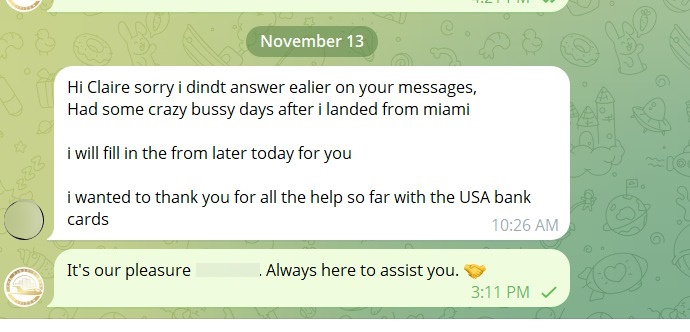
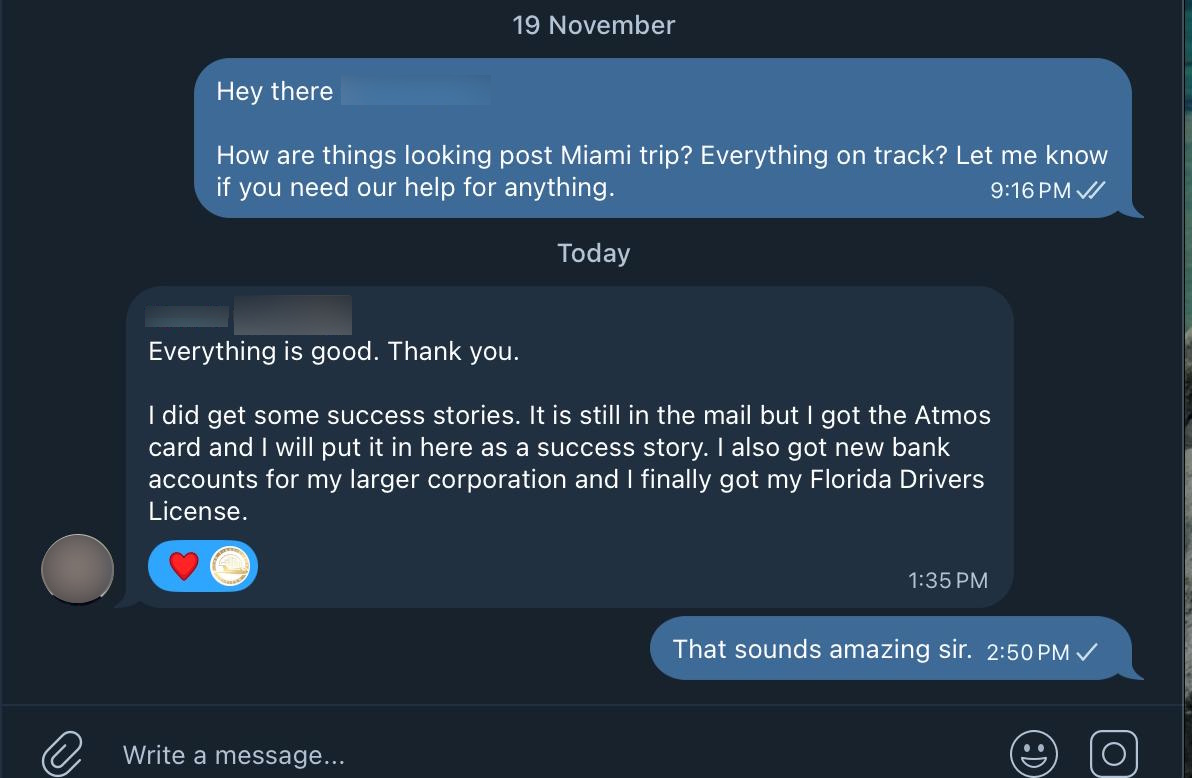



Real client wins, straight from the Hall of Wins.
The US credit series
The rest of the picture
- Find your routeTell it what you are trying to do and it maps the guides to read in order.
- ITIN document checklistPick your situation, get the exact list the IRS accepts.
- What it costsPublished prices and timelines, service by service.
- US credit calculatorWhat your spend returns at the rates issuers publish today.
FAQ
What is a US credit score?
Do I have a US credit score if I have never lived in the US?
What actually moves a US credit score?
How high do clients actually get, and how fast?
Is 750 a score their clients have reached?
Does heavy spending on a debit card build a US credit score?
Does First Class Citizen build the score for me?
What does the credit mentorship cost?
Find out what your file starts from
The assessment call covers where your credit file stands today, what the first reported account would be, and what the Miami visit involves. Free, qualified, and direct about what applies to you.
Book Your Assessment CallThis guide reports what the authorities and institutions involved publish, quoted, with the date each source was read. It is not tax, legal or immigration advice. Published rules change, and an individual case can turn on facts no page can see.

Founder & CEO, The First Class Citizen