
Banking a US LLC as a Non-Resident

A formed company is not yet a banked company. In the client record First Class Citizen publish on their Hall of Wins, the question arrives within days of every formation: now the bank account, now Stripe, what next.
The record's answer has two tracks. Fintech business accounts, Mercury and Wise among them, open remotely, in one published case two days after the EIN was issued.
Chartered banks, Chase and Bank of America among them, open in person, which is what the Miami visits in the record are for. Both tracks wait on the same three documents. Nothing here is a promise; it is what the published record shows.
Everything waits on the EIN
No account of any kind opens without the company's tax number. The EIN is the gate, which is why the formation record treats its arrival as the finish line: banks and payment platforms ask for it on the first screen.
The document set that repeats across the record is short. The stamped formation certificate. The operating agreement. The EIN confirmation from the IRS, as a CP575 letter or a 147C fax.
Plus the owner's passport. Those four appear in the client channels over and over, delivered as PDFs and then handed to whichever institution is next.
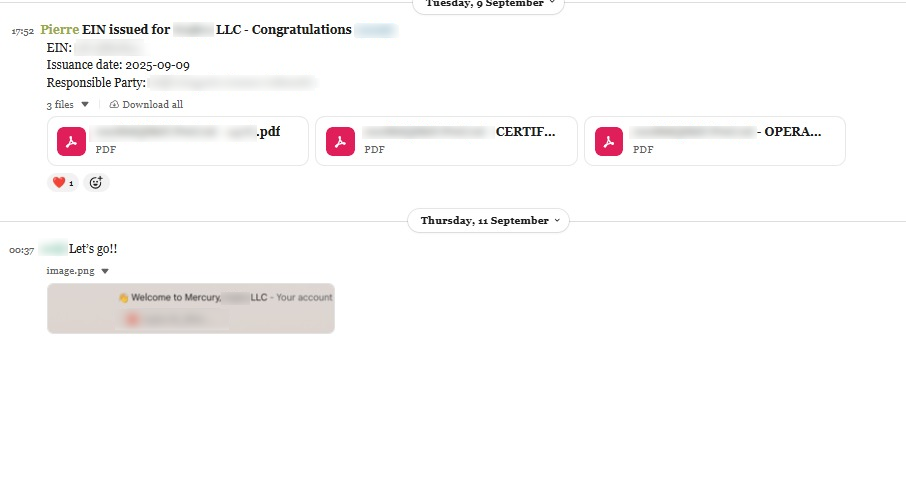
In one published case the sequence is visible end to end: EIN issued on the 9th of September with the certificate and operating agreement beside it, and a Mercury business account welcome two days later.
Which accounts your company actually needs, and in what order, is a fifteen minute conversation.
Book Your Assessment CallFintech accounts open remotely, and they stack
The remote tier is fintech: business accounts and payment platforms that onboard online. The names that appear in the published record are Mercury, Wise, Stripe, Payoneer, Relay and Revolut.
They also arrive in batches. One client's published checklist ticks off Stripe, Wise and Payoneer as approved with Revolut and Relay still pending, all part of one setup push.
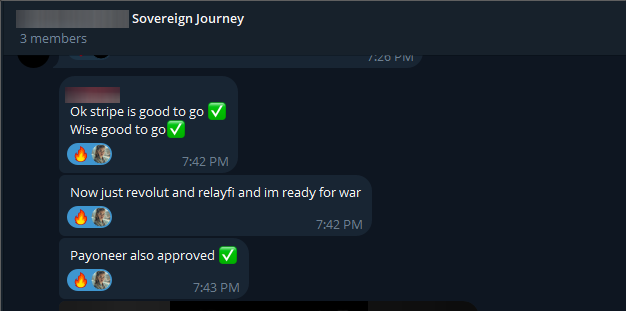
Two honest notes belong beside that screenshot. First, a fintech account is its own instrument, not a chartered bank, and which one fits depends on what the company does.
Second, onboarding requirements differ by institution and they change; the current picture of who asks for what is part of what the engagement maintains, and exactly the kind of moving detail a static page should not pretend to freeze.
Stripe deserves its own line because it is the reason many of these companies exist: in the record, a client's stated next step after the EIN is a US business account so Stripe can start taking payments. Company, number, account, payments, in that order.
Chartered banks happen in person
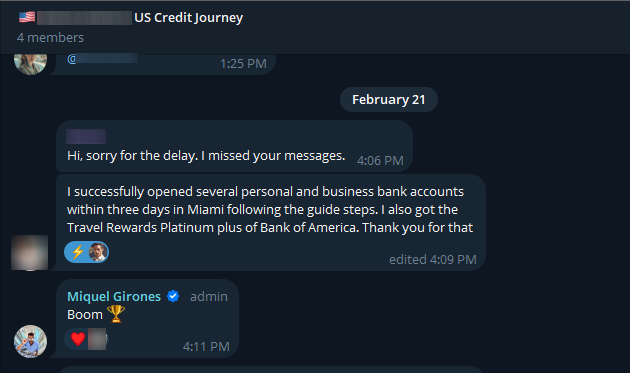
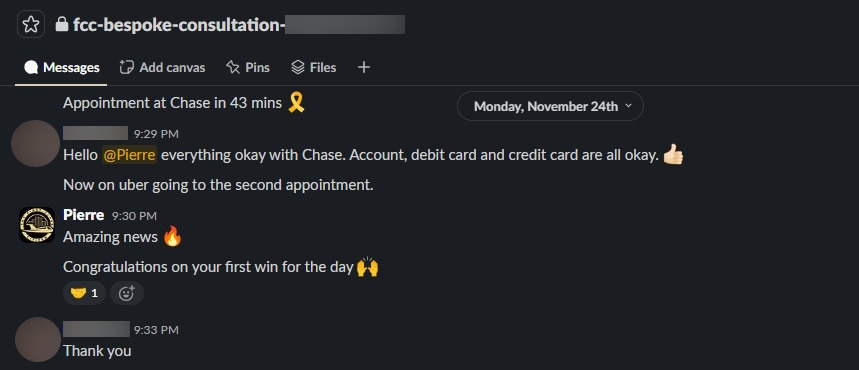
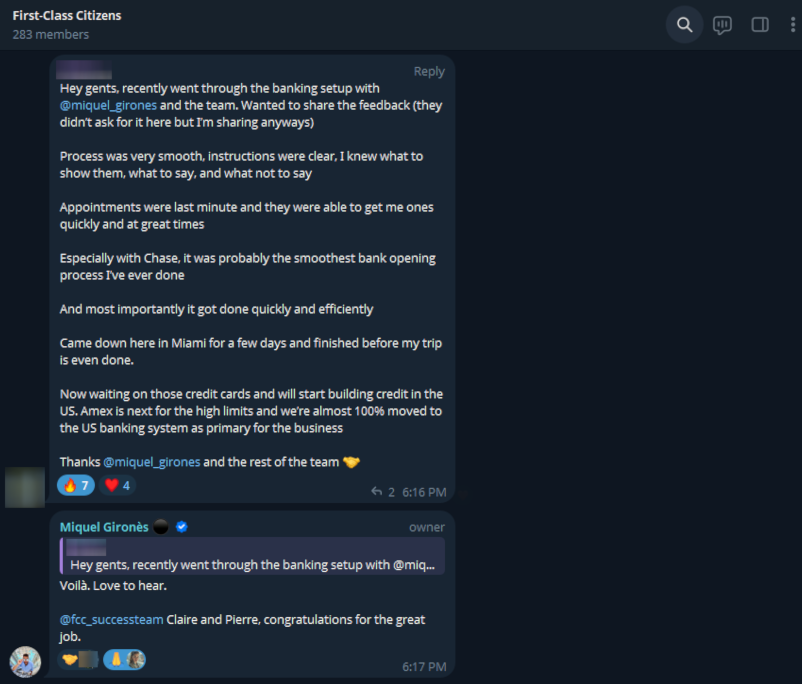
The Chase and Bank of America business accounts in the record were not opened from laptops. They were opened in branches, by arranged appointment, on the same Miami visits documented on the banking results page.
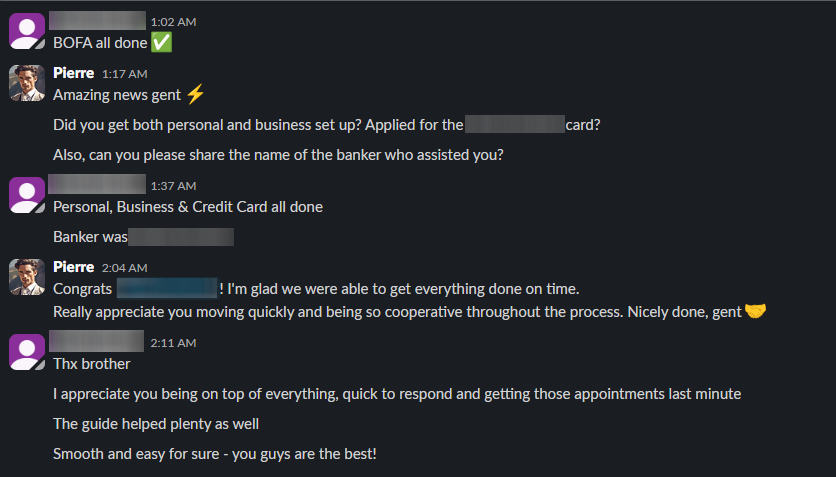
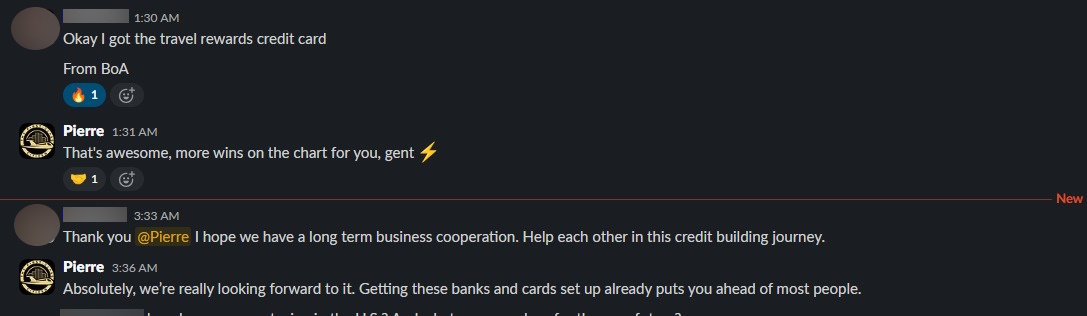
The published recaps show what one prepared trip collects: personal and business accounts at Bank of America and Chase in one visit, with cards following.
For the company that means a real chartered business account with a branch relationship behind it, sitting next to the remote fintech layer rather than replacing it.
Which track a company needs first is situational. The record shows clients running both: fintech for speed and payments, the branch visit for the chartered layer. What to bring into the branch is covered in the ITIN and US bank account guide.
What these screenshots do not show
Approvals are the published subset. Fintech onboarding includes compliance review, and the record itself shows accounts sitting in pending while others clear. A business description that does not read cleanly, or paperwork that does not match, stalls applications; the fix is preparation, not persistence.
Requirements move. Which institutions accept which addresses and documents is a picture that shifts under policy changes, and the engagement's job is to keep the client's setup matched to the current one.
This page deliberately states no bank-by-bank rules, because by the time you read them they may be wrong.
And every KYC step belongs to the owner personally. The structure, the paperwork and the order can be prepared for you; the identity checks are yours to pass. First Class Citizen set out the US LLC service this banking layer sits on here.
The paperwork is the same four documents everywhere. The order and the fit are where the call earns its place.
Book Your Assessment CallMore from the banking record
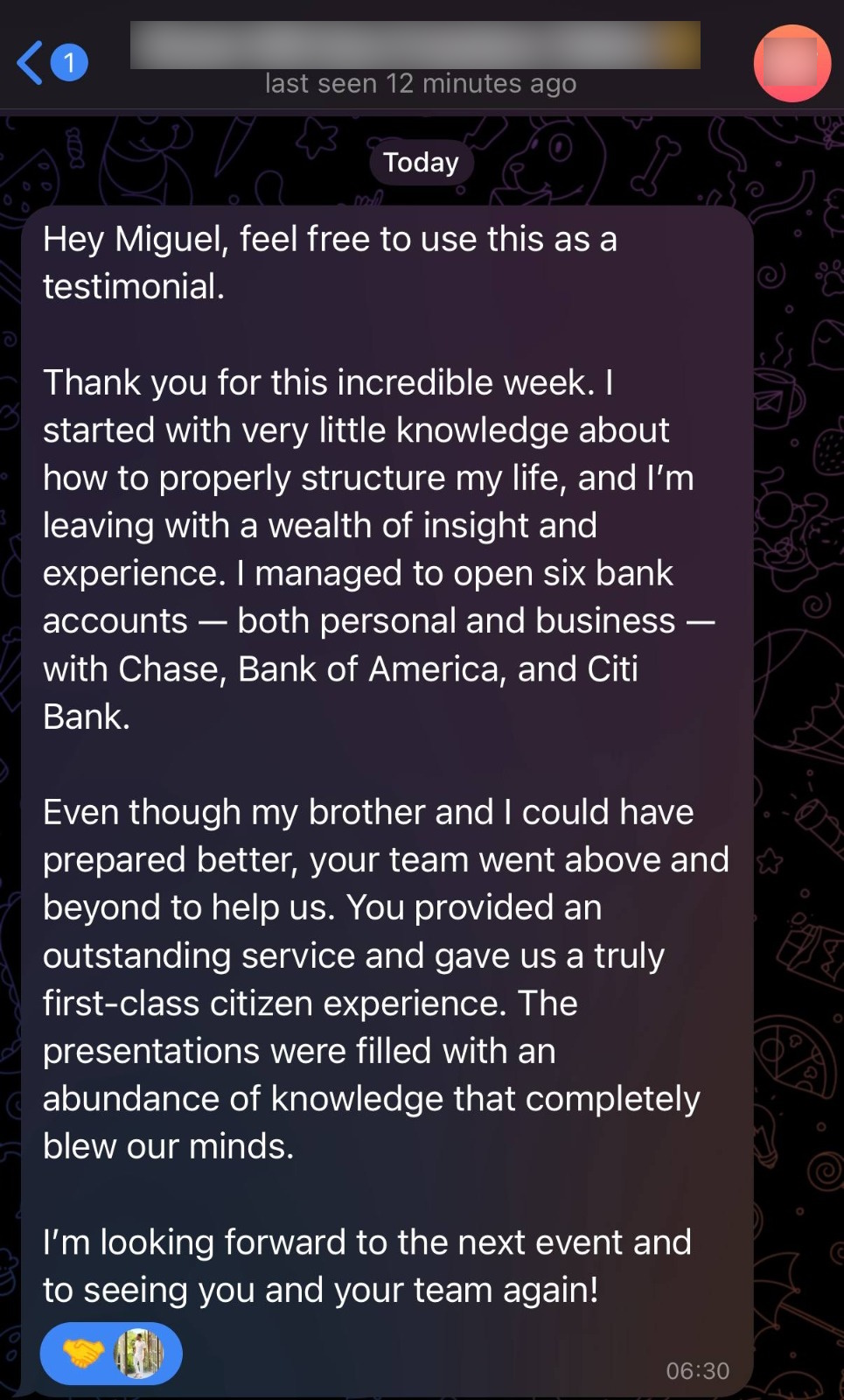




Real client wins, straight from the Hall of Wins.
The US company series
The rest of the picture
- Find your routeTell it what you are trying to do and it maps the guides to read in order.
- ITIN document checklistPick your situation, get the exact list the IRS accepts.
- What it costsPublished prices and timelines, service by service.
- US credit calculatorWhat your spend returns at the rates issuers publish today.
FAQ
How soon after forming a US LLC can it have a bank account?
What documents does the account opening actually need?
Which institutions appear in the record?
Can a chartered US bank account be opened fully remotely?
Is Stripe possible for a non-resident's US LLC?
Are these results guaranteed?
Find out what banking your company would look like
The assessment call goes through what your company does, which account layer fits first, and what the current onboarding picture looks like for your situation. Free, qualified, direct.
Book Your Assessment CallThis guide reports what the authorities and institutions involved publish, quoted, with the date each source was read. It is not tax, legal or immigration advice. Published rules change, and an individual case can turn on facts no page can see.

Founder & CEO, The First Class Citizen