
ITIN Acceptance Agents: The Application Route the IRS Publishes

The IRS authorizes two types of acceptance agents to help people apply for an ITIN, in the U.S. and abroad. One type helps complete and file Form W-7 but still sends original documents, or certified copies from the issuing agency, to the IRS. The other can also authenticate supporting documents, with published exceptions, and return them immediately.
The Instructions for Form W-7 list four ways to apply, in their own Where To Apply section: by mail, by private delivery services, in person, and through an acceptance agent.
What an agent is authorized to do with your documents, what the routes without one look like, and the clock that runs after any of them, are all published. Each is below, quoted from the page that publishes it.
One of four filing routes in the IRS's own list
Start with what is being applied for. An ITIN, the About Form W-7 page reads, is a 9-digit number issued by the U.S. Internal Revenue Service to individuals who are required for U.S. federal tax purposes to have a U.S. taxpayer identification number but who do not have and are not eligible to get a Social Security number. The same page states the form's purpose: use Form W-7 to apply for an ITIN, or to renew one that is expiring or has expired.
Then the routes. The instructions' Where To Apply section lists four ways to apply, in this order: by mail, by private delivery services, in person, and through an acceptance agent.
So the agent is not a requirement and not a workaround. It is one of four published ways to file the same form with the IRS, and what each route does with your documents is where they really differ, which is the next section.
The rules are published. Whether your facts fit them is the half worth a conversation.
Book Your Assessment CallWhat the IRS says an agent does to your Form W-7
The instructions' own structure matters here. You can also apply, they read, through one of the two types of acceptance agents authorized by the IRS. The two types differ in what happens to your documents, and the instructions publish both halves.
For the first type, the sentence is short: an AA can help you complete and file Form W-7. Its neighbor sentence is the one to read with it: an AA will need to submit original documentation or certified copies of the documentation from the issuing agency to the IRS for all applicants. Help with the form, in other words, does not by itself keep your passport out of the mail. The second type is the next section's subject.
The program page frames the whole route from the applicant's side: you can get help applying for an individual taxpayer identification number (ITIN) with an IRS-approved acceptance agent in the U.S. and abroad. IRS-approved is the load-bearing phrase. Agents are part of a program the IRS runs, with authorization levels the program page itself compares in a table.
The passport question most applicants are really asking
The W-7's document rule makes the passport central: if you submit an original valid passport or a certified copy from the issuing agency, the instructions read, you don't need to submit any other documents from the table.
One published exception rides with that rule, and most pages on this subject omit it: the passport isn't a stand-alone document for certain dependents if no date of entry into the United States is present. If the application is for a dependent, that sentence is the one to read twice.
Now the second type, the one people are usually searching for. For agents carrying its document authority, the program page's comparison column opens with these capabilities, flattened here as published: helps complete Form W-7; authenticates supporting documents, except foreign military ID cards and any documents for dependents that aren't passports and birth certificates; returns authenticated documents immediately; mails the ITIN application package to the IRS for processing.
Returns authenticated documents immediately is the sentence that matters. With that document authority, and for the document types it covers, the papers are examined and handed back on the spot, while the application package itself is mailed on to the IRS for processing. The exceptions are published in the same column: foreign military ID cards, and dependents' documents other than passports and birth certificates. Which authorization a given agent holds is published by the program, and the table itself is the receipt linked under this page's sources.
Without an agent, the instructions publish three alternatives. Send the original by mail. Take the documents to a designated IRS Taxpayer Assistance Center, which the instructions say can verify original documentation and certified copies and will return those documents to you immediately. Or send a certified copy, which the instructions define precisely: one that the original issuing agency provides and certifies as an exact copy of the original document and contains an official stamped seal from the agency, adding that you may be able to request one at an embassy or consulate.
The mail route those documents travel is published to the address level: mail Form W-7, your tax return if applicable or other documents required by an exception, and the supporting documentation, to Internal Revenue Service, ITIN Operation, P.O. Box 149342, Austin, TX 78714-9342.
Where agents are, Mexico included
The program page's geography is one phrase: in the U.S. and abroad. The IRS then publishes country listings, and they are listings in the literal sense, tables of names and street addresses.
Mexico has its own page. At the date this page's copy was archived, its table opened with an agent listed at Cancun, Quintana Roo. The list rotates, so what this page can honestly source is that the listing exists and carried agents with Mexican addresses on the archived date, not that any particular city is covered today.
The listings come with one reading key, published as the program page's own table footnote: acceptance agents are marked on the list with an asterisk. The marked entries are the first type from above, the one that submits your originals to the IRS. The unmarked entries hold the document authority.
The same discipline applies everywhere: the listings establish that agents exist in a country. They do not rank them, and neither does this page.
Two country pages show both ends of what that means in practice. Colombia has a populated listing, seven entries across four cities, one of them marked. And the IRS keeps a page for Venezuela that says, in its own words and with its own review date, that there is currently no agent listing for that country. An empty listing changes which route you start with. It does not remove the number.
Your facts first, then the number, then what the number unlocks.
Book Your Assessment CallThe published wait, and the return that rides along
The overview page publishes the wait plainly: allow 7 weeks for the IRS to notify you about your ITIN application status, and it can take 9 to 11 weeks if it's tax season, January 15 to April 30, or if you applied from overseas.
The overseas condition stands on its own in that sentence, tax season or not, so an application from abroad falls inside the condition the IRS attaches to the 9 to 11 week figure.
A filing route quotes a different number. First Class Citizen quotes clients 45 to 60 days on its done-for-you route today, and the ITIN timelines guide sets the two side by side. Its conclusion is the one to carry: the application clock itself stays the IRS's, and what a route changes is what happens when something goes wrong.
And the form rarely travels alone. To apply for a new ITIN, the instructions read, individuals must include a U.S. federal tax return unless they meet an exception, and the required documentation. Whichever of the four routes files it, that attachment rule is part of the same application.
CP566 and CP567, the two notices with deadlines
When an application stalls, the notice does the talking, and the two this page cites are the CP566 and the CP567. A CP566 means the IRS needs more information to process the application: you may have sent an incomplete form, or the wrong documents. Its deadline is published: you have 45 days from the date of your notice to reply, and if you don't, the application is rejected and a new one has to be submitted.
A CP567 is the rejection itself. Documents come back on a published clock there too: the IRS will return your documents within 60 days from your notice's date, with a phone number on the notice for the case where they don't arrive.
The full recovery path is on the rejected-application guide.
What this page will not do
Recommend an agent, or rank them. The IRS publishes listings with names and addresses; a ranking on top of that would be invention, and this page does not invent.
Quote a fee. No source this page cites publishes one, so no number appears here.
Promise that any route is faster or more likely to be approved. The published timeline is the one quoted above, and the sources this page cites attach no speed or approval claim to any filing route.
What this page is for is the shape: what an acceptance agent is authorized to do, what the routes without one require of your documents, and which clocks are published for what happens next.
The rules are published. Whether your facts fit them is the half worth a conversation.
Book Your Assessment CallClient wins from the Hall of Wins
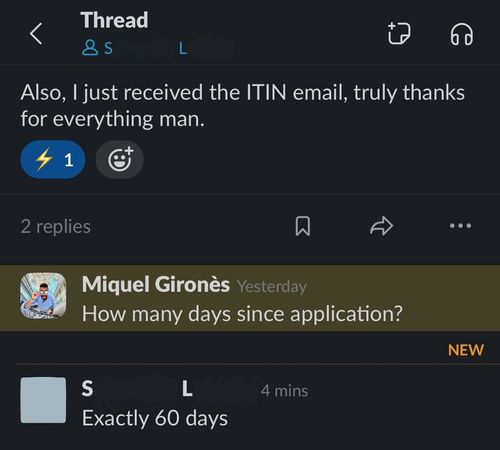
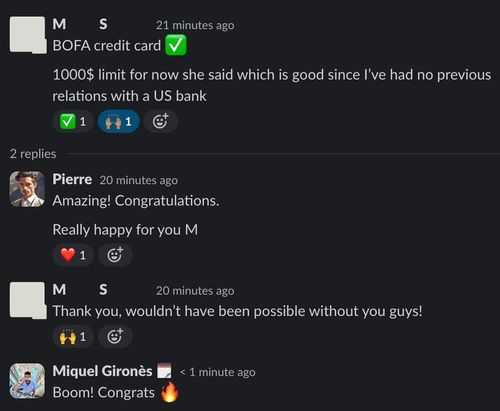

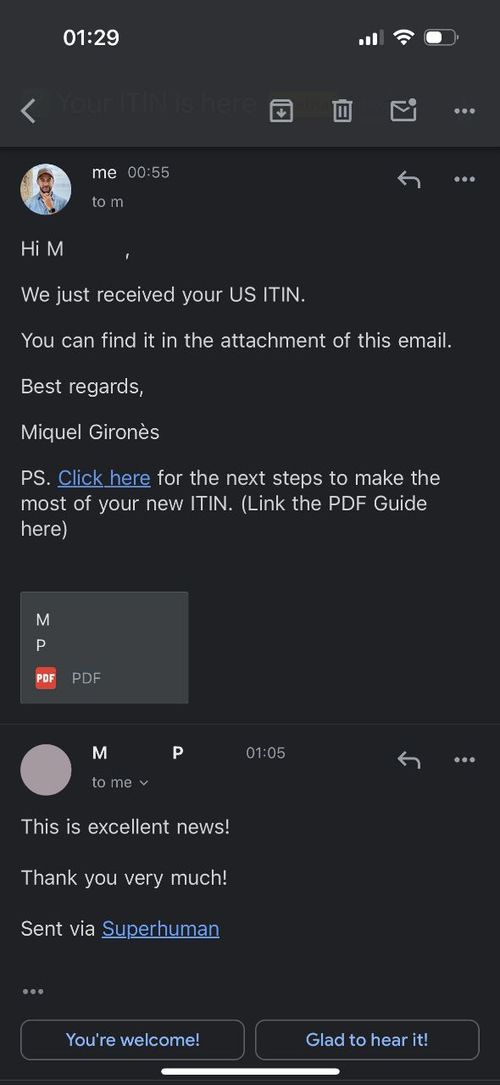

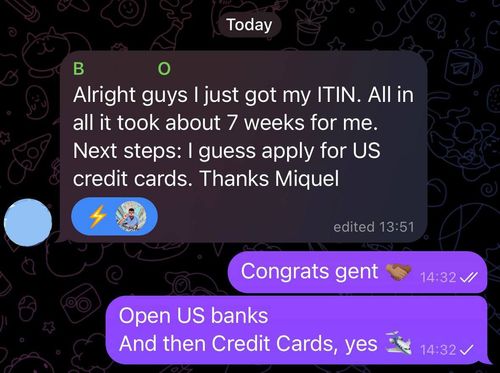



Real client wins, straight from the Hall of Wins.
The rest of the picture
- Find your routeTell it what you are trying to do and it maps the guides to read in order.
- ITIN document checklistPick your situation, get the exact list the IRS accepts.
- What it costsPublished prices and timelines, service by service.
- US credit calculatorWhat your spend returns at the rates issuers publish today.
FAQ
What is an ITIN acceptance agent?
Do I need an acceptance agent to get an ITIN?
Can I apply without mailing my passport?
Are there agents outside the United States?
How long does the ITIN take once the application is in?
Does the application still need a tax return attached?
Are the client results shown on this page guaranteed?
What happens if the application is rejected anyway?
Sources
The published pages this guide draws on, each read on the date shown.
An application is a set of facts
First Class Citizen's ITIN work starts from yours: what you hold, where you are, and what the number needs to unlock. The call establishes that first.
Book Your Assessment CallThis guide reports what the authorities and institutions involved publish, quoted, with the date each source was read. It is not tax, legal or immigration advice. Published rules change, and an individual case can turn on facts no page can see.

Founder & CEO, The First Class Citizen