
How to Get an ITIN: the Five Questions That Decide Your Route

There is no single way to get an ITIN. The Instructions for Form W-7 publish four places an application can go, and which one is yours is decided by your own facts rather than by preference. Most guides list the four. This one asks the questions that pick between them, in the order the instructions themselves resolve them.
- Are you eligible? The published test is about status and purpose, and nothing in it mentions a country.
- Does a tax return go with it? Attached by default, unless you meet one of the published exceptions.
- Is your passport enough on its own? Usually, with a stated bound, and one narrow case where it is not.
- Which route gives your documents back? This is the only question of the five where the answer costs money.
- Then what? The published wait, and the two notices that arrive when something is wrong.
Every answer below is the IRS's own text. Where a route publishes an inconvenient half beside a convenient one, both halves are here.
Are you eligible, and does your nationality change the answer?
The Instructions for Form W-7 open with a general rule. Any individual who isn't eligible to get an SSN but who must furnish a taxpayer identification number for U.S. tax purposes or to file a U.S. federal tax return must apply for an ITIN on Form W-7. Two conditions, and both have to hold: you are not eligible to get a Social Security number, which is a different thing from not having one, and you have a federal tax reason to need a number at all.
The instructions attach a step to that test, and it is easy to miss because it happens before the form does. If you have an application for an SSN pending, don't file Form W-7. Complete Form W-7 only if the SSA notifies you that you're ineligible for an SSN. If the SSA determines that you're not eligible for an SSN, you must get a letter of denial and attach it to your Form W-7. This applies whether you're attaching Form W-7 to your U.S. federal tax return or not.
One group has it stated more sharply again. Applicants receiving compensation for personal services performed in the United States, or issued a U.S. visa that's valid for employment, should first apply for an SSN with the SSA. Unless you're denied an SSN by the SSA and attach the denial letter to your Form W-7, you aren't eligible for an ITIN.
Read that test again and notice what is absent from it. It turns on status and on purpose. No country is named in it, and no country is named in the definition the IRS gives on About Form W-7 either, which describes an ITIN as a 9-digit number issued by the U.S. Internal Revenue Service to individuals who are required for U.S. federal tax purposes to have a U.S. taxpayer identification number but who do not have and are not eligible to get a Social Security number. Whatever passport you hold, the eligibility text you are being measured against is the same text.
The instructions then give examples, and the one covering most readers here is a nonresident alien individual not eligible for an SSN who is required to file a U.S. federal tax return, or who is filing a U.S. federal tax return to claim a refund or to report income. Another is a nonresident alien individual claiming reduced withholding under an applicable income tax treaty for which an ITIN is required. The instructions present these as examples rather than as a boundary.
Two more published sentences belong in this answer. From the overview page: if you're a resident alien, nonresident alien or their spouse or dependent, you can apply for an ITIN regardless of immigration status. And a narrower test for the people applying alongside a filer, from the same page: a spouse or dependent is only eligible for an ITIN if either they can be claimed for an allowable tax benefit, or they file their own tax return. The spouse and dependents guide works that second test through, and what an ITIN is covers the four things the IRS publishes that the number does not do, including that it does not provide or change immigration status.
What this page will not do is apply any of that to you. The text is quoted; the reading of it against a particular set of facts is a conversation.
The four routes are published. Which one your documents can actually survive is the half worth a conversation.
Book Your Assessment CallDoes a tax return have to go with the application?
By default, yes, and this surprises people who expect to get the number first and file with it later. To apply for a new ITIN, the instructions read, individuals applying for an ITIN must include a U.S. federal tax return unless they meet an exception, and the required documentation. The return is part of the application rather than a later step, and the phrase carrying all the weight is unless they meet an exception.
The exceptions are published and numbered, and they matter because they are the mechanism by which an application can travel without a return attached at all. One of the clearest is Exception 1(b), which the instructions describe as covering individuals who have opened an interest-bearing bank deposit account that generates income that's effectively connected with their U.S. trade or business and is subject to IRS information reporting and/or federal tax withholding.
An exception is not a lighter application. It substitutes one requirement for another, and the substitute is documentary. For 1(b), the instructions ask for an original signed letter from the bank on its official letterhead, displaying your name and stating that you've opened a business account that's subject to IRS information reporting and/or federal tax withholding on the interest generated during the current tax year. An original signed letter, on letterhead, naming you. That is a request to the bank before it is a request to the IRS.
Which case applies to you decides whether your application waits for a filing season or does not have to. The Form W-7 walkthrough takes the form itself line by line, and how nonresident aliens are taxed covers the filing question underneath this one, which is usually the real worry.
Is your passport enough on its own?
Usually it is, and the instructions say so in a sentence with a bound worth keeping attached. If you submit an original valid passport or a certified copy from the issuing agency, they read, you don't need to submit any other documents from the table. The last three words are the bound: the sentence is about the instructions' own documentation table, not a general statement that a passport is all any application ever needs.
Then the exception, and it is narrow but sharp. The passport isn't a stand-alone document for certain dependents if no date of entry into the United States is present. A family application can therefore be complete for the filer and short for a child on exactly that detail.
Certified copy has a published definition, and it is stricter than the phrase sounds. A certified copy of a document, the instructions state, is one that the original issuing agency provides and certifies as an exact copy of the original document and contains an official stamped seal from the agency. The issuing agency, not a notary. The same passage adds a route many people do not know exists: you may be able to request a certified copy of documents at an embassy or consulate.
Where you live changes the paperwork in several places in these instructions. The one most often quoted is also the one most often quoted without its bound, so here it is with the sentence that carries it. It sits inside a single application category, box f, the nonresident alien student, professor, or researcher. If you check this box, the instructions read, you must complete lines 6a, 6c, 6d, and 6g, and provide your passport with a valid U.S. visa. No U.S. visa needs to be provided if the foreign address is Canada, Mexico, or Bermuda.
Two things follow that a general reading of it gets wrong. The carve-out excuses a requirement that box f imposes in the first place, so it is not a statement that every other applicant needs a visa, and it is not a statement that these three countries are treated differently throughout. And the country list is not one list. For Exception documentation the instructions publish a narrower twin, five times over, naming two countries rather than three: a U.S. visa isn't required if the foreign address is in Canada or Mexico. A Bermuda address is inside the first and outside the second.
What both versions share is what they key on. The condition is the foreign address on the application, not the passport's country. Someone holding a Colombian passport and living in Mexico falls inside it; someone holding a Mexican passport and living in Colombia does not. Which rule reaches you is a question for the instructions themselves and for a professional reading of them.
Which of the four routes gives your documents back?
The instructions publish the four under a heading called Where To Apply: by mail, by private delivery services, in person, and through an acceptance agent. They are not four spellings of the same thing. They differ mainly in what happens to your original documents, and for anyone applying from outside the United States that is the whole question.
By mail. The instructions give the destination: mail Form W-7, your tax return if applicable or other documents required by an exception, and the documentation described under Supporting Documentation Requirements, to Internal Revenue Service, ITIN Operation, P.O. Box 149342, Austin, TX 78714-9342. Your documents travel. The IRS publishes a clock on their return as well as on the number, and it is shorter than the application band: if you mailed original supporting documents and haven't received them within 60 days, contact us. If no notice about the application arrives inside the 7-week or 9-to-11-week band, the same page says to contact them about that too.
By private delivery service, and note the address changes. If you use a private delivery service, the instructions direct the same package to Internal Revenue Service, ITIN Operation, Mail Stop 6090-AUSC, 3651 S. Interregional, Hwy 35, Austin, TX 78741-0000. A different street address, because a courier cannot deliver to a post office box. Sending a courier package to the mail address is a way to lose time on a technicality.
In person, and this is the route most guides skip. You can apply for your ITIN by visiting designated IRS Taxpayer Assistance Centers, the instructions read. They can verify original documentation and certified copies of the documentation from the issuing agency for primary and secondary applicants and their dependents, and for dependents they can verify passports, national identification cards, and birth certificates. These documents will be returned to you immediately.
The neighbouring sentences are the ones that decide whether that works for you, and they are published in the same passage. Service at these centres is by appointment only, with appointments scheduled by calling 844-545-5640, and the instructions point to IRS.gov/W7DocumentVerification for the list of designated centres offering the document authentication service. Then the half that must never be dropped: centres that don't offer ITIN document authentication service will mail the original documents, Form W-7, and the tax return to the IRS Austin Service Center for processing. Walking into the wrong office does not keep your passport in your pocket. It posts it.
Through an acceptance agent, which is two things and not one. You can also apply, the instructions read, through one of the two types of acceptance agents authorized by the IRS, and the two types differ in exactly the way this section is about. For the first, the published sentence is that an AA will need to submit original documentation or certified copies of the documentation from the issuing agency to the IRS for all applicants. Help with the form does not, by itself, keep your documents out of the mail.
The other type carries document authority, and the program page publishes what it does as a list: helps complete Form W-7, authenticates supporting documents except foreign military ID cards and any documents for dependents that aren't passports and birth certificates, returns authenticated documents immediately, and mails the ITIN application package to the IRS for processing. Those two exclusions are part of the published capability and travel with it. The program page also frames the reach of the route plainly: you can get help applying for an ITIN with an IRS-approved acceptance agent in the U.S. and abroad.
One sentence governs the money on this route, and it is the IRS's: fees for service may vary. No source cited on this page publishes a price for any route, and none of them states that any route carries no charge. The acceptance agent guide takes the routes and the published document handling further, and what an ITIN costs sets out what is actually known about the money.
Your facts first, then the route, then the number.
Book Your Assessment CallWhat happens once it is in, including when it goes wrong
The IRS publishes two figures on its overview page. Allow 7 weeks for us to notify you about your ITIN application status, and it can take 9-11 weeks if it's tax season, January 15 to April 30, or if you applied from overseas. The overseas condition stands on its own in that sentence, so an application sent from outside the United States sits inside the longer band whether or not it is tax season.
A filing route quotes a different number. First Class Citizen quotes clients 45 to 60 days on its done-for-you route today. The ITIN timelines guide sets the two side by side, and its conclusion is the one to carry here: the application clock itself stays the IRS's, and what a route changes is what happens when something goes wrong.
Which brings the two notices. A CP566 means the IRS wants more from you: we need more information to process your application for an individual taxpayer identification number, the notice reads, you may have sent us an incomplete form, you may have sent us the wrong documents. It carries a deadline in its own text. You have 45 days from the date of your notice to reply, and if you don't reply we will reject your application and you'll have to submit a new application for an ITIN. A CP566 is answerable. Ignored, it becomes the other notice.
A CP567 is the rejection, and it states three reasons: you may not be eligible for an ITIN, your documents may be invalid, or we may not have received a reply when we asked for more information. Two further published facts belong beside it. Your documents come back, on a stated clock: we will return your documents within 60 days from your notice's date, and call us at the number on your notice if you don't receive your documents by then. And the return you attached is not lost either: we'll process your return without an ITIN, the notice reads, and you'll need to reapply for an ITIN and attach a copy of the return to your application to get a refund.
That last sentence is the practical shape of a rejection. The filing is not undone, the refund is what waits, and the way to it is a new application with a copy of the return attached. What to do when an ITIN application is rejected takes both notices further, and after your ITIN arrives picks up on the other side.
What this page will not do
Tell you which route is yours. The five questions above are the IRS's own, and the answers are yours; putting them together for a particular set of facts is what a conversation is for.
Quote a fee, or call any route free. The only sentence any source here publishes about the money is that fees for service may vary, and no source cited on this page states that any route carries no charge.
Promise a faster result, or suggest any route is more likely to be approved. The only IRS timeline on this page is its own: 7 weeks, or 9 to 11 weeks in tax season or from overseas. The one other figure here is First Class Citizen's own published window, named as theirs, and not a route the IRS ranks.
Publish an approval rate, for any country or in general. The IRS publishes the reasons an application is rejected, in the CP567 notice quoted above. It does not publish a rate, and a number invented to fill that gap would be worth less than the gap.
Say anything about immigration beyond the IRS's own two sentences: that the groups it names can apply regardless of immigration status, and that an ITIN does not provide or change it. Everything past those two sentences belongs to an immigration professional.
Client wins from the Hall of Wins
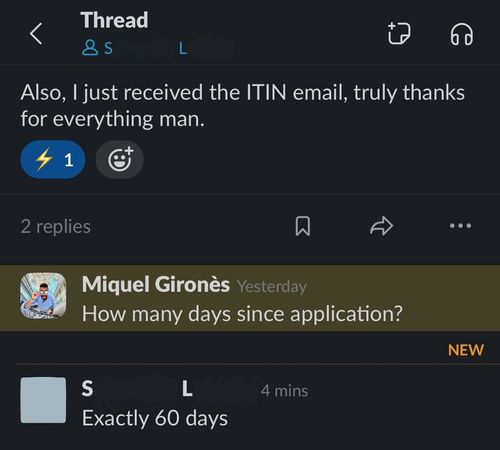
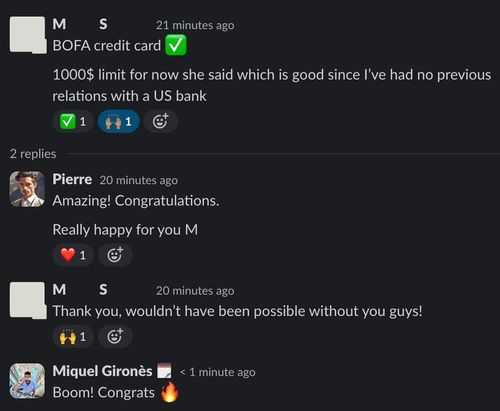

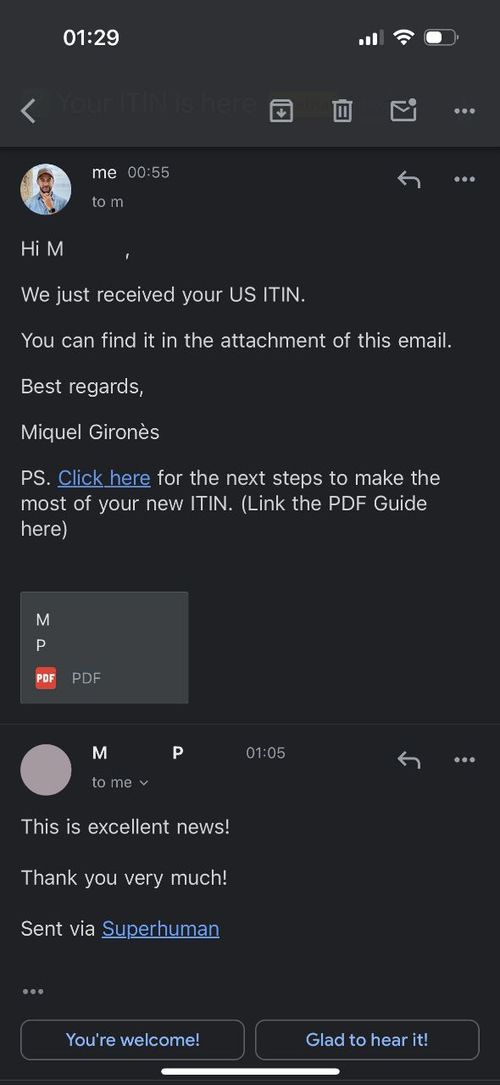

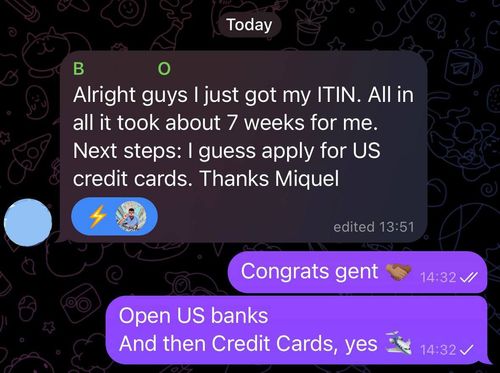



Real client wins, straight from the Hall of Wins.
The rest of the picture
- Find your routeTell it what you are trying to do and it maps the guides to read in order.
- ITIN document checklistPick your situation, get the exact list the IRS accepts.
- What it costsPublished prices and timelines, service by service.
- US credit calculatorWhat your spend returns at the rates issuers publish today.
FAQ
How do you apply for an ITIN?
What does an ITIN application need?
Where do you send Form W-7?
Can you get an ITIN without mailing your passport?
Do you need a US visa to apply for an ITIN?
Does ITIN eligibility depend on your country or nationality?
Can you apply for an ITIN without a tax return attached?
How long does an ITIN application take?
What happens if an ITIN application is rejected?
Are the client results shown on this page guaranteed?
Sources
The published pages this guide draws on, each read on the date shown.
The route is chosen from your facts, not from a list
First Class Citizen's ITIN work starts with what you hold and where you are, because that is what decides whether your documents travel and how long they are gone. The call establishes that before any paperwork moves.
Book Your Assessment CallThis guide reports what the authorities and institutions involved publish, quoted, with the date each source was read. It is not tax, legal or immigration advice. Published rules change, and an individual case can turn on facts no page can see.

Founder & CEO, The First Class Citizen