
También disponible en español: Formulario W-7
ITIN Form W-7: What It Is and What Goes With It

The W-7 is the application. The ITIN is what comes back from it. Almost everything people search for under the form's name is really a question about the application: what goes with it, how long it sits, and what makes it come back wrong.
On the done-for-you route you never fill it in. First Class Citizen publishes the sequence in four beats: a short form and payment, one document to sign inside the first week, the team takes care of the rest, and the number arrives by email.
What goes with it is a list of three. A passport photo or scan, a non-US address from any country, and an email. That is the whole list they publish.
Their published clock is 45 to 60 days. Their own published client results run from 37 days at the record end to three months and two days at the slow end, all of them on the same page.
What the W-7 is, and why their pages never name it
Start with what the number is, because the form only exists to produce it.
In their own published definition, an Individual Taxpayer Identification Number is a tax processing number issued by the Internal Revenue Service, issued to individuals who are required to have a US taxpayer identification number but who do not have, and are not eligible to obtain, a Social Security number from the Social Security Administration.
The form is the vehicle. The number and the letter that carries it are the deliverable, and their page names both: your ITIN number and the original IRS letter.
Here is the thing worth saying out loud. First Class Citizen's ITIN page never names the form at all, and neither does their FAQ post.
That is not an oversight so much as an accurate reflection of what their client actually does, which is fill in a two minute intake form and sign one document. The application is the team's job from that point.
The one place the form gets named in the published material is the renewal case, where the IRS's own instruction is that a renewal is the same form again with the renewal reason checked.
That is covered in the renewal guide, and it matters here for one reason only: the same form does two different jobs, and the paperwork that accompanies each of them is not the same conversation.
So if you came looking for a walk through the boxes, this page will not pretend to give you one. What it can give you is the part that decides outcomes: what gets handed over, in what order, and where the published record stops.
The three documents are the published part. What your own application is filed on is the part worth settling before you pay.
Book Your Assessment CallThe three things you hand over
Their published requirement list is unusually short, and it has not moved since we started tracking the page. A passport photo or scan. A non-US address, any country. An email address.
That is the done-for-you list. Filing the form yourself means the IRS's own list instead, which is longer and which the document checklist builds for your own situation.
That short list is the reason the intake takes minutes rather than an evening.
In the words of one of their published clients, Pedro A, whose account is the most detailed process narrative on their page: he sent a passport scan, an email and a mail address, the team submitted everything within minutes of his application, days later a document arrived from the IRS, and he signed it.
That signed document is beat two of their own published sequence, listed as signing a document within a week.
It is worth knowing it is coming, because it is the only published moment after payment where the file waits on you rather than on someone else.
One published requirement sits above all of it, and it is theirs, stated as a condition of the service: you must not be eligible for an SSN, which they define as not being a US resident, citizen or green card holder.
Whether you clear that bar is a fact about your own history and status, not something a page can decide, and it is the first thing the call settles.
The intake itself is a guided form covering identity, contact and invoice details, and then payment. Card, bank transfer inside and outside the US, and crypto are all accepted, with card the fastest of them.
The question their pages do not answer
This is the most-asked question on the open internet about the application, and we are going to leave it open rather than fill it in, because filling it in from anywhere other than the desk that files these would be the one unforgivable move on a page like this.
The question: does a US federal tax return have to accompany a first-time application, or does the applicant qualify under an exception instead. Their ITIN page does not answer it.
Their FAQ post does not answer it. It is not in the requirements block, not in the four-step process, and not in the list of what is included.
The only published mention of a return sitting alongside the form is the renewal case, where the IRS instruction is that the form goes in together with the tax return the ITIN will appear on, unless an exception applies.
That is a renewal. It is not a statement about your first application, and this page will not stretch it into one.
So the practical instruction is short. Ask what your own application is being filed on, and ask it before anything is paid. It is a question with a real answer; the answer just lives with the team rather than on a page.
The second unpublished item is smaller and costs more arguments: nothing on their page says what starts the 45 to 60 day clock.
Payment, your signature on the document in week one, or the submission itself. A buyer measures from the day the money leaves, so it is worth getting the start line named out loud.
Four things people get wrong about the application
One, treating the two minute form as the application. It is the intake. Their own published sequence has three more beats behind it, and the one that trips people is the document to sign in the first week. A file that stalls there stalls entirely, and it stalls silently.
Two, reading 45 to 60 days as a promise. It is the window they publish, set against their own line that some applications run past four months.
On the same page they publish client results at 37 days, 40 to 50 days, a month and a half, six weeks, and three months and two days. The route-by-route picture is in the timeline guide.
Three, assuming the number is permanent. Their pricing block publishes a three year validity and a renewal at the same price. Renewal is its own step with its own paperwork, and the time to know that is now rather than in year three.
Four, reading the no-travel claim as covering the banking. This is the expensive one. Their published claim is that automated workflows submit the application instantly and there is no need to step into the USA or to be a resident. That covers the application.
It does not cover what comes after it: step two of their own ladder is headed fly to the US and open bank accounts, naming Bank of America, Chase, JP Morgan and Wells Fargo.
The only published mention of accounts opened remotely is a client describing his own experience, not a claim the company makes. Two different statements, and people book flights on the difference.
Forty five to sixty days is the quote. What starts the clock is the question, and one conversation answers it.
Book Your Assessment CallWhat the number does not decide for you
Their FAQ carries one line on tax, and it is theirs, published on their own page: having an ITIN will not create a US filing liability and / or tax liability.
We republish that as their statement and stop there. What you owe, where you file, and what your own country makes of a US tax number are questions about your residence and your history, and no guide settles them, ours included.
If the answer matters to you, it is a conversation with your situation on the table.
The same discipline applies to the eligibility line. Not being eligible for an SSN is how they state the requirement for the service. It is a description of who the service is built for, not a verdict on your file.
And one absence worth naming, because you will look for it: no approval rate is published anywhere on their site, and neither is a published path for an application that comes back rejected.
That makes both of them call questions rather than numbers to read off a page. If your case has anything unusual in it, those two questions are worth more than every other line here.
What lands at the end, and what it costs
Their published deliverable is three items. IRS contacts to expedite it, listed as an inclusion. Your ITIN number and the original IRS letter, quoted at 45 to 60 days.
And once the number lands, access to their bonus material: a strategy for opening US bank accounts.
Worth flagging that the first of those three is sold as a headline inclusion and explained nowhere on the page. What it means for your file in practice is a fair thing to ask before you pay for it.
Delivery is by email, and their process block states the number is valid for three years.
Now the money, in that order deliberately, because the number means nothing until you know what is behind it. Their published price is 1,000 dollars, valid for three years, with the renewal at the same price and zero maintenance cost in between.
Their own framing of it: no more expensive calls with lawyers, no hidden costs, no surprise fees, and everything you need for less than the cost of one hour with a top-tier law firm.
Two things are not published beside that figure. Whether it is priced per person, and whether spouses or dependants are handled differently. If there is more than one applicant in your household, ask before you buy one.
And read the terms, because they are published somewhere other than where you will look. Their refund policy states that refund requests can be initiated within one business day of payment if a mistake has been made by the customer, assessed case by case.
Their cancellation policy states that if a cancellation request is made after service processing has commenced, refunds will not be granted.
Their delivery policy states that the estimated completion time is communicated to the client before the purchase of the service, which is your opening to get the clock named in writing.
Where the published record stops
Five things this page will not blur, gathered in one place so you can take them into the conversation as a list.
Whether a return or an exception accompanies a first application. What starts the 45 to 60 day clock. What happens if the application comes back rejected.
What approval rate they stand behind. And what the Express label implies, since the process block publishes the timeline as Express and no second tier appears anywhere on the page.
None of that is a knock on the service. It is a reading of what is published against what a buyer actually needs to decide, and the gap between those two is exactly the reason the call exists.
Every item on that list has an answer. None of them has a page.
The three documents are the published part. What your own application is filed on is the part worth settling before you pay.
Book Your Assessment CallWhat the number opens once it lands






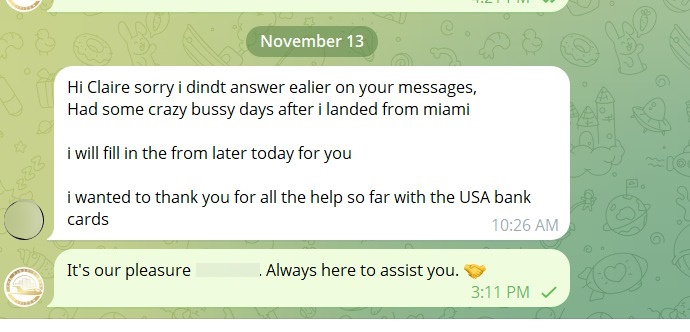
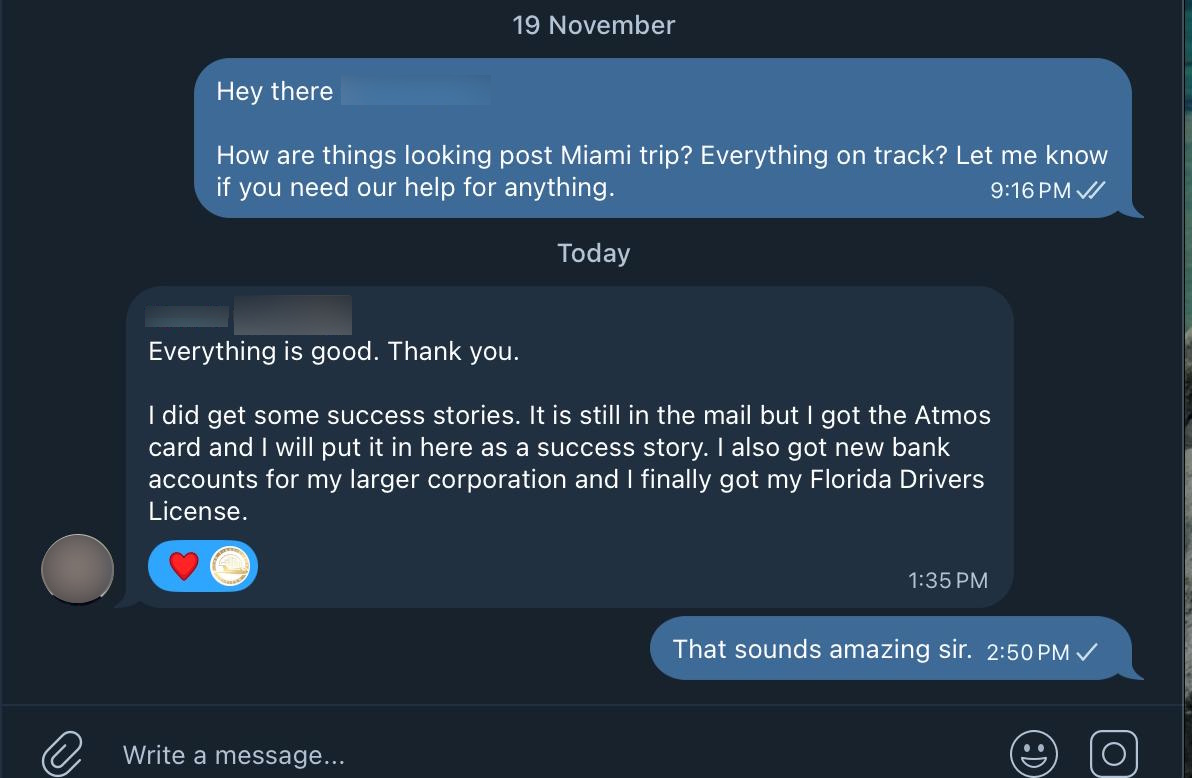



Real client wins, straight from the Hall of Wins.
The rest of the picture
- Find your routeTell it what you are trying to do and it maps the guides to read in order.
- ITIN document checklistPick your situation, get the exact list the IRS accepts.
- What it costsPublished prices and timelines, service by service.
- US credit calculatorWhat your spend returns at the rates issuers publish today.
FAQ
What is Form W-7?
What documents go with the application?
Do I have to attach a US tax return to the application?
Do I have to travel to the US to apply?
How long does the application take?
Does having an ITIN mean I have to file US taxes?
How long is the number valid, and what does renewal cost?
What does the done-for-you application cost?
Get your own application mapped before you pay for it
The published record covers what they need from you and what comes back. What it does not cover is what your own filing rests on, when your clock starts, and what happens if it comes back. The assessment call covers all three. Free, qualified, and direct about what applies to you.
Book Your Assessment CallThis guide reports what the authorities and institutions involved publish, quoted, with the date each source was read. It is not tax, legal or immigration advice. Published rules change, and an individual case can turn on facts no page can see.

Founder & CEO, The First Class Citizen