
ITIN for a Spouse or Dependents

Everything First Class Citizen publishes about the ITIN describes one applicant. One passport scan, one address, one email, one number arriving by email at the end.
Read their service page and their ITIN FAQ end to end and the words spouse, dependent, child, family and household do not appear on either of them. Not once.
That absence is the honest answer this page can give. There is no published family rate, no published joint application, no published rule about who else in a household may apply. So none is stated here, and nothing is borrowed from elsewhere to fill the hole.
What follows is the published material, read closely, so you arrive at the conversation knowing exactly which questions are already answered and which ones only a person can answer.
What their pages actually say about family applications
There are two places First Class Citizen describes this service in public. The ITIN service page, and the ITIN FAQ post. Both were read in full on 26 July 2026, and the second turns out to be the first one repeated, so there is really only one source and it is short.
The definition they publish is about individuals, and it is worth reading in their exact words: an Individual Taxpayer Identification Number (ITIN) is a tax processing number issued by the Internal Revenue Service. The IRS issues ITINs to individuals who are required to have a U.S. taxpayer identification number but who do not have, and are not eligible to obtain, a Social Security number (SSN) from the Social Security Administration (SSA).
The requirement they state is written the same way, in the singular, about the person in front of them: you must not be eligible for an SSN (not US resident, citizen, or green card holder). That is their published requirement, quoted as theirs. Whether a particular person in your household meets it is not something a page can decide, and it is not worth guessing at.
Plenty of pages elsewhere will tell you confidently what the rules are for a wife, a husband or a child. This one will not, because the material behind it does not cover it. A blank you can see is worth more than a confident sentence nobody stands behind.
Whether a second person in the household can apply the same way is a question for the team, not for a page.
Book Your Assessment CallWhat a single application involves, start to finish
This part is published in detail, and it is the part most people are actually trying to picture when they ask about a second applicant.
Three things are asked for. A passport photo or scan. A non-US address, and their page says any address. An email.
The process is published as four steps. Fill a form in two minutes and pay. Sign a document within a week. They take care of the rest. Then, in 45 to 60 days on the express route, the ITIN arrives by email, valid three years.
Nobody flies anywhere for this. In their own words: we use automated workflows that instantly submit your application. No need to step into the USA or being resident. How that is done behind the scenes is not something they publish, and it is not invented here.
Look at that list again with a household in mind. Every item belongs to one person. One passport, one email address, one document to sign, one number to arrive. Whether two applications for the same household can run side by side, and what that changes about the paperwork, is not stated anywhere on their pages. It is a direct question, and it deserves a direct answer from the team rather than an assumption from a guide.
How long each number takes, on their own published record
The quoted window is 45 to 60 days. Their comparison line puts it against the alternative: while some ITINs take +4 months, you’ll have yours in 45-60 days.
On the same page, clients publish their own results, and the page publishes all of them rather than only the fastest. Antonio Leao is published as the record at 37 days. Thor M. reports within six weeks. Davide Vignoli reports one month and two weeks. Michael Niziolek reports 40 to 50 days. And Pedro A, on the same page as all of them, writes that he got his ITIN in three months and two days.
So the quote is 45 to 60 days and the published outcomes run from 37 days to a little over three months. That is not a contradiction, it is the reason a household is planning around two numbers that they publish together.
One more detail worth noticing in their own wording. The 45 to 60 day timeline is labelled express. No second, slower or lower-priced route is published anywhere on the page, so this guide does not claim one exists. Whether the current range still holds for applications filed today is the kind of thing to have confirmed by the team on the call, because it moves with the IRS and not with anybody's marketing.
What the number opens once it lands
Their first step describes what the number is for: the equivalent of a SSN for non-residents. Allows you to open bank accounts and start building credit history. The better your Credit Score the better credit cards you can access.
Their FAQ puts the same thing as a list of what you gain access to: open a bank account, build credit score, buy a house, have a US driving license, and get a loan. Two of those are household-scale items rather than personal admin, and that is usually why the second-applicant question comes up in the first place.
Then comes the step people skim, and it matters most to a couple. Their second step is titled fly to the US and open bank accounts, naming Bank of America, Chase, JP Morgan and Wells Fargo, followed by first credit cards and the start of a credit history. First Class Citizen frames the personal account opening as done in person, on the ground in the United States. One client, Andrew Menechian, writes on that same page that he got his bank accounts remotely. That is his account of his own case, published as a testimonial. It is not a claim the company makes, and it is not a promise to anyone else.
The rest of the ladder is theirs to state and worth quoting rather than paraphrasing: with our proven strategies, increase your credit score up to 750 in 6 months, then top tier cards such as Chase Sapphire or American Express Platinum, then combining the setup with an LLC for business funding. Whether any of that happens for a given person depends on the person.
The practical household reading is simple. If the plan involves two adults with American bank accounts, a trip is part of the plan according to their own page, and it is better priced into the calendar early than discovered late.
One conversation settles what is published, what it covers, and what applies to your household.
Book Your Assessment CallWhat is published on price, and the line that is missing
Now the number, because it means very little before the paragraphs above. Their pricing block publishes 1,000 dollars, valid for three years, same renewal price, and beside it zero dollars with no maintenance cost.
Their own framing of that, verbatim: no more expensive calls with lawyers, hidden costs, or surprise fees. We provide everything you need for less than the cost of 1 hour with a top-tier law firm.
Here is the missing line, and it is the one a family actually needs. Their page does not say whether that figure covers one applicant or more than one. There is no spouse rate, no dependent rate and no household rate published anywhere on it. This guide will not state one, because stating one would mean making it up. Get it confirmed before you plan a budget around it.
One more thing worth reading before anyone pays for two of anything. Refunds are not covered on the service page at all. They sit in the Terms of Service, which state that refund requests can be initiated within one business day of payment if a mistake has been made by the customer, assessed case by case, and that once service processing has commenced, refunds will not be granted. Whether that policy is the one governing this specific service is worth asking out loud rather than assuming.
The questions this page leaves open on purpose
Six things a household wants to know that their published material does not answer. Each one is left blank here rather than filled in from somewhere else.
- Whether a spouse who cannot obtain a Social Security number applies on exactly the same basis as anyone else. Not addressed.
- Whether children or other dependents are handled at all. Not addressed.
- Whether the published price is per applicant. Not stated.
- Whether two applications from one household can be filed together, and whether that changes the timing or the paperwork. Not stated.
- Whether anything has to accompany an application beyond the three items they list. Their pages do not raise it, so this page does not answer it.
- What happens if the IRS does not approve an application. No rejection path and no approval rate is published.
Every one of those is a short answer from somebody who files these every week, and a bad guess from a page. That is the entire reason the call exists, and it is why this guide would rather be visibly incomplete than quietly wrong.
What to have ready so a household gets one clear answer
Four things to have in front of you, and they take five minutes to assemble.
Who in the household actually needs a US tax number and what for, whether that is banking, a property purchase or a business. Whose passports are current. What date you are working back from, if there is one. And whether a US LLC is already in the picture, because that changes the order of everything else.
Then ask the four questions this page could not answer. Is the published price per applicant. Can two applications run at the same time. What has the real range been for applications filed recently. And what happens if one is not approved.
What no call and no page will do is decide your tax position for you. Their own page carries this statement about the number itself: having an ITIN will not create a US filing liability and / or tax liability. That is First Class Citizen’s published statement, quoted as theirs and nothing more. What is actually true for you depends on where you live, what you own and what you have filed before, which is a conversation with somebody qualified rather than a sentence on a page.
Whether a second person in the household can apply the same way is a question for the team, not for a page.
Book Your Assessment CallWhat the number opens, in clients' own screenshots
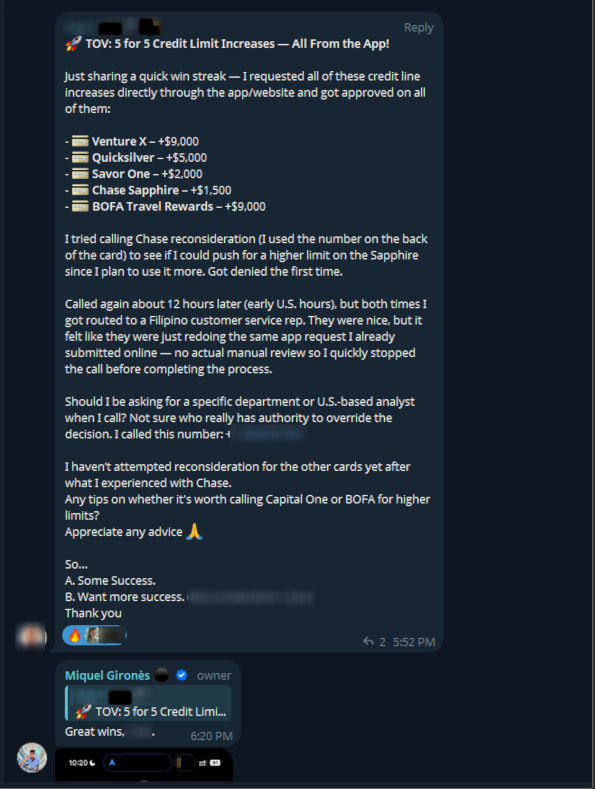
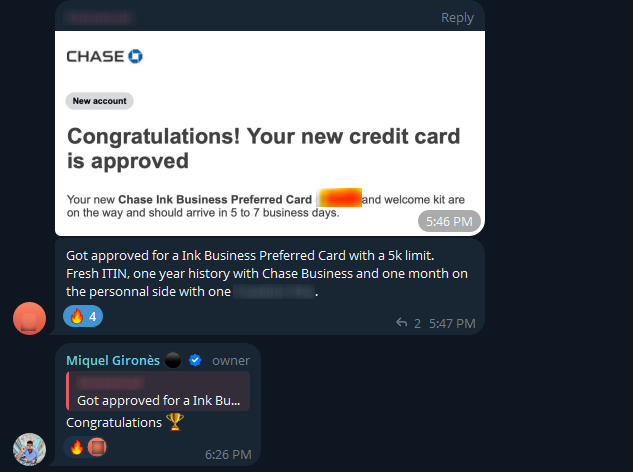


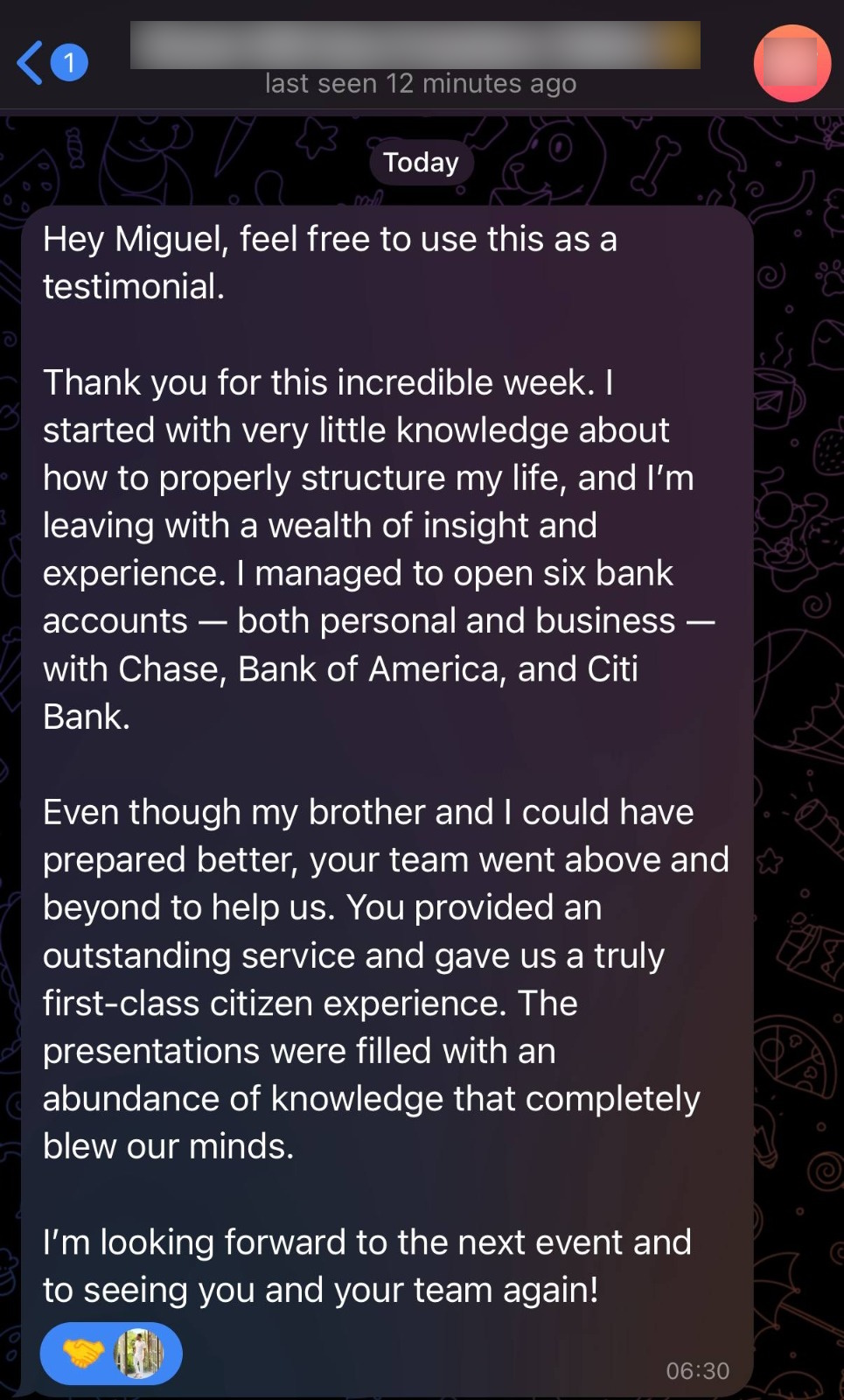
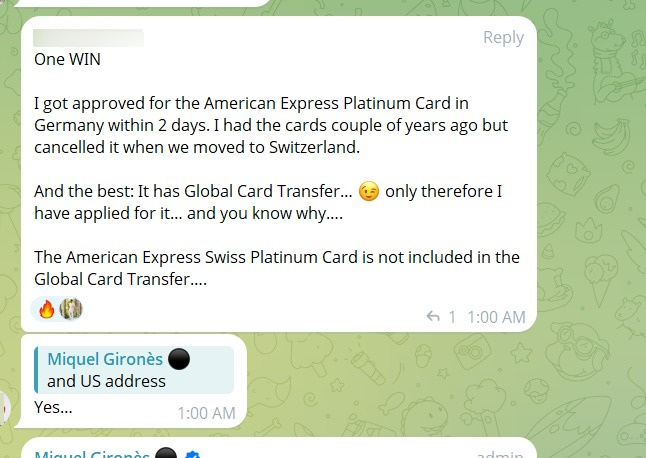
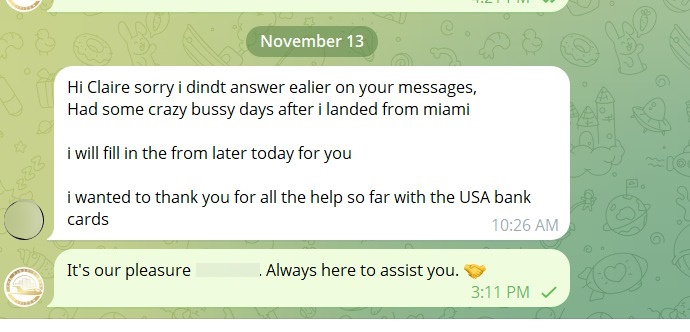
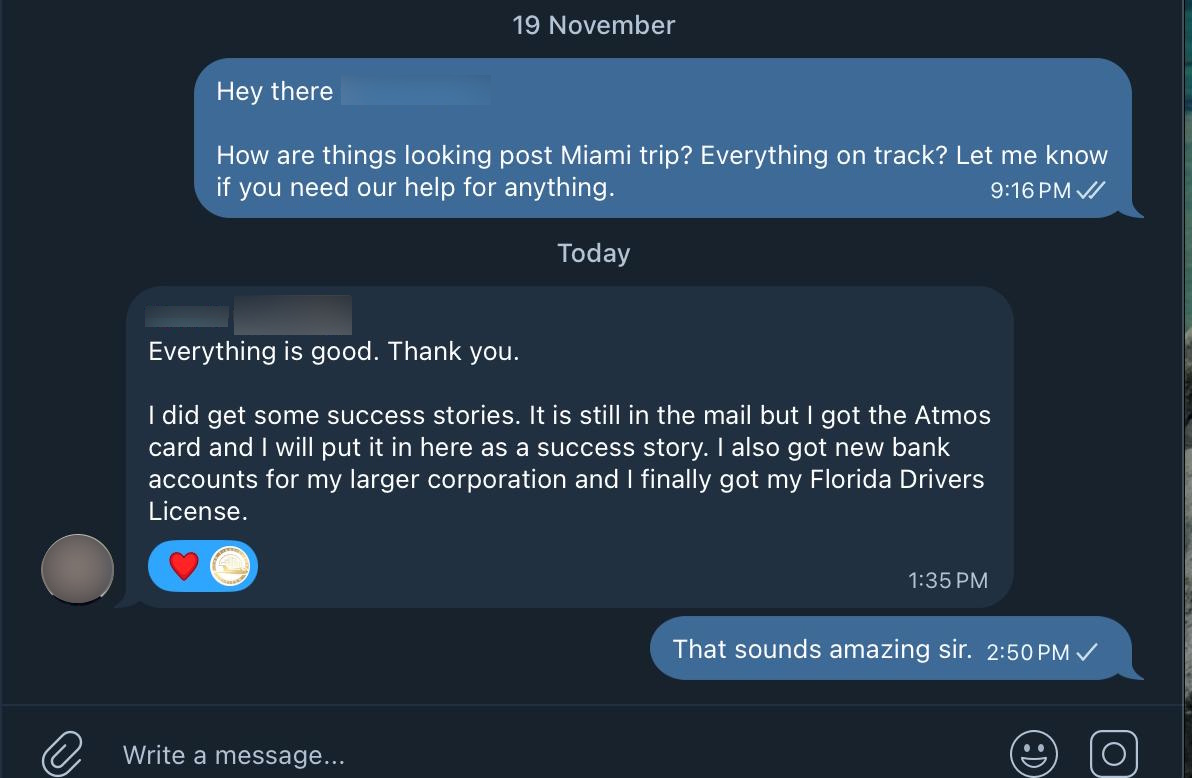



Real client wins, straight from the Hall of Wins.
The rest of the picture
- Find your routeTell it what you are trying to do and it maps the guides to read in order.
- ITIN document checklistPick your situation, get the exact list the IRS accepts.
- What it costsPublished prices and timelines, service by service.
- US credit calculatorWhat your spend returns at the rates issuers publish today.
FAQ
Can my spouse get an ITIN through First Class Citizen as well?
Are children or dependents covered?
Is there a family or per-household price?
What does First Class Citizen publish as the requirement to apply?
What do they ask each applicant to provide?
Do we have to travel to the United States?
How long does each ITIN take?
Does having an ITIN mean the family has to file US taxes?
Get the household questions answered once
The assessment call covers who in your situation actually needs a US tax number, what the timing looks like right now, and what the published price covers. Free, direct, and clear about the parts no page can answer.
Book Your Assessment CallThis guide reports what the authorities and institutions involved publish, quoted, with the date each source was read. It is not tax, legal or immigration advice. Published rules change, and an individual case can turn on facts no page can see.

Founder & CEO, The First Class Citizen