
The Registered Agent and the Address That Comes With It

First Class Citizen's formation answer puts a registered agent on the list of things a US LLC needs before it exists. Their published list is quoted in full further down, exactly as they print it, oddities included.
You bring the name and some basic information. The other two arrive with the package. Their inclusion list reads Registered Agent and Virtual Address in the Selected State, and their summary version adds the only benefit they claim for the agent, which is more privacy.
Both are tied to the state you pick on the form. Choose Wyoming or Delaware, and the address sits in that state.
The post is handled rather than lost. Their FAQ answers yes to mail forwarding, and yes to mail received by the company being scanned and uploaded to your dashboard.
What their service page and FAQ never do is explain the machinery behind the agent. This page does not invent it either. It sets it out from Wyoming's statutes and Delaware's code, below.
What their own formation list asks for
Start with the sentence that does the work, quoted as they publish it. Their list runs company name, business address, registered agent, share count, par value, registered agent and incorporator, and closes with nothing else being required by law to create a corporation.
That is their list as printed. The registered agent appears on it twice, share count and par value are stock vocabulary, and the closing word is corporation inside an answer about an LLC. All of it is reported here as found rather than corrected in silence, because a tidied quote is not a quote.
Read that list as somebody living outside the United States and one thing stands out. Two of the items describe where the company can be reached, and their inclusion list is specific about where that is. The address sits in the state you select, not wherever you happen to be.
Which makes those two the items you cannot supply from your own desk. It is also why they are not sold as extras. On their own list they are part of what makes the formation possible at all, and both appear inside the package rather than on a menu of add-ons.
So the honest description of what you are buying here is not a convenience. It is a required piece of the filing, on their own accounting of it, handled quietly enough that most buyers never think about it twice.
What their pages do not set out is what the agent receives on the company's behalf, what it is responsible for, or what each state asks of it. The states publish exactly that, and the next section quotes them.
The agent and the address arrive with the company. What they cover is worth confirming before you pay, not after.
Book Your Assessment CallWhat a registered agent actually is, in the states' own words
Wyoming's LLC Act settles the first question in one sentence. Each limited liability company, it reads, shall have and continuously maintain in this state a registered office and a registered agent.
So the agent is not a service invention. It is a statutory floor, and the Registered Offices and Agents Act, which the LLC Act adopts by reference, says who can stand on it: the registered office must be a street address in Wyoming, a physical location where the agent or a person acting for them is physically present to accept service of process.
An individual agent must be at least eighteen, reside in the state, and keep a business office identical with the registered office. That tracks the statute's own terms.
What the agent does is its own section of the statute, headed duties of the registered agent. Maintain the physical address. Accept service of process. Maintain the address of record where every legal delivery for each represented entity lands.
Service of process is the plain-English center of the whole job. It is how a lawsuit, a subpoena or official state mail reaches a company, and the statute's design is that there is always one address in the state where that delivery works.
Wyoming also defines a commercial registered agent. Its Secretary of State writes that these are registered agents representing more than ten businesses in Wyoming, and the statute hangs extra registration duties on that threshold. Whether a given provider's agent is one is a fact about that provider, and not something their pages state.
Delaware's code asks for the same two things. Each limited liability company shall have and maintain in the State of Delaware a registered office and a registered agent for service of process, with a business office identical with that registered office.
Their Division of Corporations puts it without the statute's grammar: maintain a street address and office located in Delaware, open during normal business hours, for the purpose of accepting service of process. The same page adds a line worth knowing as a buyer, that registered agents are not regulated by the State of Delaware.
None of that is First Class Citizen's claim, and none of it needed to be. It is the two states' own published law, and it is why the agent sits inside the formation package rather than on a menu of extras.
A virtual address in the state you select
Their wording is exact and worth keeping exact. Virtual Address in the Selected State.
The selected state is a field on the intake form, and the form is short. Choose your LLC name. Choose your state of registration. Provide some basic information. Pay for the service. Their published timing for that form is under two minutes.
What happens next is quick by design. In their own words, their robots start handling all the paperwork for you, instantly. They handle the formation process and submit the forms to the federal agencies, progress is trackable online, and the initial paperwork arrives in as little as 24 to 48 hours.
So the address is not chosen separately and it is not chosen later. It follows the state, and the state is one field in a two minute form that starts a process measured in hours. Their comparison offers two states and labels both a top pick: Wyoming for lower annual operating costs and flexibility, Delaware for a startup ecosystem and the legal protections for shareholders that come with it. Which one suits what you are actually building is a decision of its own, and it is covered in Wyoming or Delaware.
Two things about that address are not published anywhere, and both are the sort of thing people assume rather than ask. Whether it can serve as your business address with banks, processors or clients is not stated. Whether anything other than company post can arrive there is not stated either. Ask rather than assume, on both.
Where the company's post actually goes
An address that collects post you never see is not an address. It is a hole. Their FAQ deals with that directly, in two answers of one word each.
Is mail forwarding included? Yes. Can the mail received by the LLC be scanned and uploaded to my dashboard? Yes.
The dashboard is the Sovereign Lounge. The one-folder-per-company detail comes from their 2023 FAQ answer, written when documents lived in a shared drive and the Lounge was still a roadmap item, so treat the folder mechanics as dated even though the destination stands.
Now the part worth flagging, because it is a real gap rather than a detail. Mail forwarding is answered yes in their FAQ, and it does not appear on either inclusion list on their service page. Neither list itemises it. That does not make it untrue, and it does make it worth a direct question before you pay: is forwarding inside the set-up fee, or arranged separately?
Also unpublished, and in the same category: where post is forwarded to, how often, whether physical originals can be sent on, and whether any of it carries a cost. Four short questions, none of them answered in public, all of them quick to put to their team.
One field on a two minute form decides where both of them sit. Far easier to choose than to change.
Book Your Assessment CallThe small version, which is the accurate one
Their inclusion list carries exactly two words of benefit next to the agent. More privacy.
That is the whole published claim, and it is worth staying inside it. What appears on a company filing, and what does not, is a technical subject that differs from state to state, and none of it is set out on their service page or in their LLC FAQ.
So this page says what is published and stops. A registered agent is included. They label the benefit more privacy. What that produces on any particular filing in any particular state is not something their material states, and it is not something a guide should improvise on a subject where being confidently wrong has consequences that land on you rather than on the writer.
The reader-specific half is simpler still. Whether any of this touches an obligation you personally carry, anywhere, depends entirely on your own situation and history. That is a conversation, not a paragraph, and it is one of the things the call exists to settle.
Why this gets settled before the form, not after
Everything above converges on one practical point. The agent and the address are downstream of a single field, and that field sits inside a form built to take two minutes.
Their published policies are the other half of the picture, and they are short. Refund requests can be initiated within one business day of payment if a mistake has been made by the customer, with eligibility assessed case by case. Cancellations are considered on the validity of the reason given, and once service processing has commenced, refunds are not granted. Their delivery policy adds that completion time depends on the service selected and is communicated to the client before purchase.
Set that against their own description of what happens after payment, which is that the paperwork starts instantly. The window between choosing a state and being registered in it is genuinely narrow, and narrow is the point of the product rather than a flaw in it.
Whether the state, and therefore the agent and the address, can be changed afterwards is not addressed on either page. The company can be dissolved at any point, they write, and the cost of doing that is not published either. Which is the whole argument for having this settled in advance, on a short call, rather than discovered afterwards.
What the agent and the address cost, in context
The number comes last on purpose, because it means very little until you know what sits underneath it.
First Class Citizen publishes a one-time set-up fee of $1,000 and a yearly maintenance fee of $299. The set-up fee covers the registered agent, the virtual address in the selected state, all filing fees and expedited processing, the incorporation documents in 24 to 48 hours, the EIN, and direct access to Miquel Gironès' team through Telegram. The annual filing and paperwork sit with the maintenance fee, with the first year included.
Their own framing of the figure is that there are no hidden costs and no surprise fees. They also publish, plainly, that the brand does not offer discounts, while leaving room for bonuses or credits toward future services on occasion, particularly for existing clients. Payment is accepted in US dollars, euro and pound sterling, and in crypto.
What the pricing does not do is itemise, and that is worth saying rather than smoothing over. There is one set-up figure rather than a figure per state. The maintenance fee is described as annual filing and paperwork rather than as a list. Whether the agent and the address renew inside that yearly figure, and when it first charges, are not published anywhere. Both are worth asking, and both are the kind of question their team answers in a sentence.
The agent and the address arrive with the company. What they cover is worth confirming before you pay, not after.
Book Your Assessment CallWhat their pages do not settle
Five things this page will not fill in, because they are not published and a confident guess about a company filing is worse than a blank.
What the agent actually does. The role is named on their formation list and included in the package. What it receives on the company's behalf, and what any given state asks of it, is not written down anywhere on their pages.
Whether mail forwarding is inside the fee. Answered yes in the FAQ, absent from both inclusion lists on the service page.
What the address may be used for. Its role on the filing is clear. Its use with banks, processors or clients is not addressed either way.
What the yearly fee renews. Annual filing and paperwork are named. The agent and the address are not named inside that figure, and no first-charge date is published.
What happens if the yearly fee lapses. Not addressed. Neither is moving an existing company from one state to another.
None of that is a reason to hesitate over forming the company. It is a reason to spend ten minutes on the questions first, with the list in your hand, which is exactly what the call is for.
Client wins from the Hall of Wins
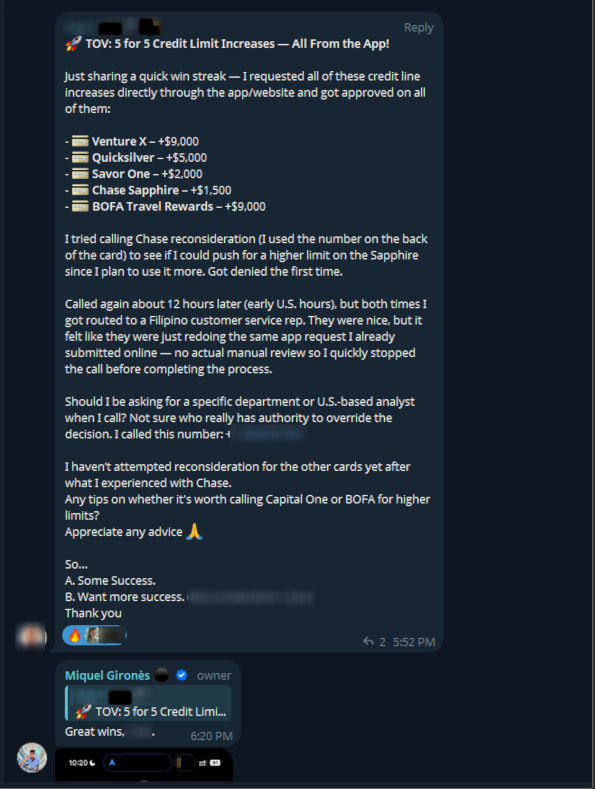
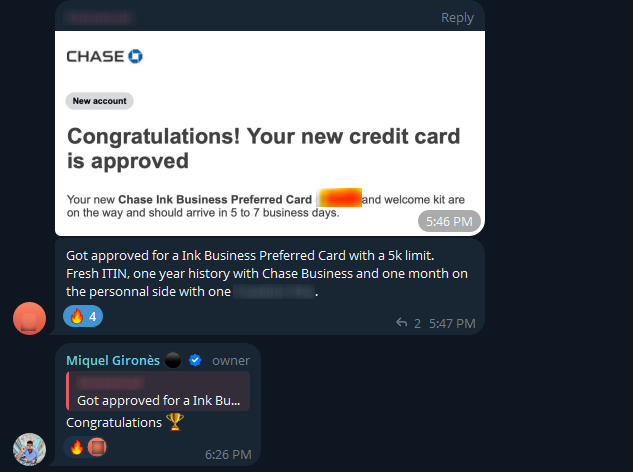





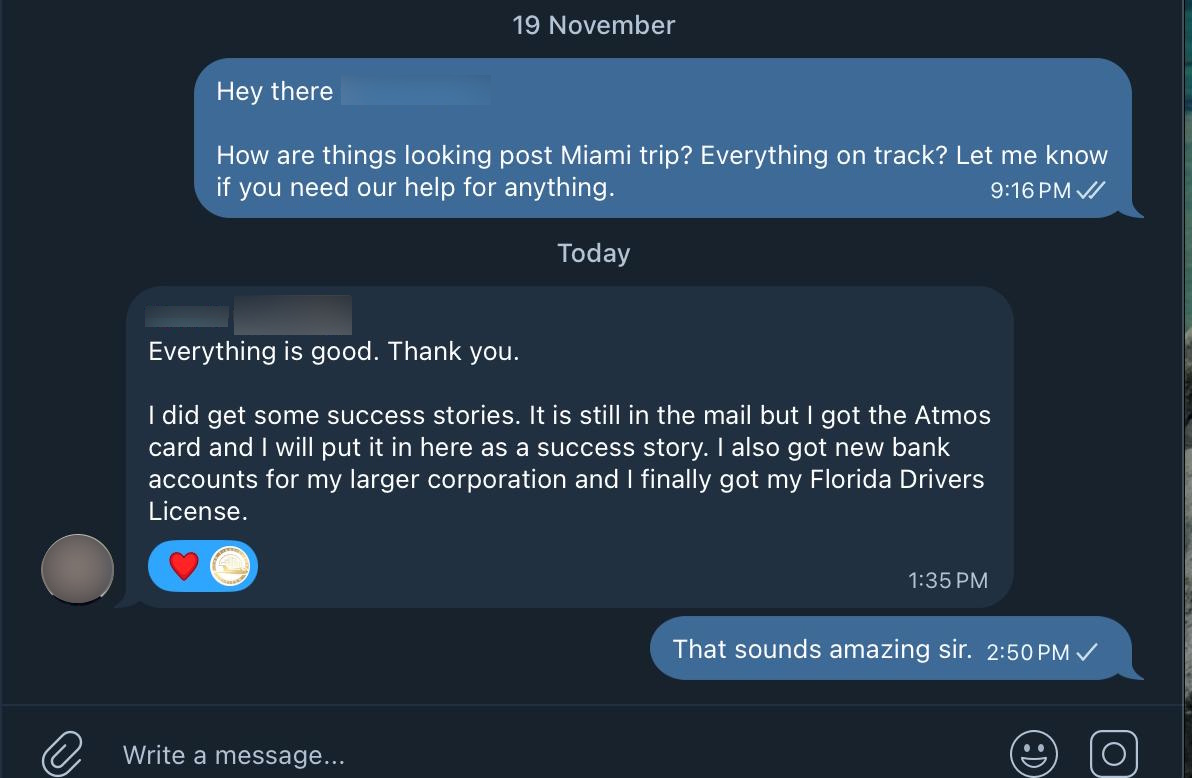

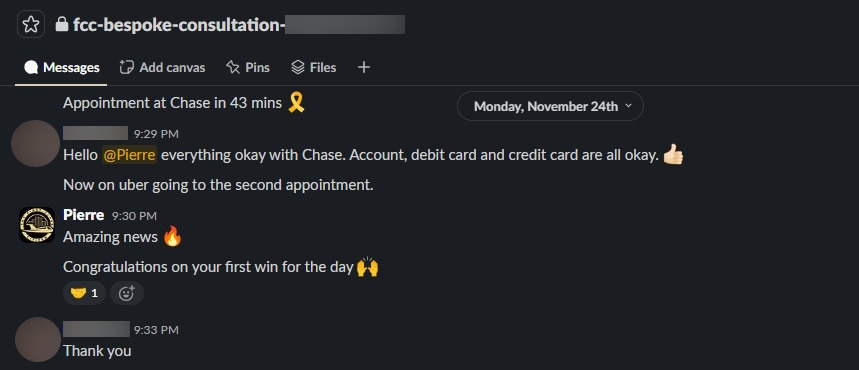

Real client wins, straight from the Hall of Wins.
The rest of the picture
- Find your routeTell it what you are trying to do and it maps the guides to read in order.
- ITIN document checklistPick your situation, get the exact list the IRS accepts.
- What it costsPublished prices and timelines, service by service.
- US credit calculatorWhat your spend returns at the rates issuers publish today.
FAQ
What is a registered agent, and is one included?
What is the virtual address for?
Is mail forwarding included?
Do the agent and the address depend on which state I choose?
Does a registered agent make an LLC anonymous?
What does the LLC package cost?
What does the yearly fee actually renew?
Can I change the state, and the address with it, after the company is formed?
Sources
The published pages this guide draws on, each read on the date shown.
- wyoleg.gov read 2026-08-01
- sos.wyo.gov read 2026-08-01
- delcode.delaware.gov read 2026-08-01
- corp.delaware.gov read 2026-08-01
Settle the address questions before the form
The assessment call covers which state your agent and address would sit in, what the package carries in the year after formation, and the questions their pages leave open. Free, qualified, and direct about what applies to you.
Book Your Assessment CallThis guide reports what the authorities and institutions involved publish, quoted, with the date each source was read. It is not tax, legal or immigration advice. Published rules change, and an individual case can turn on facts no page can see.

Founder & CEO, The First Class Citizen