
Wyoming or Delaware, for a Non-Resident LLC

First Class Citizen puts both states on their own comparison and labels both of them a top pick. That is not indecision. It is the actual answer, because the two states are answering two different questions.
They recommend Wyoming for LLCs, on lower annual operating costs and flexibility, with no corporate income tax and no annual franchise tax. That is the case for a company built to trade.
They recommend Delaware for a startup ecosystem, on strong legal protections for shareholders and strong business laws, with no state income tax if you operate in other states. Their FAQ adds the line that usually settles it: investors prefer Delaware, if you are going to look for angel investors or venture capital.
What neither state does is decide your tax bill. An LLC is a pass-through, and as their page puts it, as a non-US citizen you pay taxes where you have your residency.
What First Class Citizen publishes about each state
Their comparison is two cards, and the wording on each is short enough to take at face value.
Wyoming. Recommended for LLCs, on lower annual operating costs and flexibility. No corporate income tax or annual franchise tax.
Delaware. Recommended for a startup ecosystem, on strong legal protections for shareholders and strong business laws. No state income tax if you operate in other states.
Read those twice and the shape of the decision appears. Neither card argues about tax outcomes for the owner. One is about the cost and flexibility of running the thing. The other is about who is going to read your paperwork later and what they expect to see.
Both cards carry a top-pick badge on their own page. Nobody is being steered. The question they are quietly asking you is what kind of company you are building, and that question has an answer before you get anywhere near a form.
On camera, Miquel Gironès puts it this way, at 1:53 of The EASIEST Off-Shore Bank In The World?! (2026):
So if you have a company in Wyoming, in Delaware, these are the most popular.
Two top picks, two different companies. Which one you are building is the actual question.
Book Your Assessment CallWhat each state publishes, side by side
The section above is what First Class Citizen publishes. This is what the two states publish about themselves, in their own filing pages and their own statutes, with a link to each one under the table.
| Wyoming | Delaware | |
|---|---|---|
| Filing fee to form | $100.001 | $110.002 |
| The annual payment | $60, for assets of $300,000 or less3 | $400 6 Del. C. 18-11074$300.00 Division of Corporations5Both are published. This page does not choose between them. |
| How it is calculated | On assets located and employed in the state6 | A flat sum, not asset-based |
| Annual report | not in the pages read for this guide | None. LLCs formed there do not file one7 |
| When the annual payment is due | not in the pages read for this guide | 1 June, following the close of the calendar year8 |
| Missing it | not in the pages read for this guide | $2009 |
| Registered agent | Required, continuously10 | Required11 |
| Who regulates the agent | Agents with more than 10 clients register as Commercial Registered Agents12 | Not regulated by the State of Delaware13 |
| Processing time | Up to 15 business days from receipt14 | not in the pages read for this guide |
Delaware publishes more about its annual tax than Wyoming publishes about its license tax, so four cells here name what was not read rather than filling the gap. A blank would have looked like a nil. It is not one.
Every figure above, and where it was published:
- sos.wyo.gov read 2026-08-05
- corpfiles.delaware.gov read 2026-08-05
- sos.wyo.gov read 2026-08-01
- delcode.delaware.gov read 2026-08-05
- corp.delaware.gov read 2026-08-05
- sos.wyo.gov read 2026-08-01
- corp.delaware.gov read 2026-08-05
- delcode.delaware.gov read 2026-08-05
- delcode.delaware.gov read 2026-08-05
- wyoleg.gov read 2026-08-01
- delcode.delaware.gov read 2026-08-01
- sos.wyo.gov read 2026-08-01
- corp.delaware.gov read 2026-08-01
- sos.wyo.gov read 2026-08-05
One cell in that table is worth more than the rest of the page. Delaware states its own annual tax twice and the two figures do not match, so the table prints both and picks neither. A comparison that quietly chose one of them would read cleaner and would be worth less.
Who the Wyoming LLC is for
Wyoming is the one their page recommends for LLCs specifically, and the reason they give is running cost rather than tax cleverness. Lower annual operating costs and flexibility, with no corporate income tax and no annual franchise tax at the state level.
That fits the founder whose company exists in order to invoice. Clients pay the company, the company holds the banking, the company keeps running next year and the year after. Nothing about that job needs a courtroom or a term sheet, and everything about it is sensitive to what the structure costs to carry.
There is a second Wyoming point in their FAQ, and it is a structural one. The shares in a Wyoming LLC can be held inside another Wyoming LLC or a Wyoming Trust, for additional asset protection. That is a layer above the company rather than a feature of it, and their own page names the direction of travel: more complex setups such as holdings or trusts, as a later step rather than a first one.
On privacy, the only thing worth repeating is what their inclusion list actually says. A registered agent is included, and they list it as more privacy. They leave it at those two words, which is a smaller claim than the internet usually makes about Wyoming.
One number their service page and their LLC FAQ never publish is what Wyoming's annual report actually costs. The state itself does: Wyoming's Secretary of State publishes an annual report license tax of sixty dollars or two-tenths of one mill on the dollar of assets located and employed in Wyoming, whichever is greater, and states plainly that an entity with three hundred thousand dollars or less in assets pays sixty dollars. That is the state's own schedule, not First Class Citizen's fee, and whether it sits inside their maintenance fee is exactly the kind of question to put to their team before you pay.
Who the Delaware LLC is for
Delaware earns its place on their comparison for a different reason entirely, and it has almost nothing to do with the first year of trading.
Their card names strong legal protections for shareholders and strong business laws, and their FAQ fills in the mechanics: Delaware does not impose income tax on corporations registered in the state which do not do business in the state, and shareholders who do not reside in Delaware need not pay tax on shares in the state. Corporations is their word, quoted as printed, in an answer about LLCs.
Then comes the sentence that decides it for most people who choose Delaware. Investors prefer Delaware, if you are going to look for angel investors or venture capital. That is the whole case, stated plainly by the people selling it. You are not buying a tax position. You are buying a paperwork format that the people you intend to raise money from already know how to read.
Which makes this a question about your next five years rather than your next five invoices, on their own framing: the raising route points one way, the operating-cost route points the other.
One gap worth naming, because it is the first thing an informed buyer will look for. Their Wyoming card explicitly says no annual franchise tax. Their Delaware card says nothing about a franchise tax in either direction. That silence is a question for their team before you pay, and this page is not going to fill it in.
The state is one field on a two minute form. It is far easier to choose than to change.
Book Your Assessment CallThe parts that are identical either way
A surprising amount of what people think rides on this decision does not ride on it at all. On their own published terms, the following is the same in both states.
What you need to form it. Their FAQ's printed list runs company name, business address, registered agent, share count, par value, registered agent and incorporator, closing with nothing else required by law to create a corporation. The duplication and the stock vocabulary are theirs, quoted as found, and the list is the same whichever state you pick.
The formation itself. Incorporation documents in 24 to 48 hours, published with no state distinction anywhere on the page. Their own terms add the sensible caveat that completion time depends on the service and is communicated to the client before purchase.
The EIN. Their page describes submitting your forms to the federal agencies, and publishes no state-by-state difference for that number. The timing is covered on the US LLC guide, which is also where the rest of what the EIN unlocks lives: business banking, and payment processors such as Stripe or PayPal.
What comes with it. A registered agent and a virtual address in the state you select. Mail forwarded, and mail scanned and uploaded to their Sovereign Lounge dashboard, with the one-folder-per-company detail coming from their 2023 FAQ answer, and questions answered through a private channel to Miquel Gironès' team rather than an email queue.
The year after. The annual filing and paperwork are handled as part of the engagement, with the first year included. The company can be dissolved at any point.
What their pass-through wording says about the states
This is where the state choice gets loaded with weight it cannot carry, so it is worth being exact.
An LLC allows for pass-through taxation. Its income is not taxed at the entity level. Any income or loss passes through to the owner or owners, who report it on their personal returns and pay any necessary tax where they have their residency. That is First Class Citizen's own published mechanic, and it applies whichever state is on the certificate.
So read the two cards for what they say and not for what they imply. No corporate income tax in Wyoming, and no Delaware state income tax if you operate in other states, are statements about state-level company tax. They are not statements about what the owner owes in the country the owner actually lives in.
Their own worked example is Paraguay. A resident there, on their published example, reports LLC profit as foreign income and does not need to pay tax on it. That is a territorial tax system doing the work, not the state on the paperwork, and it is their example rather than a description of you.
What your own position would be depends on where you are resident, what your current country does about people who leave, and what you actually do for a living. No page can answer that, and any page that tries is guessing about a stranger. It is the first thing the call settles, and it is worth settling before the state question, not after.
Where the choice actually gets made
Here is the practical reason to have this decided in advance, and it is the part their page states without drawing attention to it.
The state is part of step one of the intake. Choose your LLC name. Choose your state of registration. Provide some basic information. Pay for the service. The form is published as a two minute job, and the state is one field inside it.
What happens next is fast by design. Their own wording is that their robots start handling all the paperwork for you, instantly, and the incorporation documents follow inside 24 to 48 hours. That speed is the product. It also means the window between paying and being incorporated somewhere specific is genuinely short.
Their published policies are the other half of the picture. Refund requests can be initiated within one business day of payment if a mistake has been made by the customer, with eligibility assessed case by case. Cancellations are considered on the validity of the reason given, and once service processing has commenced, refunds are not granted.
Whether changing your mind about the state counts as that kind of mistake, and what it costs once the filing has gone in, is not published on their service page or in their LLC FAQ. Which is the whole argument for treating this as a decision to make before the form rather than during it. Their team is reachable directly, and this is exactly the sort of question to put to them first.
Two top picks, two different companies. Which one you are building is the actual question.
Book Your Assessment CallWhat it costs, in either state
Everything above comes before the number on purpose, because the figure only makes sense once you know what sits under it. What is being bought is not a filing. It is the company plus the year that follows it.
First Class Citizen publishes a one-time set-up fee of $1,000 and a yearly maintenance fee of $299. The set-up covers the registered agent, the virtual address in the state you select, the incorporation documents in 24 to 48 hours, the EIN, and direct access to Miquel Gironès' team through Telegram. All filing fees and expedited processing are listed as included. The annual filing and paperwork sit under the maintenance fee, with the first year included.
They also publish, plainly, that the brand does not offer discounts. They leave room for bonuses or credits toward future services on occasion, particularly for existing clients, but the price is the price.
And here is what the pricing does not tell you, stated rather than papered over. They publish one figure, not a Wyoming figure and a Delaware figure, and they list filing fees as included without saying anywhere whether the number is the same in both states. No state annual-report or franchise-fee amount appears on their service page or in their LLC FAQ, the two places their formation answers live. Whether the price moves with the state, and what happens if a state's own annual fee runs past the maintenance fee, are both unanswered in public and both worth asking before you pay.
What their pages do not settle
Four things this page will not invent, because they are not published and a confident guess on a subject like this is worse than a blank.
Whether the state can be changed later. Nothing on their service page or in their FAQ addresses moving an existing company from one state to the other, or what that would cost. Dissolution is available at any point, and the price of that is not published either.
The Delaware franchise position. Named explicitly on the Wyoming card, absent from the Delaware card. Silence in a comparison is not the same as a no.
What the maintenance fee covers from year two. The first year is included and the annual filing and paperwork are named. Whether the registered agent, the address and the mail handling all continue to sit inside that same figure is not itemised.
The state fees themselves. No state-level amount for either state appears on their service page or in their LLC FAQ. The Wyoming figure earlier on this page is the state's own schedule, not theirs.
None of that is a reason to avoid forming the company. It is a reason to have the short conversation first, with the state already decided and these four questions in your hand.
Client wins from the Hall of Wins
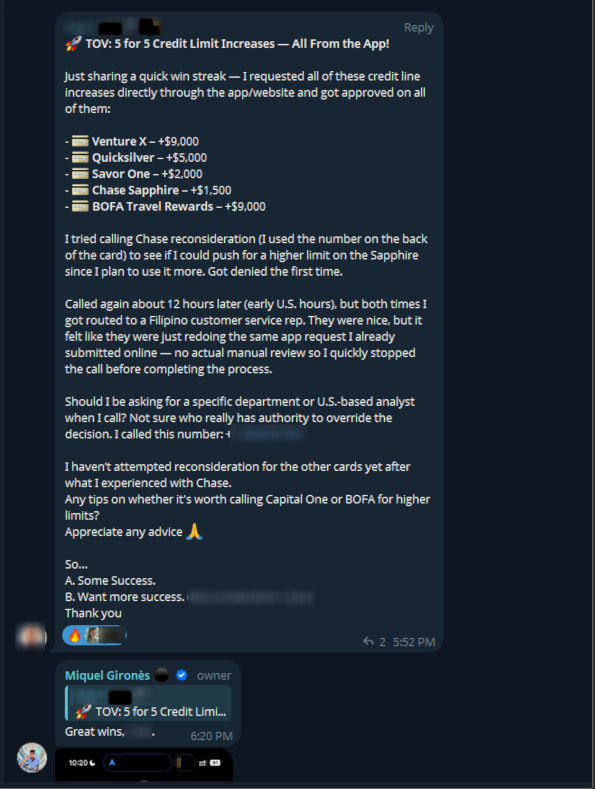






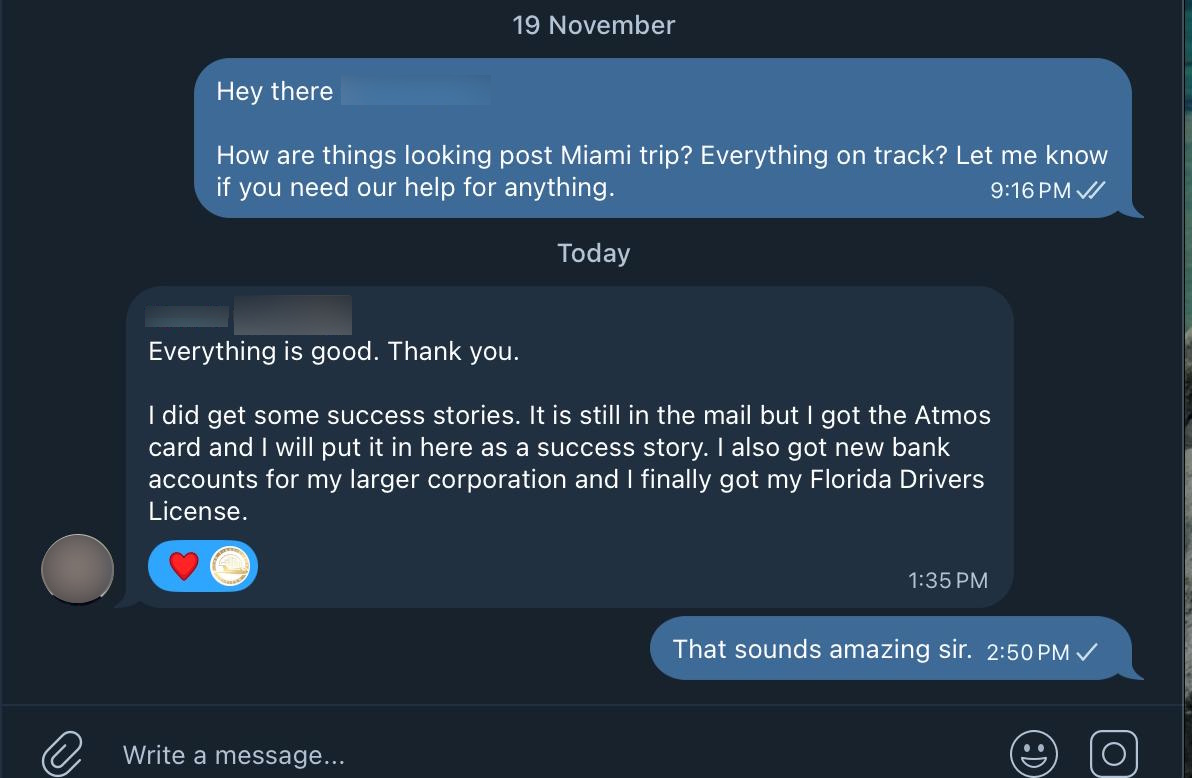



Real client wins, straight from the Hall of Wins.
The rest of the picture
- Find your routeTell it what you are trying to do and it maps the guides to read in order.
- ITIN document checklistPick your situation, get the exact list the IRS accepts.
- What it costsPublished prices and timelines, service by service.
- US credit calculatorWhat your spend returns at the rates issuers publish today.
FAQ
Should a non-resident form an LLC in Wyoming or Delaware?
Why does First Class Citizen recommend Wyoming for LLCs?
When is Delaware the better choice?
Does the state change how much tax I pay?
Does the price differ between Wyoming and Delaware?
Can I change the state after the company is formed?
Is one state faster to incorporate in than the other?
What is included either way?
Sources
The published pages this guide draws on, each read on the date shown.
- sos.wyo.gov read 2026-08-01
- sos.wyo.gov read 2026-08-05
- wyoleg.gov read 2026-08-01
- sos.wyo.gov read 2026-08-01
- corpfiles.delaware.gov read 2026-08-05
- delcode.delaware.gov read 2026-08-01
- corp.delaware.gov read 2026-08-01
- corp.delaware.gov read 2026-08-05
- delcode.delaware.gov read 2026-08-05
- youtube.com read 2026-08-30
Settle the state before you fill in the form
The assessment call covers which state fits what you are actually building, how the company sits against where you are tax resident, and the questions their pages leave open. Free, qualified, and direct about what applies to you.
Book Your Assessment CallThis guide reports what the authorities and institutions involved publish, quoted, with the date each source was read. It is not tax, legal or immigration advice. Published rules change, and an individual case can turn on facts no page can see.

Founder & CEO, The First Class Citizen