
What Banks Accept an ITIN?
The honest answer is not a list of bank policies. It is a list of names, and knowing where each name comes from is worth more than the names themselves.
On First Class Citizen's own ITIN page, the banks named for opening accounts are Bank of America, Chase, JP Morgan and Wells Fargo.
Asked directly which banks work for an ITIN applicant, Miquel Gironès names Bank of America, Wells Fargo, Chase and Capital One.
Those are banks First Class Citizen works with. They are not rules those banks publish. Nothing in their material states any bank's own position on ITIN applicants, so nothing on this page states one either.
What their material does describe, in detail, is how the account gets opened: in person, on a US visit, with the number already in hand. That part is where the real answer lives.
The banks named, and where each name comes from
Two sources, written for different purposes, and they do not say quite the same thing. Both are worth reading as they were written.
The first is their published ladder. Step two of the four steps on their ITIN page is headed fly to the US and open bank accounts, and the line underneath it reads: open bank accounts in Bank of America, Chase, JP Morgan, Wells Fargo, and then an ellipsis rather than a full stop.
The same step continues into getting your first credit cards and starting to build credit history. Read the punctuation. Their own sentence presents those four as examples, not as the roster.
The second is the answer they give when asked outright. Put the question to Miquel Gironès, which banks work with an ITIN applicant, and the answer is Bank of America, Wells Fargo, Chase and Capital One.
That is stated as their experience of what works, which is a different kind of claim from marketing copy and, for this purpose, a better one.
Which US banks work for an ITIN applicant?
Three names sit on both lists: Bank of America, Chase and Wells Fargo. That overlap is the closest thing to a firm answer anyone can honestly give you here.
The edges are where the interesting part is. JP Morgan appears in the page copy and not in the working answer. Capital One appears in the working answer and not in the page copy.
Neither list was written as complete, and the fact that each carries a name the other does not is the proof of it.
Which institution is the right first door
Which institution is currently the right first door for a new applicant is not published anywhere, and it is a fair question to put to them directly rather than a gap to fill with a guess.
The name on the building is rarely what decides it. What you are carrying when you walk in usually is.
Book Your Assessment CallWhat the issuers publish about the ITIN, in their own words
Both lists above are First Class Citizen's. Neither is the banks'. So here is the third list, which is the issuers writing about themselves, quoted from the pages they publish, with a link to each one underneath.
These are not the same institutions the two lists name. Only Wells Fargo appears on both. That is worth knowing rather than smoothing over: the issuers whose wording was read for this guide are the ones who publish wording worth reading, which is a different question from which bank to walk into first.
| What they publish | About their own product? | |
|---|---|---|
| Citi | “your name, address and SSN or ITIN”1 | Yes. Its own secured card, named in the same sentence. |
| Wells Fargo, checking | “Know your Social Security Number (SSN) or Individual Taxpayer Identification Number (ITIN)”2 | Yes. Its own account-opening checklist. |
| Wells Fargo, card terms | “may share the last four digits of your SSN or ITIN with our partners”3 | Yes, and it is in the card agreement rather than the marketing. |
| US Bank | “We can only upgrade your secured credit card if you have an SSN. If you have an ITIN, you can continue to have a secured account and use your card.”4 | Yes. Its own secured card, and it is the most specific sentence any issuer publishes here. |
| US Bank, business card | “Social Security number/ITIN and personal income”5 | Yes. Its own business card application. |
| American Express | “U.S.-issued Social Security Number (SSN), or U.S.-issued Individual Tax Identification Number (ITIN)”6 | Yes. Its own page for people moving to the US. |
| Discover | “Social Security number or Individual Taxpayer Identification Number (if the card issuer accepts it)”7 | No. Read the parenthetical. That sentence is about issuers generally, and commits Discover to nothing. |
Seven sentences from five issuers. Read only for what each one says about itself, because that is the only thing an issuer's own page can settle.
Every figure above, and where it was published:
- citi.com read 2026-08-02
- wellsfargo.com read 2026-08-02
- wellsfargo.com read 2026-08-02
- usbank.com read 2026-08-05
- usbank.com read 2026-08-05
- americanexpress.com read 2026-08-02
- discover.com read 2026-08-02
The last row is the one to take away
The last row is the one to take away. Discover's sentence looks like the others until the bracket, and the bracket moves it from a statement about Discover to a statement about the industry. Most of what gets written about banks and the ITIN is that sentence, repeated without the bracket.
The US Bank row
The US Bank row is the opposite, and it is the most useful thing on this page. It settles two separate questions in one sentence: an ITIN holder can hold and use the secured card, and cannot be upgraded off it without an SSN. Nobody else publishes that distinction at all.
Why a list of banks is the wrong thing to shop for
The question carries an assumption inside it: that somewhere there is an official register of institutions that take an ITIN, and that finding it solves the problem.
No such register appears in First Class Citizen's material, and none was found on the issuer pages read for this guide. Not finding one is not the same as knowing none exists.
What one of them does publish is the mechanics
What one of them does publish is the mechanics. In Chase's own education library, read on 31 July 2026, an application asks for a Social Security number or an Individual Taxpayer Identification Number, and with either you should be able to apply for most cards.
That is a long way from a register of banks that say yes. Approval is settled inside an application, against your file, rather than announced in advance.
What does exist is narrower and more useful
What does exist is narrower and considerably more useful: the institutions their clients actually walk into, and what those clients report coming out with.
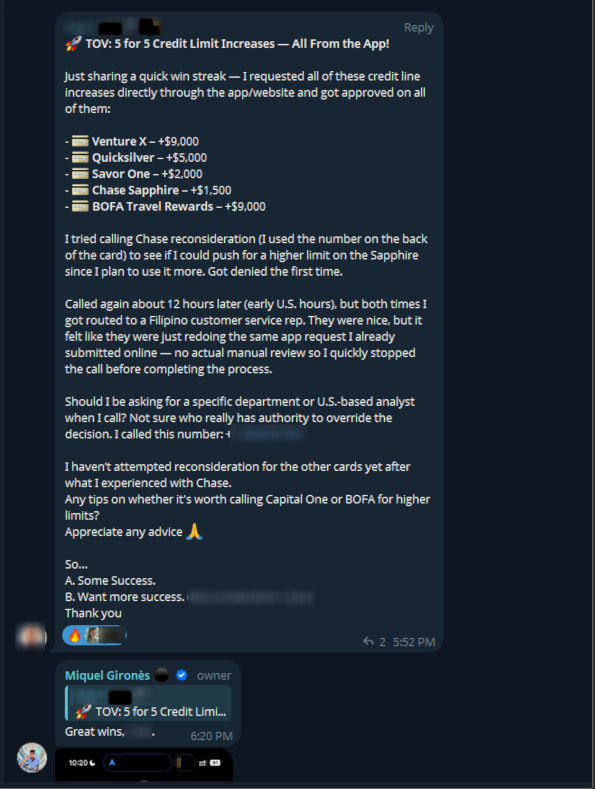
Their own published wins make the point better than any argument could. One cleared client win is a run of five approvals in a row, all requested through the apps: a Venture X limit up nine thousand dollars, a Quicksilver up five thousand, a Savor One up two thousand, a Chase Sapphire up fifteen hundred, and a Bank of America travel rewards card up nine thousand. Five for five.
On the same screenshot, published by the same company, the same client reports that a Chase reconsideration call was denied the first time. Both facts, side by side, from a business with every commercial reason to show you only the first one.
Outcomes land application by application rather than bank by bank. Which is why the useful question is not which bank says yes to an ITIN. It is what you are carrying when you ask.
In person, and what that actually involves
Their published route is not subtle about this.
Do I have to travel to the United States to open the account?
Step two says fly to the US and open bank accounts. Their credit programme, which is a separate service with its own terms, puts a number on that same visit: open three to eight US banks in three to five days in Miami as a non-US citizen.
Miquel Gironès describes the sequence more tightly still. The first card is opened on the same first visit they organize in Miami, one to two days on the ground, and the card is usually in hand within three to seven business days.
Their no-travel line covers the application, not the counter. The promise on the same page is automated workflows that submit your application instantly, with no need to step into the USA or be a resident.
That sentence is about obtaining a number from a federal agency. Walking into a branch is the next step down their own ladder, and only the first of the two is described anywhere as a no-flight step.
One client on their wall says something different, and he is quoted here as one client rather than as a route. Andrew Menechian, on how his own set came together: "got the bank accounts REMOTELY".
Nowhere do they sell remote personal account opening as a thing they do, and between a company's own copy and a client's recollection, the copy is the part anyone can be held to.
Who does the opening
One line on who does the opening, because it decides what you are buying. Miquel Gironès on the model: they advise, and he cannot access clients' banks.
Every account is opened in your name, by you, with your own documents in your own hand. Their part is the door and the order you go through it in.
The preparation is included rather than the appointment
The preparation is included rather than the appointment. Once the number lands, their published deliverables add a bonus: a strategy for US bank account opening.
That is a plan, and knowing the difference between a plan and a booked appointment before you buy a plane ticket is most of the value of this section.
On camera, Miquel Gironès puts it this way, at 3:43 of The Best Off-Shore Bank in the World?! No More Frozen Funds:
Like the United States, it's getting more and more difficult to open accounts for non-residents without being there.
Which bank, in which order, and whether a flight is involved at all. Fifteen minutes settles all three.
Book Your Assessment CallWhich names show up once the accounts exist
Accounts are rarely the actual goal. Here are the card names their material carries, each one attached to a person who reported it.
Step three of their ladder
Step three of their ladder is headed build your credit up to 750, and what it points at is applying for top tier credit cards such as a Chase Sapphire or an American Express Platinum. That is their published order: the score first, those names after it.
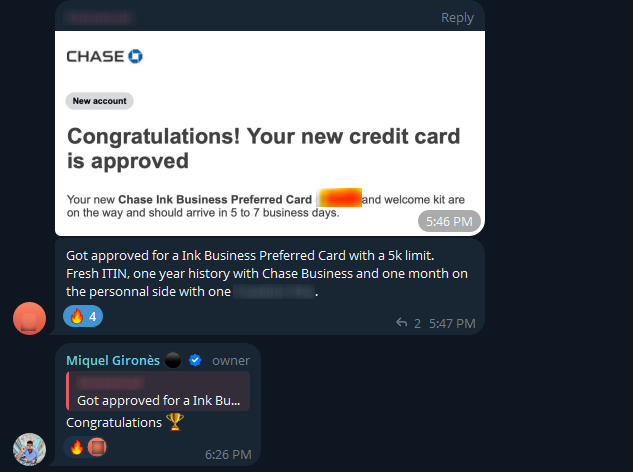
Their cleared wins name specific approvals. One is a Chase Ink Business Preferred, and the client's own note beside it is the useful part: "Got approved for a Ink Business Preferred Card with a 5k limit. Fresh ITIN, one year history with Chase Business and one month on the personnal side".
A fresh number, a year of history at one institution, and a five thousand dollar limit at the end of it.
Named cards in the published notes
Thor M. names his two cards outright: "My credit score is 730 which I think is pretty decent since I have only been using two credit cards - AMEX and the Capital one Quicksilver." He also describes carrying an AMEX Platinum in Germany and making the whole global transfer to the US.
Markus Dunk describes the order rather than the cards, and his sequence is the one to notice: "Things have been GOOD, first the Ink Card, then the Sapphire... Then I applied ONLINE for the Reserve card and I got APPROVED." Their route opens the first card in person.
What his note adds is the other end of it, an online application approved once there was something behind it.
Michael Niziolek came at it from a country where the product simply is not offered: "I was looking into CREDIT CARDS for a long time but in Poland there is no such thing as an AMEX". He reports the number in forty to fifty days and two credit cards after it.
Davide Vignoli reports thirty five thousand dollars in credit limit and a Miami trip ahead of him.
Every one of those is an individual result, published by the person it happened to, at a moment in that person's own history. Read them as evidence that the route exists. They are not a schedule, and nobody sensible would sell them as one.
None of the names matter without the number
Every bank on both lists sits behind the same door, so the door is worth two minutes. The full treatment is in the complete ITIN guide; what follows is only the part a banking decision rests on.
Their own case for the number
Their own case for the number is three lines long and two of them are this page: you can build an American credit score, you can open bank accounts as a non-resident, and you can access American credit cards as a non-resident.
Getting it asks little of you. A passport photo or scan, a non-US address, any address, and an email, then a short form and payment, then a document to sign inside a week.
Their published window from there is forty five to sixty days, and what arrives is valid for three years.
The bar they publish
They publish a bar as well, and it is the one sentence on this page that could stop you before any bank does: you must not be eligible for a Social Security number, meaning not a US resident, citizen or green card holder.
That is the requirement they state, not a ruling about you. Whether you clear it turns on your own status and history, which no web page can settle.
Their published position on tax sits next to it, and it stays theirs. First Class Citizen states that holding an ITIN will not create a US filing liability or tax liability.
What is true for you depends on your own country and your own record, and that one is a conversation rather than a paragraph.
The price, now that the explanation is behind it
Then the number, now that the explanation is behind it. First Class Citizen publishes 1,000 dollars for the ITIN service, valid for three years, with the same price at renewal and zero maintenance cost in between, checked on their service page in July 2026.
Prices move, so have yours confirmed in writing before you pay. Every route is priced side by side on the cost page.
What this page will not tell you
Five things a page about banks is expected to answer and this one cannot, printed as gaps rather than filled with a plausible guess.
Which bank opens first, and with which product. Asked that exact question, the answer named institutions and not a starter product.
Which door is the right first one for an applicant with a new number and no US history is not published anywhere, and it is the single best question to bring to the call.
Whether the bank or the card issuer wants a US address or a US phone number. The ITIN application asks for a non-US address, any address, and their own material says so.
What the counter asks for afterwards is a different question, every applicant holding a foreign passport asks it, and nothing they publish answers it. This page will not invent a requirement or quietly retire one.
What happens if a bank says no?
What happens if a bank declines. Their material carries no second attempt, no fallback institution and no stated remedy.
Their own cleared win shows a first reconsideration call turned down, so the scenario is real rather than imagined, and the silence around it is worth breaking out loud before money changes hands.
What the trip costs and who pays for it. The visit is published and the days on the ground are published. The cost of getting yourself there is not, anywhere.
Whether any of these banks would take you
Whether any of these banks would take you. That depends on your passport, your address history, your source of funds and what your own country does when money moves.
Those are facts about you rather than facts about a service, and they decide more of this than any list of names ever will.
None of the five is a hard question. Each one is simply better asked now than discovered at a counter in Miami.
The name on the building is rarely what decides it. What you are carrying when you walk in usually is.
Book Your Assessment CallAccounts and cards that landed


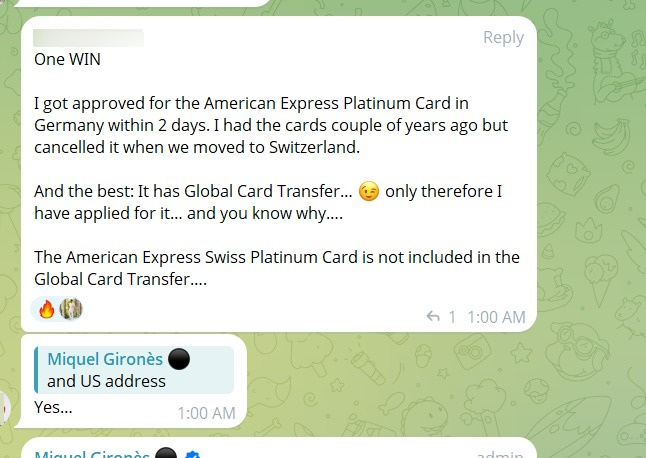
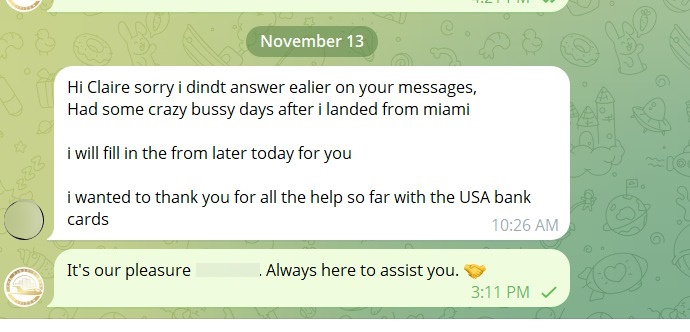
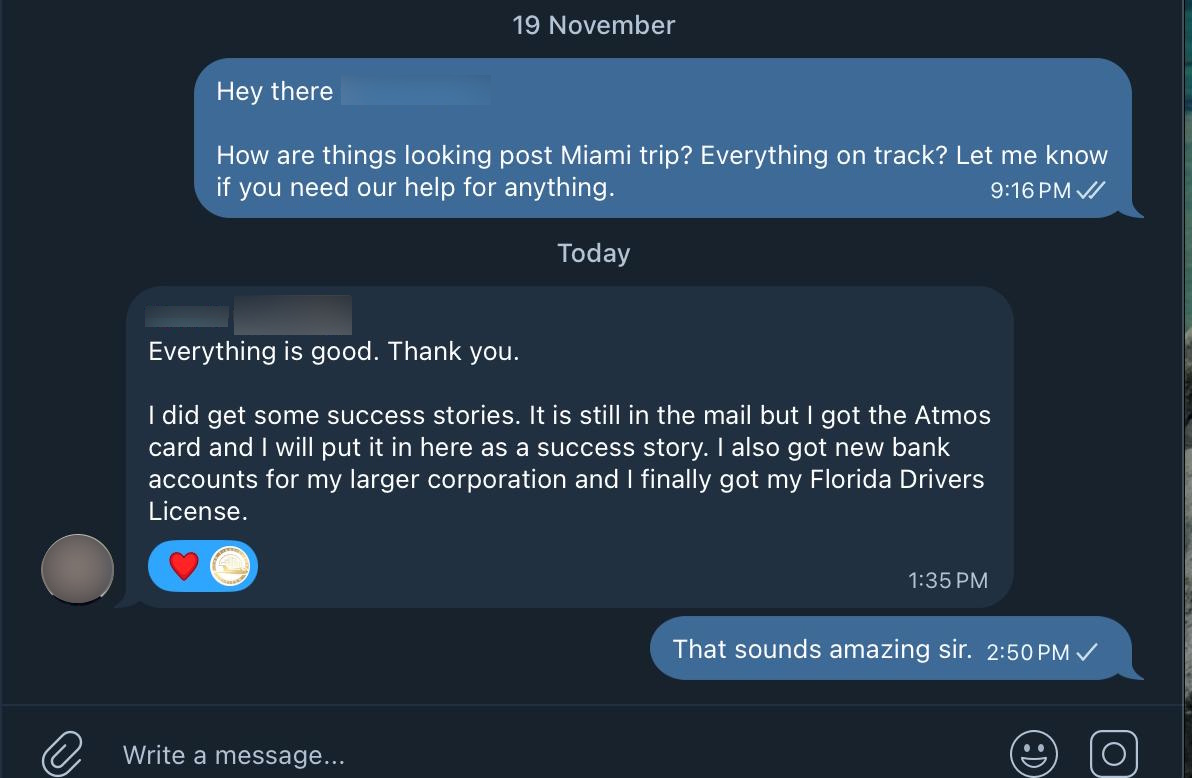

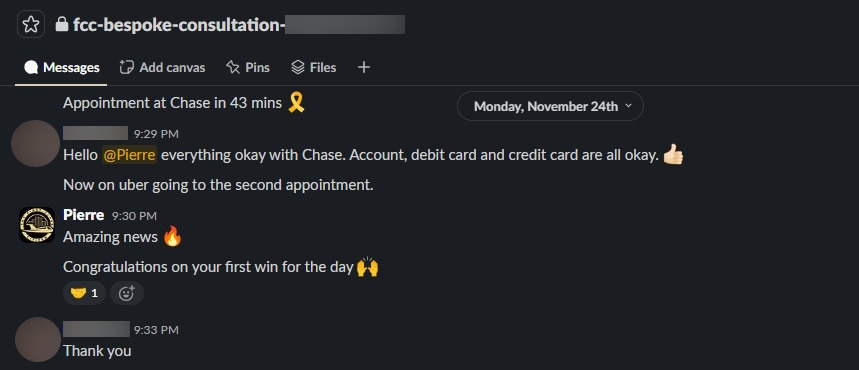
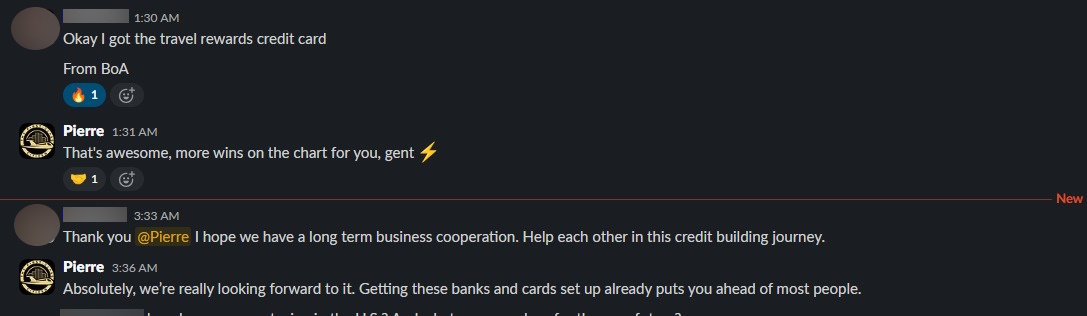
Real client wins, straight from the Hall of Wins.
The rest of the picture
- Find your routeTell it what you are trying to do and it maps the guides to read in order.
- ITIN document checklistPick your situation, get the exact list the IRS accepts.
- What it costsPublished prices and timelines, service by service.
- US credit calculatorWhat your spend returns at the rates issuers publish today.
FAQ
Which US banks work for an ITIN applicant?
Is there an official list of US banks that accept an ITIN?
Do I have to travel to the United States to open the account?
How many accounts can be opened on one trip?
Does First Class Citizen open the accounts for me?
Which cards have their clients actually been approved for on an ITIN?
Do I need the ITIN before any of this, and what does it cost?
What happens if a bank says no?
Sources
The published pages this guide draws on, each read on the date shown.
- citi.com read 2026-08-02
- wellsfargo.com read 2026-08-02
- wellsfargo.com read 2026-08-02
- usbank.com read 2026-08-05
- usbank.com read 2026-08-05
- americanexpress.com read 2026-08-02
- discover.com read 2026-08-02
- youtube.com read 2026-08-30
Settle which bank you are actually walking into
The assessment call covers which of the named institutions fits your case, what the in-person route asks of you, where the ITIN sits in the order and what the current timeline really is. Free, qualified, and direct about what applies to you.
Book Your Assessment CallThis guide reports what the authorities and institutions involved publish, quoted, with the date each source was read. It is not tax, legal or immigration advice. Published rules change, and an individual case can turn on facts no page can see.

Founder & CEO, The First Class Citizen