
Residency Without Travelling

One of the three routes compared here can be obtained without boarding a plane. The other two cannot.
Armenian permanent residency is the remote one. Their page's own words are “100% Remotely in 30 days” and “zero travel required”, and it lists coming to Yerevan in person as optional, for people who also want to see the capital.
Paraguay asks for one to three days on the ground in Asunción, and then a separate one day visit later to collect the RUC, the local tax number. Dubai asks for less time but is no more avoidable: the medical test, the fingerprints and the bank appointment all happen with you in the room.
What follows is the travel, the time and the published cost of each, in that order. That much a page can settle. What a residency does to your tax position it cannot, and their own material is unusually direct about why.
The route that needs no flight
Armenia is the only lane on their site marketed on the absence of a trip rather than the shortness of one.
The published sequence starts with a form. “Complete a simple online form in under 5 minutes”, then “Get your Armenian PR approved within 30 days after documents are submitted”, then “Enjoy full residency benefits with zero travel required”. The requirements block asks two things of you, a passport scan and a profile picture, which they validate before anything is mailed.
There is one decision to make. Their third step puts it as a choice of route, either a government donation of 6,000 dollars or an investment of 10,000 dollars which the page describes as returning 70 percent within twelve months. What that investment goes into, and on what terms the 70 percent comes back, is not stated anywhere on the page.
After that, in their words, “the rest is on us”. The deliverable is a printed permanent residency card valid for five years, alongside a legal proof of address, a social security number and a certificate of permanent residency.
Travel is not excluded. It is simply not required. The closing line of the requirements block reads: “Optional: You can come to Armenia and do some of the steps in person if you also want to explore the capital.”
On volume, the page publishes more than 180 Armenian residencies over the last six years and a physical office in the capital. On the outcome, the same page is careful, and the care is worth repeating: “The final decision regarding the acceptance of any residency application rests with the Armenian immigration authorities.”
One of the three needs no flight. Which one fits is a conversation, not a page.
Book Your Assessment CallHow a file is submitted without you in the country
A residency application still needs a body standing in a government office. Their page explains whose.
It also names, plainly, the four things that normally force the trip: passing the mandatory health exam, having the profile picture taken, signing legal documents, and making the donation or investment in local currency. That list is the useful part, because it says exactly what has to be solved for a remote file to work at all.
Their answer is a power of attorney and the post. They describe working with local partners to prepare the documents, make the official translations, apply the official stamps, do the currency exchange, and present the documents on your behalf under power of attorney, with some of those documents posted by you.
Two things follow that the page does not address. A power of attorney has a round trip of its own, drafting, signing, legalisation and international mail, and whether that sits inside the thirty days or in front of them is not stated. And of the four items above, the mandatory health exam is the one the remote description does not account for. How it is satisfied for someone who never lands in Yerevan is a question for the call, because the page does not answer it.
One more thing before anyone counts days. The thirty day clock has two different published start points on the same page, “within 30 days after documents are submitted” in one block and “30 days after the application is submitted” in another. Those are not the same moment, and the gap between them is yours.
What Paraguay asks you to be there for
Paraguay is the opposite shape. The paperwork is long, the trip is short, and the trip is not optional.
Before you fly there are thirty to sixty days of document preparation, validated by them before the visit. Their FAQ also sets a floor on notice: a minimum of one week from the moment you place the order to your travel date, so the documents can be requested and the immigration appointment scheduled.
Then one to three days in Asunción, with the appointments pre-booked across consecutive days. Their FAQ puts a three business day turnaround on the process per visit and adds that it can often be completed in a single day. You leave with a residencia precaria that is already valid.
The rest happens without you. On their Fast Track plan the temporary residency follows and the cédula after it, on the window that page publishes; the Standard plan publishes a longer one. Their own surfaces carry further versions of the same clock, in the five step block and in the FAQ, and they do not all agree, so the window that binds a given file is the one their team quotes for it, and the grant itself comes from the Dirección General de Migraciones on its own timetable.
Then you come back. The RUC, the Paraguayan tax number, needs a separate one day visit to collect, and the sales page says so directly. Their FAQ, written earlier, describes the travel differently: two visits to Asunción during the immigration process, once for the temporary residence and again for the ID card. Their pages do not agree on the total number of trips, and that is worth settling before anyone books a flight.
One more trip sits in their FAQ and deserves its own line, because a buyer planning flights off the sales page alone would miss it: the conversion of temporary residency into permanent residency is done on a return visit, inside a window their answer states in months after the grant. And the ongoing rule after that is now stated directly on their Paraguay page: one day in the country per year keeps the residency.
So the flight math has three parts on their own material. The application visit or visits, the conversion trip, and one day a year after that.
On what the trip costs you rather than them, their published inclusions cover a professional to collect you at the airport or bus station and to walk you through immigration and the collection of the ID card. Travel costs to Paraguay and lodging in Asunción are both listed as not included. Running the process in Ciudad del Este rather than Asunción carries an additional charge, because their people are in Asunción.
The page publishes more than 200 Paraguayan residencies over the last seven years.
Dubai is short, not remote
The UAE route belongs here precisely because it looks remote at the start and is not.
It runs through a company. A six minute application forms a free zone company, described on their page as done in three days and entirely online, and you are made its manager. The same page states the company must be owned by you for the residency to be granted.
Everything after that needs you in Dubai. The medical test and the fingerprints are completed in under ninety minutes. The Emirates ID follows in three to five business days. The bank appointment is attended, meaning they go with you and the account is opened in the room, and three to five business days later the account is live and the card arrives. Their own FAQ closes the door on reordering any of it, answering the question of whether an account can be opened without an Emirates ID with a flat “No that I am aware of.”
The headline sixteen days belongs to one specific package. Their page names three plans: a company-only free zone option at three days, a Premium plan at twenty five days, and the Elite package at sixteen. Whether the company-only option delivers any residency at all is not stated on the page, which makes it a question rather than an assumption.
The travel column is published. What it means for your situation is not.
Book Your Assessment CallThe columns, side by side
Two tables, built only from what their own pages publish. Where a figure is not published anywhere on their site, that is what the cell says, because the alternative is a number nobody can stand behind.
The cost side is thinner than the time side, and the gaps are the honest part of it.
Read those blanks literally. The Armenia page names the donation and the investment, then says “Pay the Package” without ever naming a package price, and there is no Armenia product page on the site to carry one. The Paraguay page shows two plans, lists what each includes, and puts a button under both that opens a chat with the team rather than a price. The 25,000 dollars on the Dubai page, described there as a one time set-up fee for the Elite package, is the only service price published across all three routes.
There is one further cost that appears on neither table and belongs to two of the three routes. Flights and hotels. The Paraguay page lists travel and lodging as not included, and the Dubai sequence needs you in the country across a chain of appointments separated by several business days each. However that works out, it is a real number and it is yours.
What the travel column does not tell you
A route that needs no flight is not the same thing as a route that changes what you pay, and the clearest statement of that anywhere on their site is on the Armenia page itself.
Their FAQ answers it head on. Whether Armenian residency reduces your tax burden “depends on your tax residency status and your home country's tax laws. Residency and tax residency are two different things.” The same answer goes further and says the vast majority of their clients obtain residency in Armenia while enjoying more favourable zero percent tax advantages in other countries, through non-dom status in Cyprus or Malta, or a territorial system such as Paraguay.
The other two routes publish thresholds of their own, and Paraguay's are worth reading twice. Their published test for tax residency there is either holding a temporary or permanent residence in the country, or spending at least 120 days there within a twelve month period. Becoming a tax resident and keeping the residency itself are two separate questions, and the second one is worth putting to First Class Citizen directly for your own case. On the UAE, their published answer has two steps and the first is not about the UAE at all: becoming a non-tax-resident in your country of origin, then spending more than ninety days a year in the Emirates.
Which splits the travel question in two. Getting the residency may need no trip. Changing a tax position, on their own published thresholds, can need a great deal of time in a country. Those are two separate claims on your calendar, and nobody should meet the second one after paying for the first.
The split holds at the far end too. Neither route is remote all the way to a passport. Asked directly whether citizenship can be gained without residing in the country, their Paraguay FAQ answers that ties to the country must have been created during the three years of permanent residency, and that the country must be visited and certain steps completed in person during the passport application. Their Armenia page describes the certificate of permanent residency as needed later to increase the chances of citizenship approval. Chances, not entitlement, and their word rather than ours.
What none of it can tell you is which route applies to you, because that turns on your nationality, where you are resident now, and what your current country does when you leave. That part is the call, and it is worth having before the money moves.
Wins clients sent in







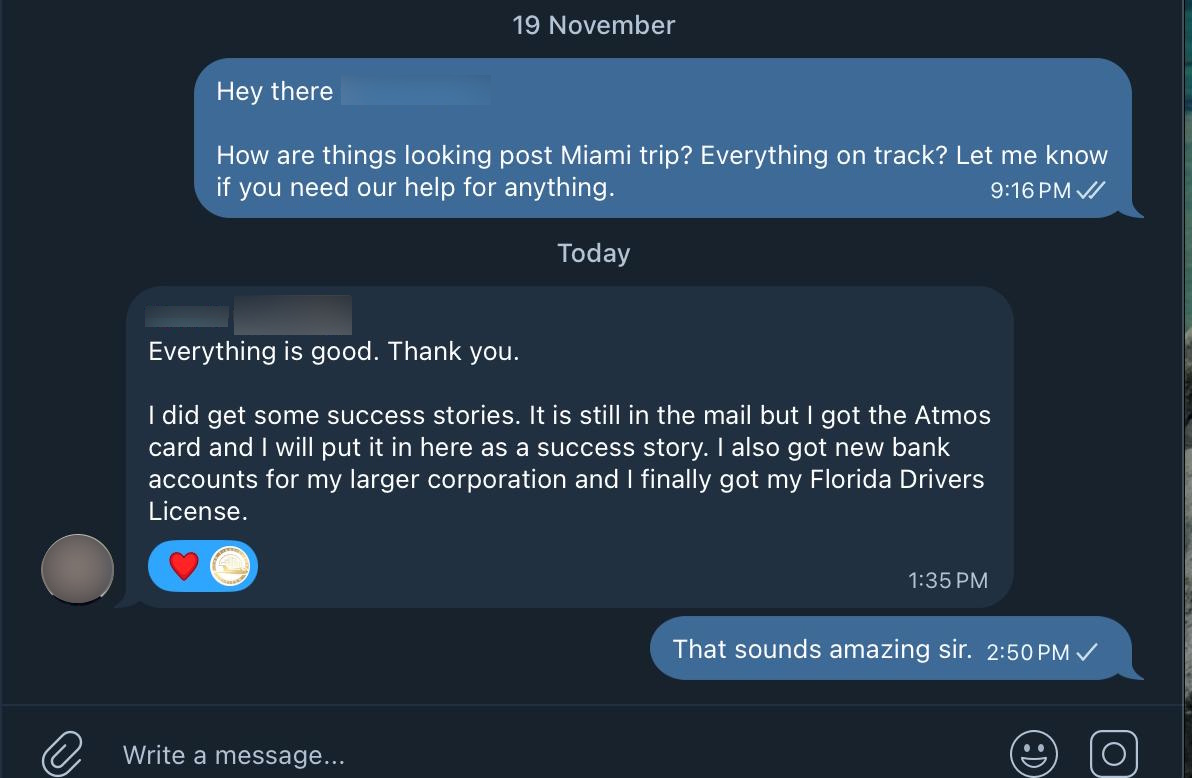



Real client wins, straight from the Hall of Wins.
The rest of the picture
- Find your routeTell it what you are trying to do and it maps the guides to read in order.
- ITIN document checklistPick your situation, get the exact list the IRS accepts.
- What it costsPublished prices and timelines, service by service.
- US credit calculatorWhat your spend returns at the rates issuers publish today.
FAQ
Can I get a residency without travelling?
How does a remote application get filed at all?
Do I have to travel to Paraguay?
How long does each route take?
What does the Armenia route cost?
What does the Paraguay residency cost?
Is the Dubai route remote?
If I never travel for it, does the residency change my tax position?
Get the routes matched to your situation
The assessment call covers which route fits, what the trip actually involves, and the parts no page publishes: the service fee, the full document list, and what leaving your current tax system genuinely takes. Free, direct, and honest about what does not apply to you.
Book Your Assessment CallThis guide reports what the authorities and institutions involved publish, quoted, with the date each source was read. It is not tax, legal or immigration advice. Published rules change, and an individual case can turn on facts no page can see.

Founder & CEO, The First Class Citizen