
The Panama Account: What It Is For, and What It Takes

Panama runs its banking on the US dollar. The account described here is held at a private Panama bank by people who do not live in Panama, and the feature that separates it from any other dollar account is narrow: crypto can be your declared source of funds.
First Class Citizen publishes the default plainly. Asked whether you need to travel to Panama, their answer starts with the words usually yes, and the visit in question is to the bank headquarters in Panama City.
What they publish instead is a remote opening that runs on a long-term relationship with the bank. The in-person visit is replaced by a video call from wherever you are, and the card is shipped to you. Three to five business days from there and the dollar and crypto accounts and the debit card are ready.
So there are two routes to the same account. This page is about which one you are on, what the bank asks for on either, and which parts of the answer are not on their pages at all.
What the Panama account is actually for
Naming the problem plainly is the fastest way to know whether this account is yours, because it solves something much narrower than banking in general.
Crypto-related activity is what closes ordinary accounts. Banks and fintech providers block or suspend an account when crypto transactions appear on it, and where funds come from crypto, some institutions will not open one at all. That is what this account is sold against.
Their published definition of crypto-friendly is four separate permissions rather than a slogan. Crypto can be your source of funds. You can deposit into the account directly with crypto. You can swap between stablecoins and dollars at will. And you can transact freely to and from exchanges worldwide.
Their page is specific about the assets. Dollars can be exchanged for stablecoins, USDC and USDT deposits are published as landing in under thirty minutes, and bitcoin can be deposited and used as your funds. That combination, in their framing, exists in only a few stable jurisdictions.
The jurisdiction does part of the work too. Panama uses the US dollar, so there is no currency conversion sitting between you and your money. It has no central bank. It is, on their published characterisation, among the least indebted countries in the Americas. And its banks operate in English and Spanish, which stops being a detail the moment the whole relationship is conducted from somewhere else.
If crypto plays no part in your situation, this is a dollar account among many, and the reason to want it becomes the jurisdiction rather than the feature.
Remote or in person is not a preference. It follows whether you will be in Panama City at all, and one conversation settles it.
Book Your Assessment CallRemote or in person, and what actually changes
Both routes end at the same account. What differs is where the waiting sits and what it costs you to get there.
The remote route is the one their pages lead with. Instead of the in-person visit to the headquarters in Panama City, the opening runs over a video call from wherever you are, and the card is then shipped anywhere in the world. Their published clock is three to five business days to the dollar and crypto accounts plus the debit card, with the credit card application following a few days after that.
The in-person route is documented on the same page, by a client rather than by them. Writing under the name Nicholas O, he describes a group chat set up beforehand in which he shared his information, an appointment made for him at the bank, a one-to-one meeting with a bank representative, and, in his words, the account opened and the debit card in hand in less than an hour. He also describes a choice at that meeting between a crypto-friendly account and a standard checking account.
That is one published client experience, not a schedule anyone is promising, and it describes a visit to Panama rather than the remote route. Read against the three to five business days, though, it makes the trade legible. Remote pushes the waiting into processing days and a courier for the card. In person compresses it into a single appointment and costs you a trip to Panama City.
Two details there are worth carrying into your own conversation. The first is that the introduction does the work on both routes: an appointment exists because someone arranged it, and that is the same relationship the remote opening rests on. The second is the choice of account type, which surfaces in an in-person account while the remote route is described only in terms of the crypto-friendly account. Whether the same choice is offered on a video call is not stated anywhere, and it is fair to ask before you pay.
What the bank asks you for
The published requirement list is short, and they head it with a claim of two minutes.
Four things go in: the form, a copy of your passport, a bank statement, and a crypto address. Then payment. Then, in their sequence, the account in three to five days, and then you use it.
Two observations about that order, and neither is a criticism. Both are simply what the page does and does not say. First, payment sits at step two, before the account exists. What happens if an application does not clear after that payment is not published anywhere on their Panama pages. On the Georgia side they do publish a position on non-acceptance, which tells you the question is answerable. Here it is answered by a person rather than by a page, so ask it early and get the answer in writing.
Second, a bank statement is the only published evidence of where money comes from, on an account explicitly sold to people whose funds come from crypto. If your income has not passed through a bank in years, raise that in the first conversation rather than at the document stage. In the same vein, USDC, USDT and bitcoin are named on their page, while the networks those must arrive on, and which other assets are accepted, are not.
Who can open one, and who decides
Their published answer is wider than most people assume, and it stops in two specific places.
Both Panamanian and non-Panamanian residents can open. Accounts can be opened for companies and individuals from anywhere except restricted countries, with Syria, Iran and Afghanistan given as their examples. The rest of that list is not published, so if your passport is anywhere near that conversation it is the first thing to settle.
Opening for non-Panama resident companies and individuals is evaluated case by case. Panama ties are not required, and they publish that having them raises the chance of a successful opening: local investments, residence, an existing account in the country, or a business there.
On passports, asked directly whether one nationality serves better than another, their published answer is that any passport works fine and there is no major difference between nationalities.
None of that is a ruling about you. Whether your own file clears is a fact about your passport, your residence and where your money comes from, established before anything is paid rather than inferred from a page.
The set-up figure is not on their page, and the bank's own fee sheet is not either. Ask for both in writing before anything is paid.
Book Your Assessment CallWhat lands when it opens
Checking, savings and an investment account, held in dollars, euros, bitcoin and USDC, with the debit card.
The institution behind it is a private family bank with more than fifty years of operating history in the Panama banking sector. Its name is not published, and they say why in their own FAQ: the name is part of their know-how and they do not disclose it publicly. Worth knowing before you ask, and worth understanding what it implies: everything you can verify about the institution runs through them.
What is not published is the rest of that picture, in the terms a banker would use: deposit protection, capitalisation, the regulator, audited accounts. A reasonable question, and one that deserves a proper answer rather than a paragraph on a page.
Above the account sits the card. With a fifteen thousand dollar deposit in the bank you qualify for a Visa Infinite, shipped anywhere in the world, carrying airport lounge access, TSA PreCheck and a round-the-clock virtual concierge. Two things their page leaves open there. The card is called a Visa Infinite in one block and a Visa Black Infinite in another, on the same page. And the summary lists it as available with the right conditions without stating what those are, which leaves the obvious question unanswered: whether the fifteen thousand has to stay on deposit, and for how long.
What is published on cost, and what is not
Numbers come last here on purpose, because a figure means nothing until you know which of the two routes you are on and whether your file clears at all.
Two figures are published. The minimum opening deposit is fifty dollars, stated twice on their page. Yearly maintenance costs are published as zero.
The one-time set-up payment is not published. The pricing block on their page is headed simple, transparent pricing, and the tile where that figure belongs carries no number at all. The line underneath makes a comparison rather than a price: everything you need for less than the cost of one hour with a top-tier law firm. Useful, and not a figure. The number is quoted on the call, and it is the first thing to ask for.
What the bank itself charges is a separate matter and none of it appears anywhere. A monthly account fee, if there is one. Incoming and outgoing wire fees. The spread between dollars and euros. Card issuance and replacement. Anything charged on a crypto deposit or a withdrawal. Whether a minimum balance has to stay in the account after the fifty dollars that opened it is not stated either.
So the instruction is short and it costs nothing to follow. Ask for the set-up figure and the bank's own fee schedule in writing before anything is paid. Both are ordinary requests, and the answers decide whether a zero maintenance cost is the whole story or half of it.
The corporate account and the structures beside it
The personal account is the product. Three other things sit next to it on their pages, and each one is a separate decision with a separate clock.
A corporate account comes first, because it is the one people assume is included. Their page states that if you have a US LLC, an account for the company can be opened as well, the company incorporated in one country while its funds are held in another. Read the timeline carefully. The only figure published for that corporate opening is three months, in a Panama FAQ dated June 2023, and it applies to the company account rather than the personal one. Whether it still stands is a call question, and this is the most common place where a three to five day expectation gets carried across to something it was never about.
A Panama company and a Panama trust are both sold on the same page, the first for holding assets or operating internationally, the second for succession and generational protection. Neither carries a published price and neither carries a published timeline, which makes both a conversation rather than a product.
They also publish the option of holding part of your wealth in gold in a Panama vault, listed under maximum protection alongside the trust. Same status: unpriced, and settled with a person.
Remote or in person is not a preference. It follows whether you will be in Panama City at all, and one conversation settles it.
Book Your Assessment CallWhat this account does not do
Four limits. Each one is a reading of what their own pages publish, not a hedge added here.
An account is not a tax position. Where you pay tax follows your residency, not the country your money sits in. If the actual question is what you owe and to whom, that belongs in the residency lane, and this page cannot answer it for you.
The reporting question is not answered here. Whether the account is reportable where you live is not addressed anywhere on their Panama pages. They answer exactly that question for their Georgia account in detail, naming the frameworks and publishing the treaty list, which means the Panama silence is silence rather than an answer in either direction. Do not read anything into it, and do put it on the call.
Some situations are not addressed at all. Their Panama pages say nothing specific about US citizens or green card holders, and the restricted country list stops after three examples. If either of those describes you, it is the first question on the call rather than an inference from this page.
The bank decides, not the page. Opening for non-residents is assessed case by case, restricted countries are excluded outright, and payment sits ahead of approval in their published sequence. All of which points the same way: establish where your own file stands before anything is paid, which is precisely what the first conversation is for.
Clients on the record
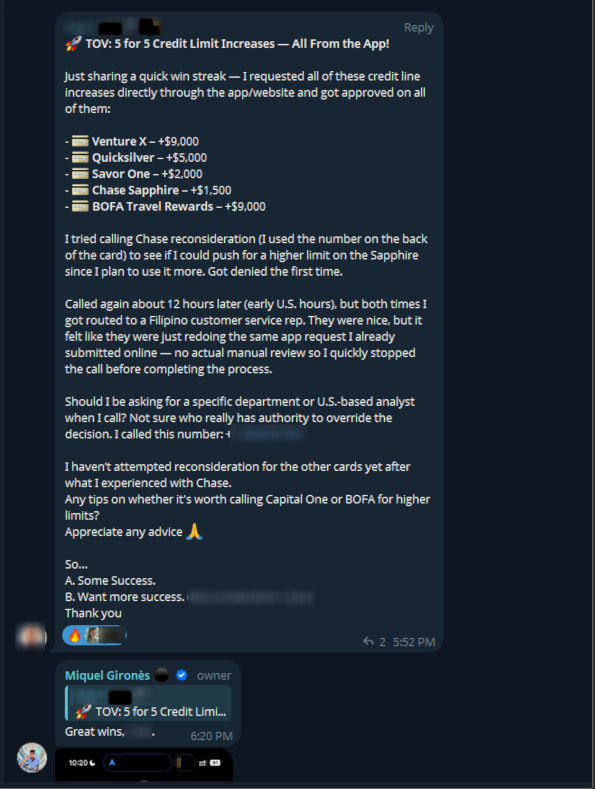
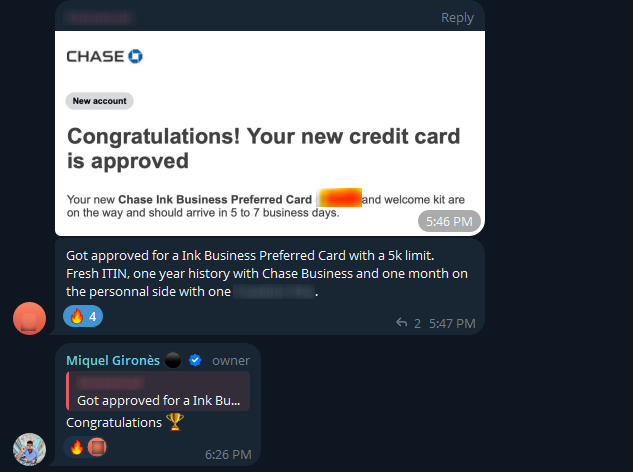


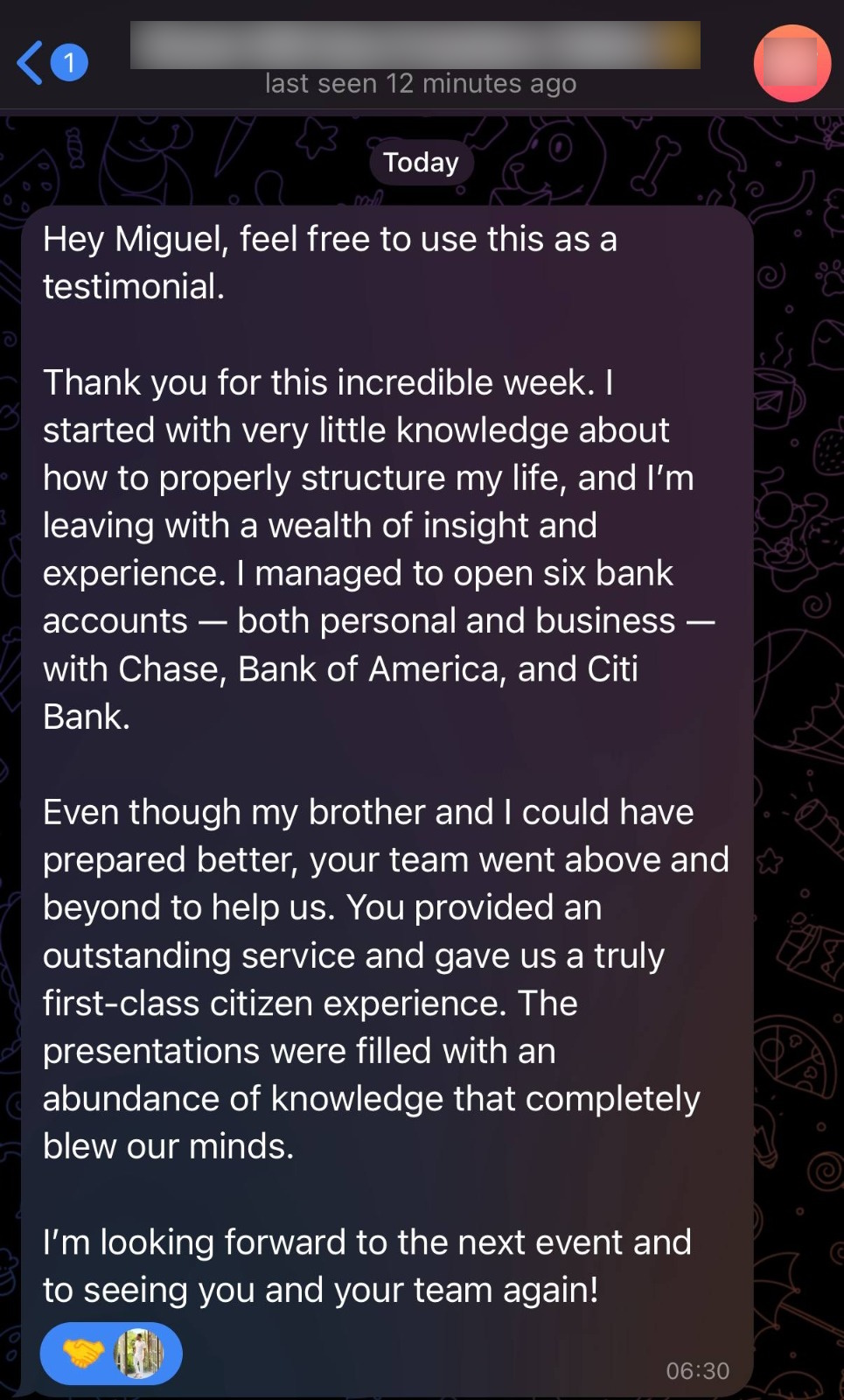
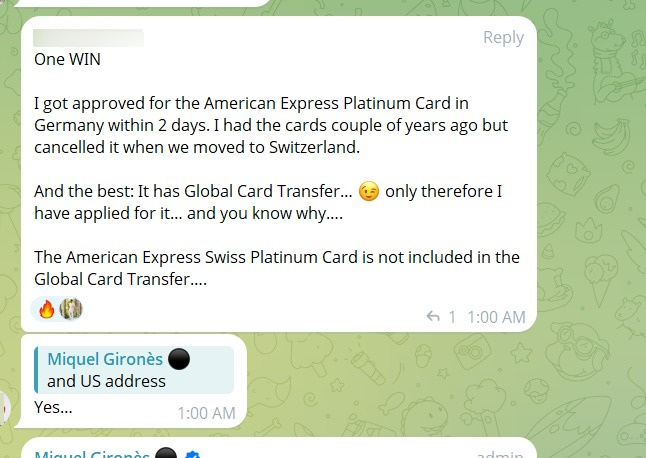
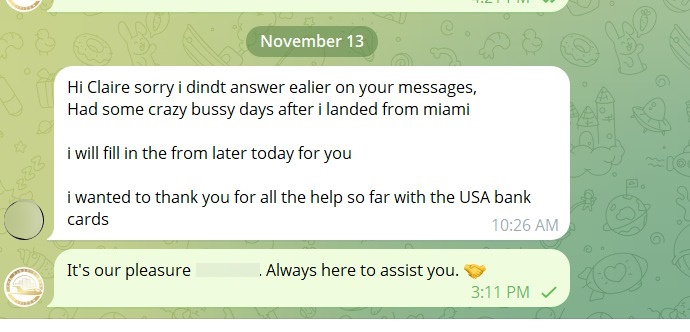
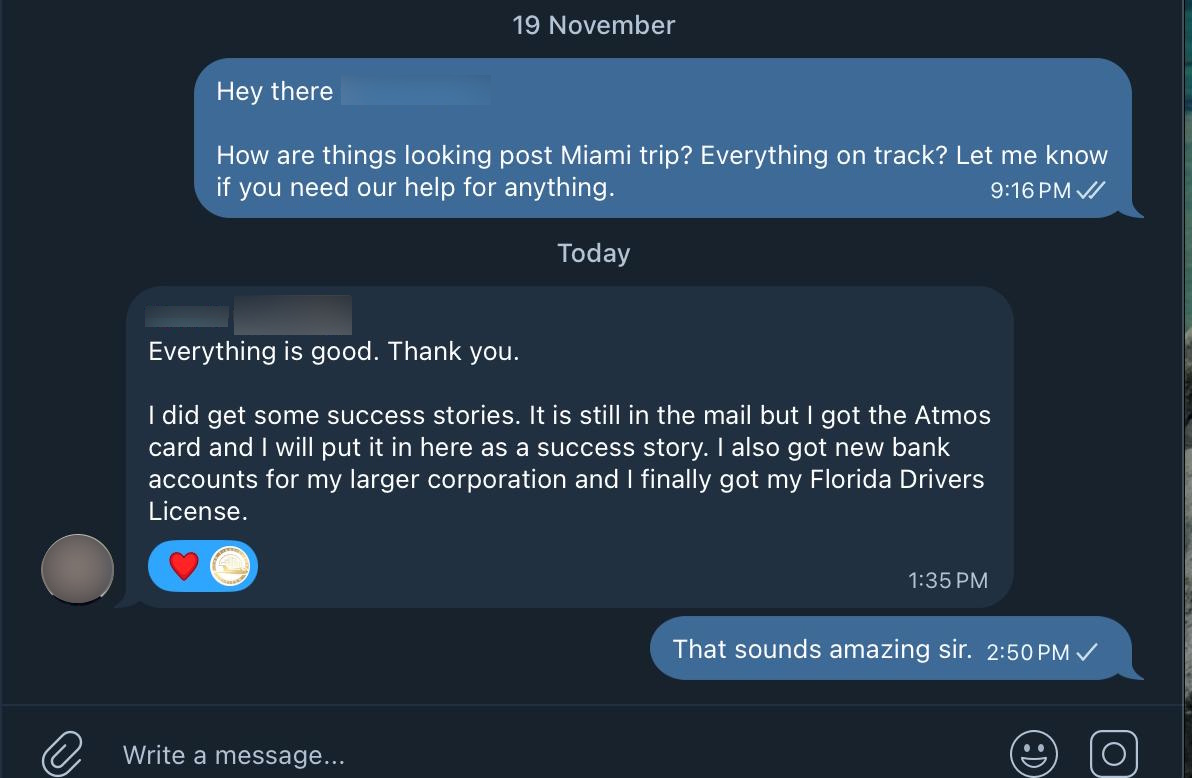

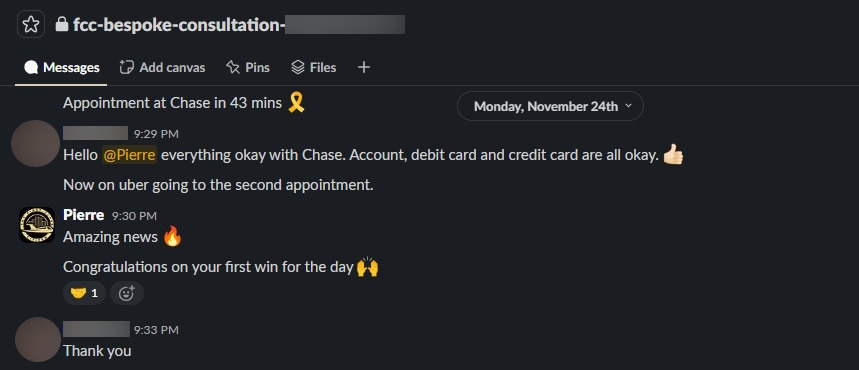
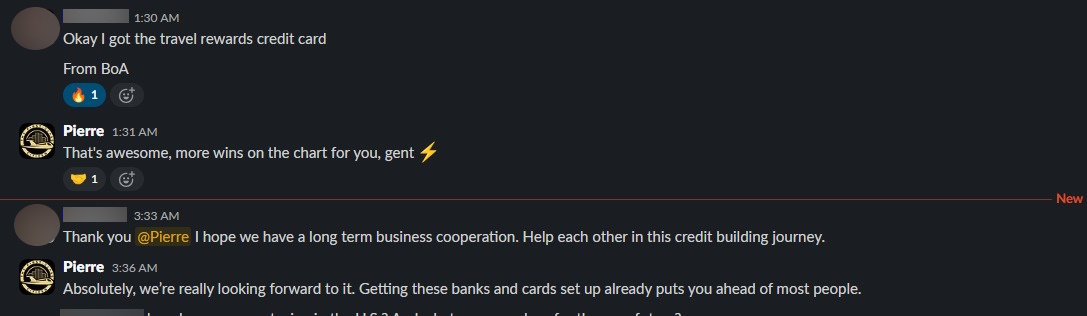
Real client wins, straight from the Hall of Wins.
The rest of the picture
- Find your routeTell it what you are trying to do and it maps the guides to read in order.
- ITIN document checklistPick your situation, get the exact list the IRS accepts.
- What it costsPublished prices and timelines, service by service.
- US credit calculatorWhat your spend returns at the rates issuers publish today.
FAQ
Do I have to travel to Panama to open the account?
How fast is it, remote versus in person?
What does the bank ask me for?
Who can open one?
What does it cost?
What makes it crypto-friendly?
Which bank is it?
Can I open an account for my US LLC at the same time?
Find out which route your own file takes
Opening for non-residents is assessed case by case, so whether you go remote or in person, and whether the file clears at all, depends on your passport, your residence and where your money comes from. The assessment call establishes that, and it is where the set-up figure and the bank's fee schedule are quoted. Free, qualified, and direct about the parts that do not apply to you.
Book Your Assessment CallThis guide reports what the authorities and institutions involved publish, quoted, with the date each source was read. It is not tax, legal or immigration advice. Published rules change, and an individual case can turn on facts no page can see.

Founder & CEO, The First Class Citizen