
A Georgia Bank Account, Opened Remotely

The country, not the US state. Georgia sits in the Caucasus, its capital is Tbilisi, and the account described here is opened without you going to either.
The published clock is two business days from the day your documents arrive. At that mark you have an IBAN and a debit card, and the IBAN sends and receives dollars, euros and lari.
First Class Citizen sells it as a VIP tier account, and the part most people come for is narrower than banking in general. Crypto can be your declared source of funds, and their page says you can transact freely to and from exchanges worldwide.
Where it stops is stated by them, not by us. The account does not offer direct deposits in cryptocurrencies, unlike the Panama account they also open. That single line is the difference between the two, and it decides which one you want.
How the account opens without you flying anywhere
Usually this account requires a person in the branch in Tbilisi. That is the normal answer and their page gives it.
What replaces the visit is paperwork and a power of attorney. You fill out the opening documents, send them digitally for verification, and then mail them to their address in Georgia. Their Georgian partners translate and certify them from there.
Their published requirement for the remote route is short: a copy of your passport and a power of attorney for the opening. The bank does not require proof of tax residency for the account opening itself.
Two business days after the papers land, the IBAN and the debit card are ready, and the bank ships the cards anywhere in the world.
The speed is attributed to a relationship rather than a trick. Their Georgian partners signed an official partnership agreement directly with the bank, which is why they open in two days rather than the thirty to sixty days they say the usual power of attorney route takes.
They describe themselves as one of the only partners worldwide with that access. After payment you are handed to that partner, who runs the rest of it with you.
The bank itself is not named on their page. Worth knowing before you ask, and the same position they hold on the Panama side.
Two business days is the bank's clock, and it starts when the envelope lands. That is the part worth asking about.
Book Your Assessment CallWhat the account actually holds
One IBAN, three currencies. Euros move on instant SEPA transfers, dollars cover worldwide transfers, and lari is the currency the deposit interest is paid in.
Behind the IBAN sit checking, savings and investment accounts, with a brokerage account available as an option on top.
It is run from a mobile app they describe as advanced, built so the account can be operated entirely remotely with no branch visit.
The service layer is the part they lead with: a vetted private banker you reach directly on WhatsApp rather than an open ticket in a queue.
On deposits, the rates published on their page and checked in July 2026 are 1.0 to 2.5 percent a year on dollars, 0.1 to 0.5 percent on euros, and 7.5 to 11 percent on lari.
Deposit rates move, so treat those as the numbers they publish rather than the numbers you will be offered.
The card stack is optional and comes after the account, not with it. Their summary lists Amex Gold, Amex Platinum, Visa Black Infinite and Mastercard World Elite, with the Amex cards, Visa Platinum and lounge access delivered a week after the account opens.
What that buys is 1,300 airport lounges worldwide, a fast-track lane arriving into and departing from Tbilisi, and a round-the-clock virtual concierge. Which card you qualify for, and whether the stack carries a cost of its own, is not stated on their page.
Now the money. The minimum opening deposit is fifty dollars. What the service itself costs is not published anywhere on it, and no wire fee schedule is published either.
Their own downside list says fees run higher than fintechs or crypto platforms, so the honest instruction is to get the setup price and the fee sheet in writing before anything is paid. Those are the first two questions on the call.
Six steps, and the one with no clock on it
Their page publishes the sequence in order, and it is short enough to hold in your head.
One, the initial form, which they say takes under five minutes, plus a passport copy and a bank statement. Two, payment. Three, the opening documents: filled out, sent digitally for verification, then mailed to their address in Georgia.
Four, the account, two business days after those documents arrive, with their Georgian partners handling translation and certification. Five, you use it. Six, optionally, you apply for the cards and the travel perks.
Step three is the one to look at twice. The mail leg carries no published duration anywhere on the page, and their own downside note says the opening process takes some time because documents must be sent by mail.
So the two day clock starts when the envelope lands in Georgia, not when you pay.
That is not a criticism of the service, it is a reading of what they actually publish, and it is the difference between a two day account and a two week one depending on where you post from.
Which makes three questions worth asking before you send anything: how long the courier realistically takes from your country, who pays for it, and what happens to the file if the package goes missing.
Why Georgia, in their own numbers
Their case for the country is made with figures rather than adjectives, which makes it checkable.
A debt to GDP ratio of 49.5 percent, set against 128 percent in the United States. Thirty fifth on the Economic Freedom Index, with Italy at fifty eighth and Mexico at seventy fourth.
One of the least indebted countries in the region, a rapidly expanding market with interest rates above 10 percent on the local currency, and a history of pro-market reforms and low taxes.
Those are their characterisations of the country, published as their reasons for banking there.
Two practical points matter more than the rankings. English proficiency in the financial industry is high, and the banks run their websites and apps in English, which is why the account can be operated by someone who will never set foot in the country.
And Tbilisi itself is described as a financial and digital nomad hub, with crypto to fiat ATMs and peer to peer services across the city for the day you do visit.
On the crypto side, their position is that an account allowing crypto as a declared source of funds exists in only a few stable economies, and usually behind much larger deposit minimums.
That is the argument for this one: a bridge between the crypto world and the traditional banking world, in their phrase, with no frozen funds.
Their page also lists two other Georgia services, a driving licence and a real estate strategy, as consultation entries. Neither carries a price and neither carries a link, so both are conversations rather than products at the moment.
Panama or Georgia is not a preference. It follows how your money actually moves, and the call settles it.
Book Your Assessment CallGeorgia or Panama: two accounts doing two different jobs
They sell both, and the pages look similar enough that people pick the wrong one. The split is mechanical.
The Panama account opens over a video call in three to five business days, holds dollars, euros, bitcoin and USDC, and takes deposits directly in crypto.
That is the account for money that arrives as crypto and needs to land somewhere without being converted first.
The Georgia account opens on mailed documents and a power of attorney, two business days after they arrive, and holds dollars, euros and lari. In their own words it does not offer direct deposits in cryptocurrencies, unlike the Panama account.
So Georgia is not the crypto on-ramp. It is the bank side of the same life: a triple currency IBAN with instant euro transfers on SEPA, dollars for worldwide payments, lari earning deposit interest, savings and investment accounts, an optional brokerage, and the card stack on top.
Crypto sits behind it as a declared source of funds, and their page says you can transact to and from exchanges worldwide.
One thing their page does not answer, and it is the obvious one: how you fund the account the first time from abroad if crypto cannot go in directly. Ask it plainly before you pay, because the answer shapes the whole sequence.
Both accounts open on fifty dollars. Neither of them is a tax position, and people who choose between them on privacy rather than on how their money moves usually choose wrong.
What they publish against their own account
Most banking pages do not carry a downside section. This one does, and it is the most useful block on it.
Four things, in their own published list. No direct deposits in cryptocurrencies. Fees higher than fintechs or crypto platforms. Information shared through CRS and FATCA. And an opening process that takes time, because documents must be sent by mail.
The third one deserves its own paragraph, because it is the one people assume away. Georgia participates in FATCA, which is information exchange with the United States on accounts owned by US citizens and companies.
It participates in CRS, which is multilateral exchange with dozens of countries, and they point at the OECD list rather than paraphrasing it. It has signed double taxation treaties with fifty seven jurisdictions, from Armenia and Austria through to the United Kingdom and Uzbekistan.
Whether any of that reaches your country has one determinant, and their answer is exact: if the tax residency country you declare at the account opening is on one of those lists, then yes, and if it is not, then no.
Past that line, it stops being a question about the account and becomes a question about you.
Whether an account outside your country changes what you owe depends on where you are a tax resident, which is a conversation with your situation on the table, not a paragraph on a page. Their own answer to that question is the same one.
Who can open it, and who decides
Their published eligibility is wider than most people expect and narrower than a headline.
Both Georgian and non-Georgian residents can open. Their words on the point are that Georgian ties are not required to open successfully, and the bank does not require proof of tax residency for the opening.
Individuals from anywhere except restricted countries, with Syria, Iran and Afghanistan given as their examples.
The full restricted list is not published, so if your passport is anywhere near that conversation, it is the first thing to settle and it settles before anything is paid.
Companies are a separate matter. Accounts for Georgian companies are a different service entirely, and accounts for non-Georgian companies are evaluated case by case, which includes the US LLC most readers of this page are running.
And the decision is not theirs. The final call on accepting a client application rests with the bank or the brokerage.
They publish that to date they have had no rejections as long as the required documents were submitted correctly, and that in the event of non-acceptance they may offer a partial refund of the order minus service fees.
What that works out to in numbers is not published, which makes it the third thing to get in writing.
Two business days is the bank's clock, and it starts when the envelope lands. That is the part worth asking about.
Book Your Assessment CallClients on the record
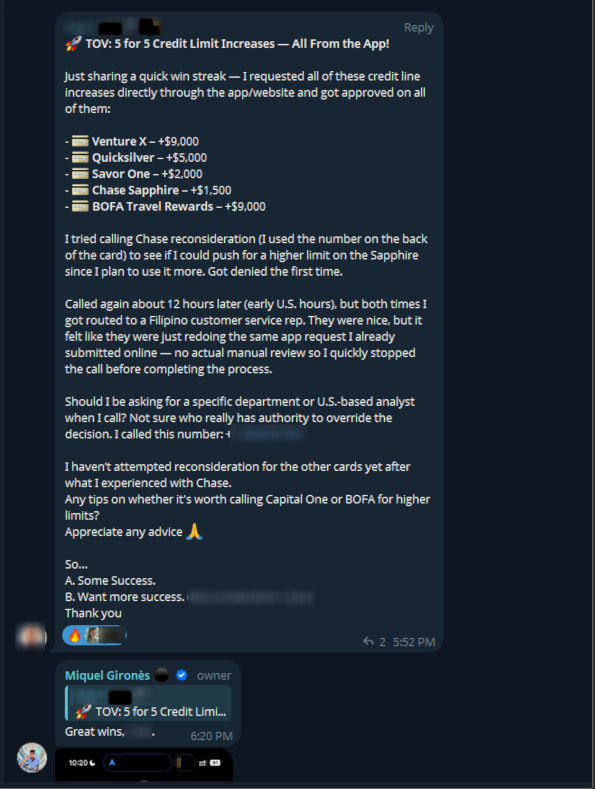
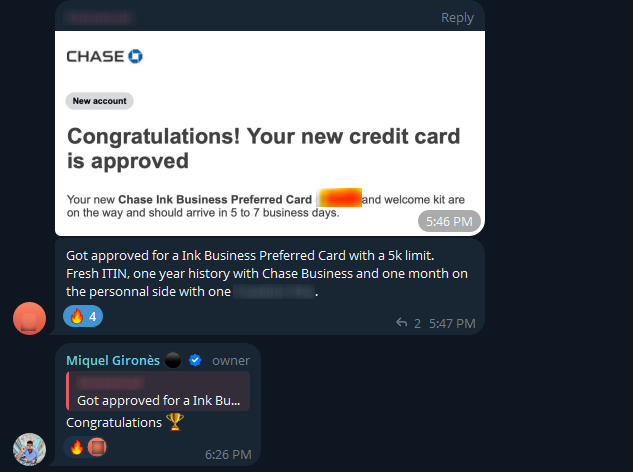


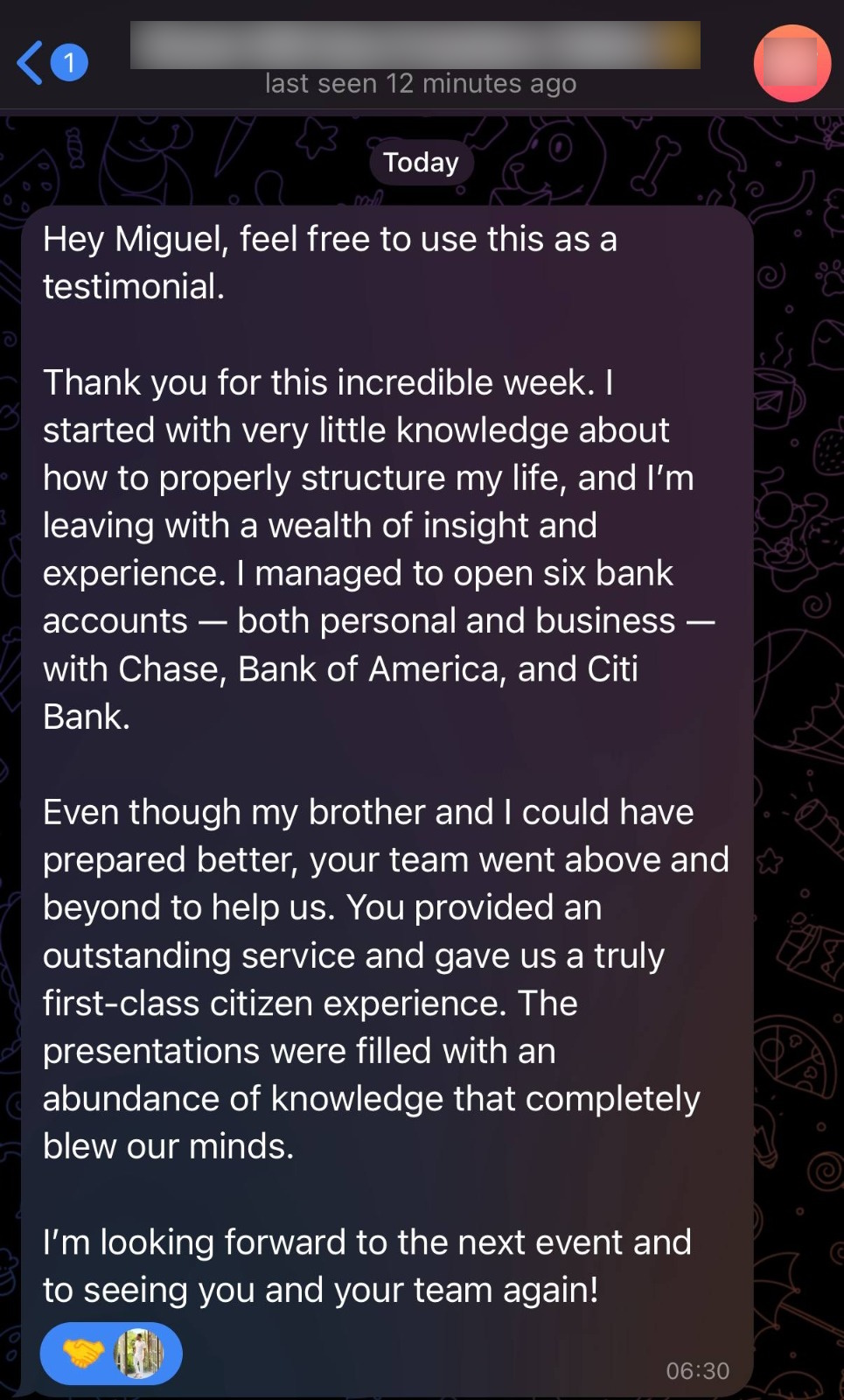
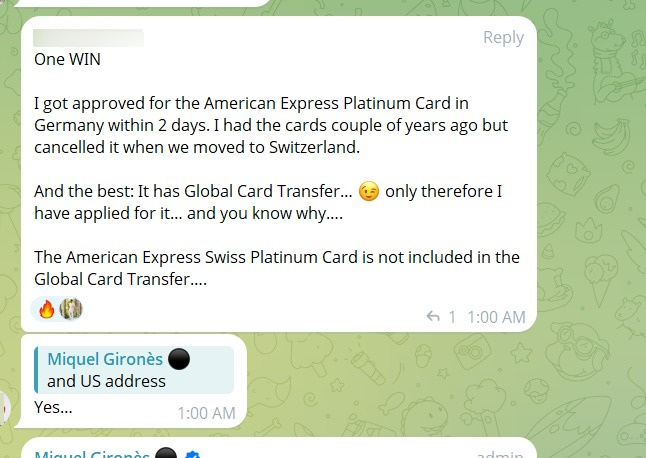
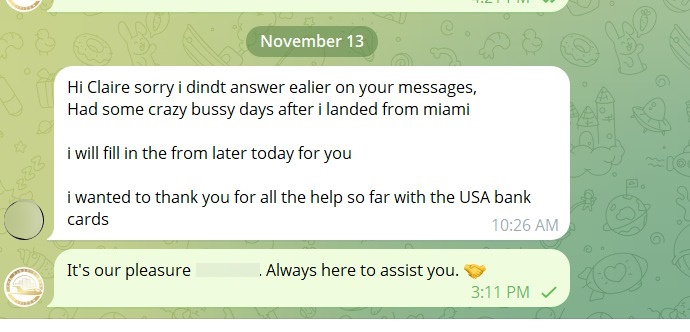
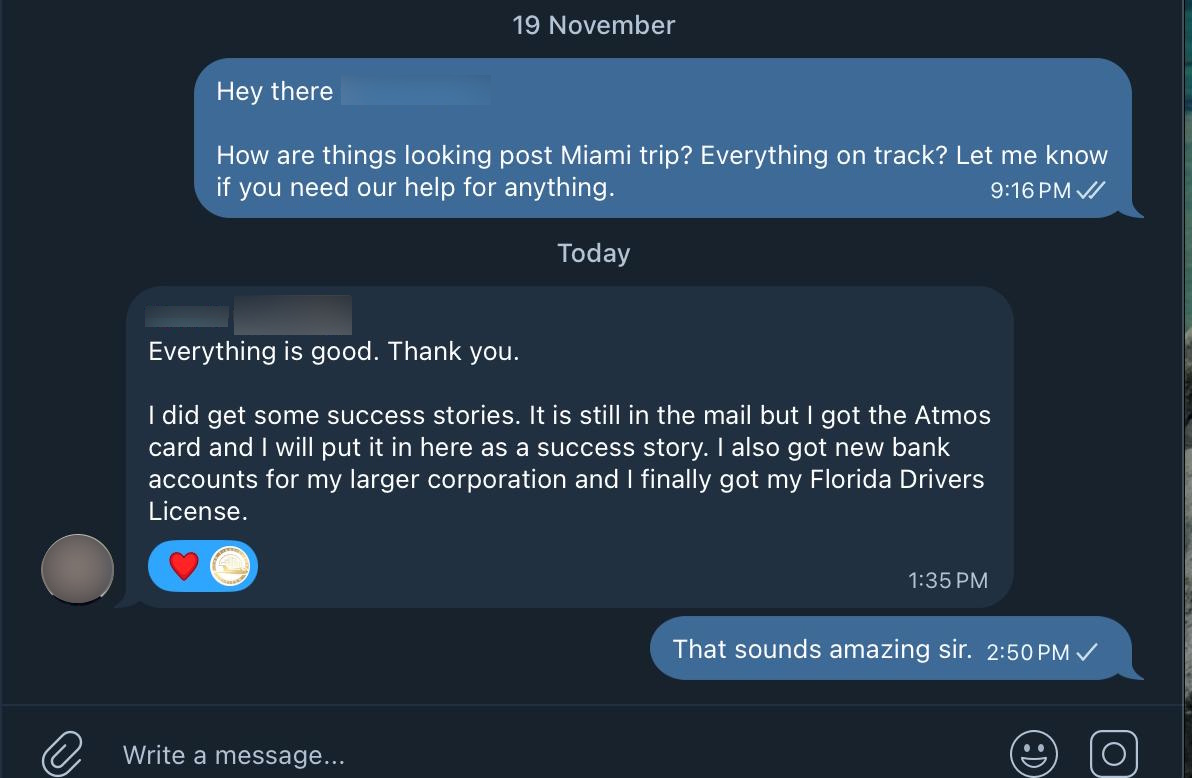

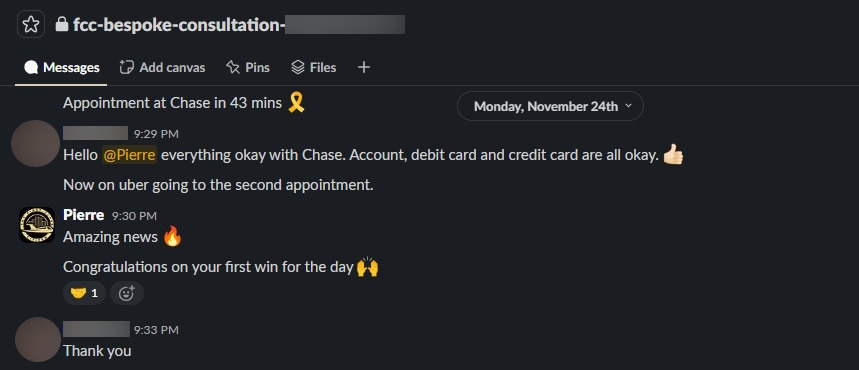
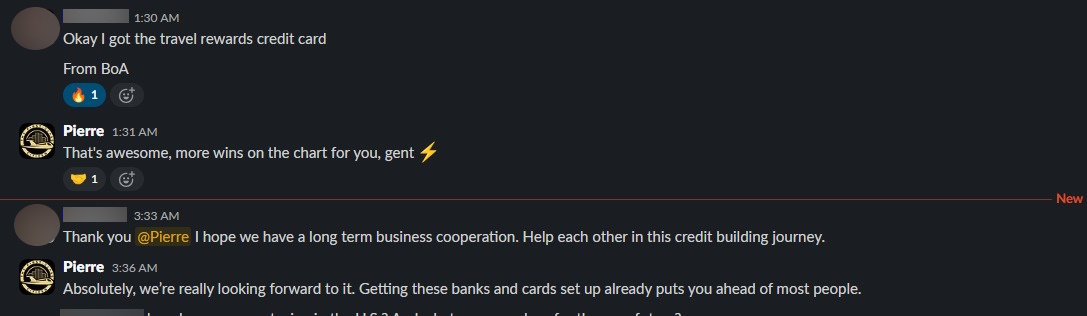
Real client wins, straight from the Hall of Wins.
The rest of the picture
- Find your routeTell it what you are trying to do and it maps the guides to read in order.
- ITIN document checklistPick your situation, get the exact list the IRS accepts.
- What it costsPublished prices and timelines, service by service.
- US credit calculatorWhat your spend returns at the rates issuers publish today.
FAQ
Do I have to travel to Georgia to open the account?
How long does it take?
Which currencies does the account hold?
What is the minimum opening deposit?
What makes it crypto-friendly, and where does that stop?
How is this different from the Panama account?
Who can open an account, and who decides?
Does Georgia share bank account information with my country?
Find out which account fits how your money moves
Whether crypto has to land in the account directly or only sit behind it as a source of funds is the question that decides Georgia or Panama. The assessment call covers that, what the opening actually costs, and what your own tax residency changes. Free, qualified, and direct about what applies to you.
Book Your Assessment CallThis guide reports what the authorities and institutions involved publish, quoted, with the date each source was read. It is not tax, legal or immigration advice. Published rules change, and an individual case can turn on facts no page can see.

Founder & CEO, The First Class Citizen