
ITIN for UK Citizens

There is no British version of this application. First Class Citizen publishes one ITIN process, described the same way for everybody, and none of it is addressed to applicants in the United Kingdom.
Read their service page and their ITIN FAQ end to end and the words United Kingdom appear exactly once, in the services menu, pointing at a company formation rather than at the number.
That is closer to an answer than a gap. Their published requirements run to three items, one of them is an address, their own word for which address is any, and a British one is not a US one.
Where Britain does appear is the other thing they sell, the UK LLP, in wording written about UK residents directly. That part is quoted here rather than summarised.
What their pages actually say to a British reader
Two places describe this service in public: the ITIN service page and the ITIN FAQ post. Both were read in full on 26 July 2026, and the second is the first one repeated, so there is really one source and it is short.
Across the whole of it the United Kingdom is named once, in the services menu under business incorporations, pointing at the UK LLP. It is not part of the application copy and it says nothing about British applicants.
So there is no British document list, no British timeline and no British price to report, because none has been published. Any page that hands you one has invented it, and on a tax question that is worse than a visible blank.
What is published is a single process, short enough to check yourself against in about a minute.
Where you are actually resident does more work in their material than which passport you hold, and only one of those is written on a page.
Book Your Assessment CallThe three things they ask for, read from Britain
Their published list of what an applicant provides runs to three items. A passport photo or scan. A non-US address, and the parenthesis on their own page is the word any. An email address.
That middle item is the only published line that touches where you live. A British address is a non-US address. Nothing published asks which country, which is why there is no British variation to describe.
Their published condition to apply is a different matter, and it is worth reading in their exact words: you must not be eligible for an SSN (not US resident, citizen, or green card holder). That sentence is written entirely about American status. A British passport is not what it turns on, and whether a given person clears it depends on their own status and history.
On travel their page is direct, in their wording rather than ours: we use automated workflows that instantly submit your application. No need to step into the USA or being resident. So the application itself is not a reason to book a flight.
The process they publish is four steps. Fill a form in two minutes and pay. Sign a document within a week, your one deadline. They handle the rest. Listed as included: IRS contacts to expedite it, your ITIN number and the original IRS letter, and a strategy for opening US bank accounts once the number lands.
45 to 60 days, and what their own clients report
The published window is 45 to 60 days, in four places on their page, labelled express. The number itself is published as valid for three years.
On the same page their clients publish their own results, and the page publishes all of them. Antonio Leao is published as the record at 37 days. Michael Niziolek reports 40 to 50 days. Davide Vignoli reports one month and two weeks. Thor M. reports within six weeks. And Pedro A., on the same page, writes that his took three months and two days.
So the quote is 45 to 60 days and the published outcomes run from 37 days to a little over three months. That is the shape of a government queue behind a private process, and it is why anyone working back from a fixed date should both figures come from their own page.
Two things are not published and are not filled in here. What exactly starts the clock, whether that is the payment, the signature in week one or the submission. And what happens if the application is not approved, because no fix path is published on either page.
Citizen and resident are not the same word here
This is the part worth carrying into any conversation about British paperwork.
On the ITIN, their published bar is about American status: not a US resident, citizen, or green card holder. Britain does not enter into it.
On the UK LLP, their published tax wording does not mention citizenship once. It turns entirely on residency, and their own sentence for it is as plain as it gets: the LLP is a partnership structure. As a pass-through entity you pay taxes where you have your residency.
So a British passport on its own answers neither question. Two people holding the identical document, one living in Manchester and one living abroad, read the same two pages and land in different places, and what separates them is a fact about their life, not their citizenship.
That fact is not on this page and cannot be. It is why the most useful preparation for the call is one sentence: where you are tax resident now, and since when.
Whether the number and the company belong in the same setup is not published anywhere. It is a two minute answer from the team.
Book Your Assessment CallThe other structure they sell to this reader
A UK Limited Liability Partnership is a partnership structure. It must have at least two partners, and all of them are limited partners. Partners can be natural persons, legal entities such as a holding company, or a mix of both. And on the question most non-residents ask first, their wording leaves no room: there are no residency requirements for any of the partners.
If you are building alone, that two partner rule looks like a wall. Their published answer, in their own LLP FAQ, is that they put one of their limited companies in as partner at zero percent ownership, so you benefit from the structure and still own one hundred percent of the company and its profits.
Now the tax paragraphs, which are why this section exists on a British page. The qualifiers are the substance, so both are quoted in full.
First: a UK LLP can conduct business in the UK without any restrictions. With that said, doing so will usually create a tax burden in the UK for the partners. Do note that selling services and products to UK customers from abroad, via a UK LLP, will not usually be deemed as conducting business in the UK and as such, will not usually create a UK tax liability. It may create a UK VAT liability, however, depending on the nature of the products and services sold.
Second, and this is the sentence written about a partner who lives in Britain: when one or more of the partners is a UK resident, they will be liable to tax in the UK on their share of the LLP’s worldwide profits while non-resident partners will only be liable to tax in the UK on their share of the LLP’s UK profits. If no business is conducted in UK, and all partners are non-residents, no tax liability will exist in UK.
Read those two together and the shape is clear. The liability follows the partners, not the partnership, and the deciding facts are where each partner is resident and where the business is conducted. That describes the structure, not you. Their own material points at a residency in a territorial tax country as the next move, naming Paraguay, which is their published position rather than a conclusion about anyone.
The rest of the package is a registered agent, a UK virtual address, direct access to Miquel Gironès’ team on Telegram, incorporation documents in 24 to 48 hours, the zero percent partner where you are the single owner, and the annual filing under the yearly maintenance fee with the first year included. One line there is worth checking: the address is described as a prestigious address in a city like London, which is deliberately non-committal, so ask which city.
Which accounts actually open
Both products end at a bank, and their published guidance on the two runs in opposite directions.
On the LLP, their FAQ says the quiet half out loud. While the UK is home to some of the largest banks in the world, HSBC and Standard Chartered among them, non-residents will often struggle to open accounts for their LLP. What they recommend instead is fintech: Wise, Revolut, Juni and similar services. On speed, their FAQ says online accounts can be opened right away, with money reaching the new LLP in two days.
On the ITIN the direction is the opposite. Their second step is titled fly to the US and open bank accounts, naming Bank of America, Chase, JP Morgan and Wells Fargo. So the no-travel line covers the application, not the banking.
One client on that page, Andrew Menechian, writes that he got his bank accounts remotely. That is his account of his own case, published as a testimonial, not a claim the company makes. So price a trip into the calendar early rather than discover it late.
Two things are unpublished and left as blanks. Who actually opens the fintech accounts, and whether any UK bank introduction is part of the LLP service. If a British branch account is the reason you are reading this, that is the first question to put.
Whether the two belong in the same setup is not published
Here is the obvious question for this reader. Does a British person forming a UK LLP need an ITIN?
Their material does not say. What their ITIN page does publish is the pairing it recommends for itself, and the company it names is an LLC, the American one. Their fourth step is worded as combining your setup with an LLC, for access to funding and business credit cards. That is the only structure their ladder names.
Nothing on the ITIN page and nothing on the LLP page says the number is required for a UK partnership, or that the two are sold together, or that one follows the other. So this page does not say it either.
That restraint is deliberate. The easy version of a page like this writes the combination because it reads well, and an invented pairing on a page about tax numbers and company structures is exactly the confident sentence that costs somebody money. If you have been told the two go together, put it to the team first.
Where you are actually resident does more work in their material than which passport you hold, and only one of those is written on a page.
Book Your Assessment CallWhat is published on price
Last on purpose, because the figures mean very little until the paragraphs above have been read.
For the ITIN, First Class Citizen publishes 1,000 dollars, valid for three years, same renewal price, with zero dollars and no maintenance cost in between. So no recurring line item attaches to the number, and the renewal is its own step three years out at the same published figure.
For the company, their UK LLP page publishes a one time set-up fee of 1,000 dollars and a yearly maintenance fee of 299 dollars, with the annual filing and paperwork carried under that fee and the first year included. The same two figures are published on their American company page as well, so the invoice is not what separates one structure from the other.
Four things are not published anywhere, and naming them beats filling them in. Whether the ITIN figure covers one applicant or more. What happens to the money if an application is not approved. Whether a VAT registration is offered at all, given that their own answer raises a possible VAT liability and stops there. And what happens at year two if you want out of the LLP.
All four have answers. They live with the team rather than on the website, and prices move, so confirm rather than assume. These were checked in July 2026.
Client wins from the American banking and credit lane
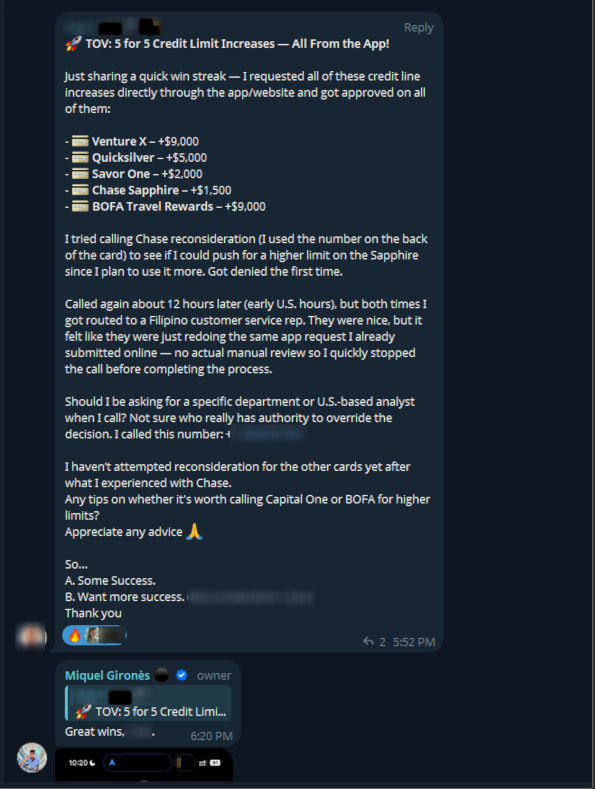




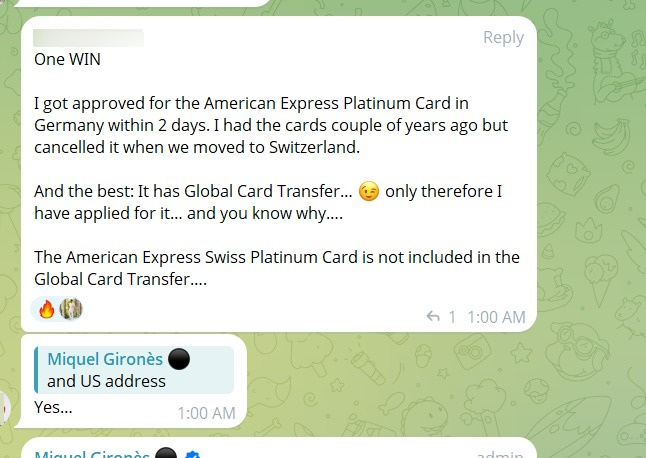
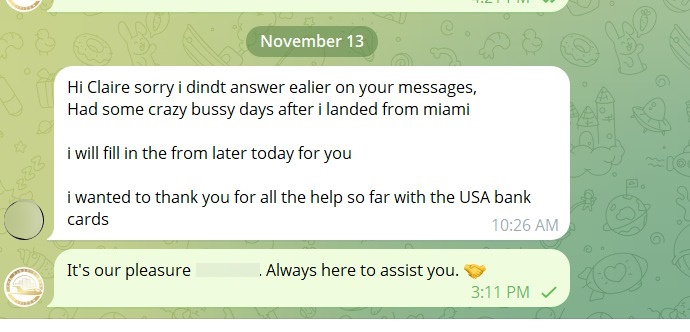
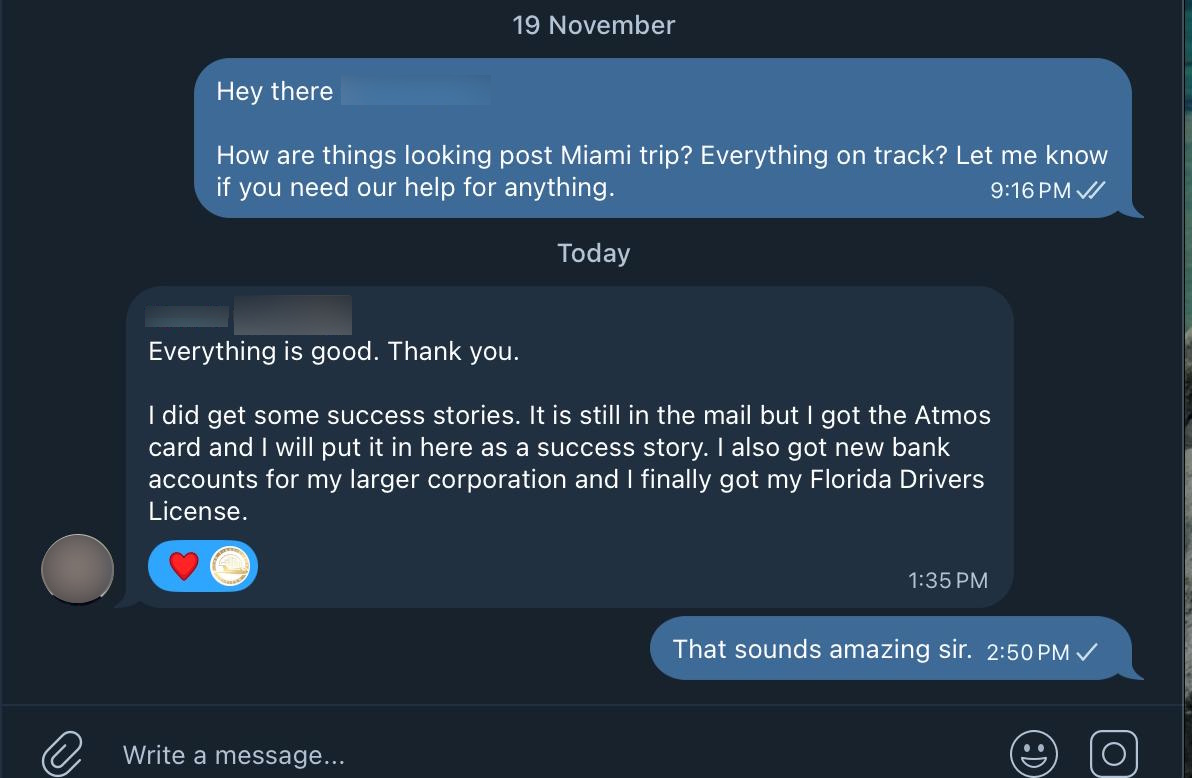



Real client wins, straight from the Hall of Wins.
The rest of the picture
- Find your routeTell it what you are trying to do and it maps the guides to read in order.
- ITIN document checklistPick your situation, get the exact list the IRS accepts.
- What it costsPublished prices and timelines, service by service.
- US credit calculatorWhat your spend returns at the rates issuers publish today.
FAQ
Can a UK citizen get an ITIN through First Class Citizen?
What does a British applicant have to provide?
Do I have to travel to the United States?
How long does it take from the UK?
Does having an ITIN mean I have to file US taxes?
I live in the UK. Does a UK LLP mean I pay no UK tax?
Does a UK LLP really need two partners?
Do I need an ITIN if I form a UK LLP?
Get the British questions answered once
The assessment call covers what you actually need a US tax number for, what your own residency does to the picture, whether the American company or the British partnership fits what you are building, and the questions this page deliberately left open. Free, qualified, and direct about what does not apply to you.
Book Your Assessment CallThis guide reports what the authorities and institutions involved publish, quoted, with the date each source was read. It is not tax, legal or immigration advice. Published rules change, and an individual case can turn on facts no page can see.

Founder & CEO, The First Class Citizen